A normal gym membership costs enough to make you resent direct debit day. Brisbane’s newest fitness club wants up to $1000 a week — roughly $52,000 a year — before you’ve lifted a single dumbbell.
For that kind of money, you’d expect more than a treadmill and someone yelling “one more” while you fail a bench press. Level X is planned for Queen’s Wharf and one is planned for the Goldie. The facility, according to realestate.com, is promising something closer to a private health club: performance training, bathhouses, recovery technology, a café and restaurant, co-working spaces, childcare, and — according to reports — an MRI facility.
The Price
The top Level X membership is reported at $1000 a week. Run the numbers and that’s roughly $4333 a month, or about $52,000 a year, before you’ve added a single extra treatment.
The entry-level membership is reportedly a comparatively modest $189 a week — still around $9828 a year, more than plenty of Australians spend on their actual gym plus their actual holiday combined, according to Australian Leisure Management
This isn’t an expensive gym membership in the way a boutique studio or a 24-hour chain with nicer showers is an expensive gym membership. It’s a serious annual financial commitment, on the scale of a car lease or a school fee, for something that has not yet opened.
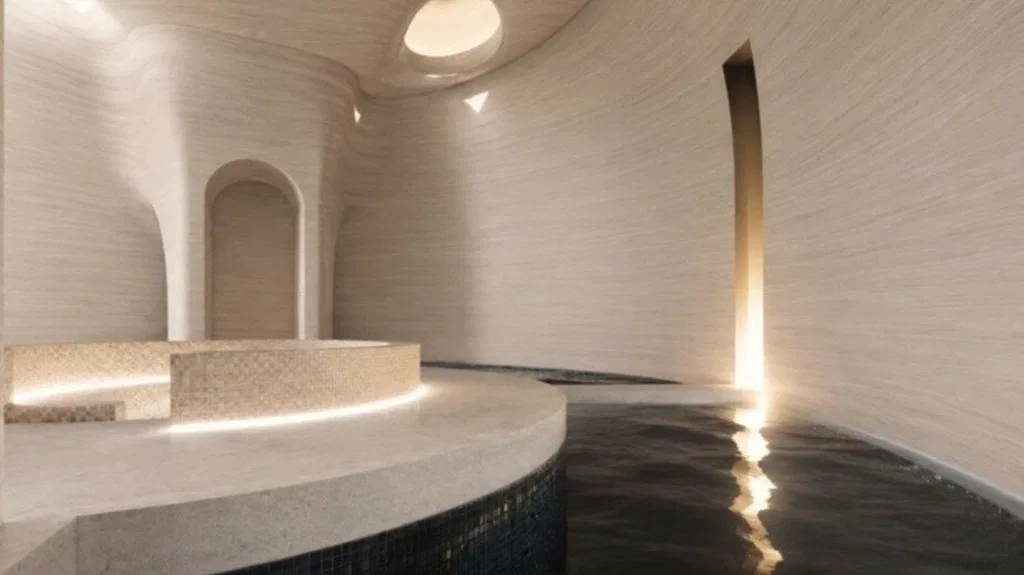
This is not really a gym
Level X is being developed by property entrepreneurs Emil Juresic and Giselle Kramer Juresic, and reports put the numbers at more than 3000 square metres across multiple levels, a reported $30 million construction and fit-out spend, and a further $10 million earmarked for equipment, recovery facilities and wellness technology.
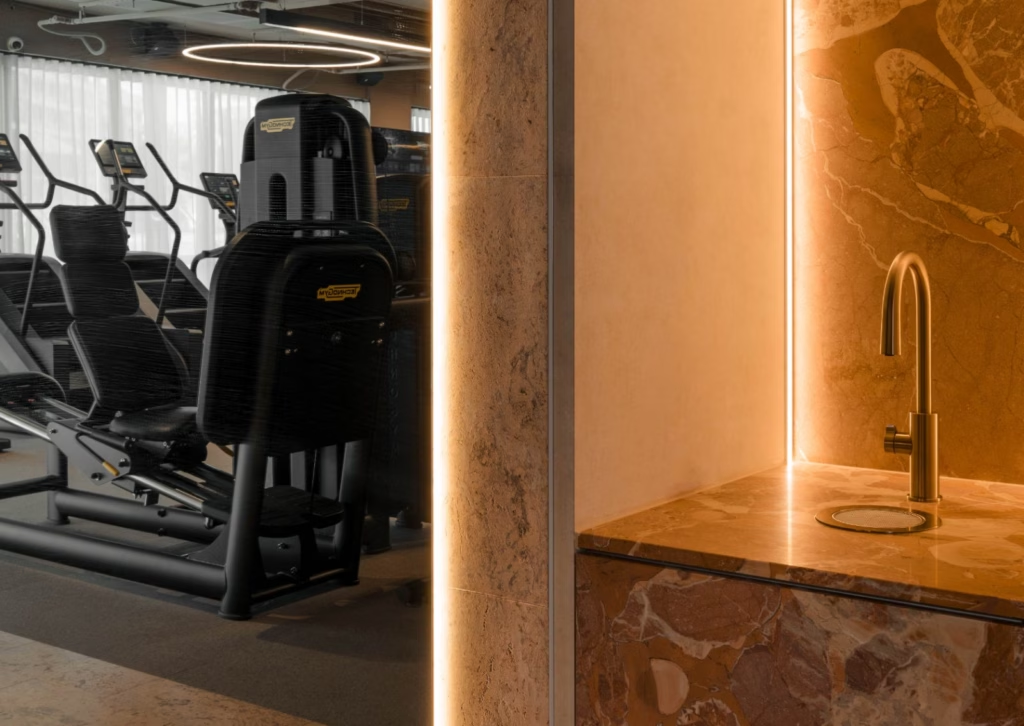
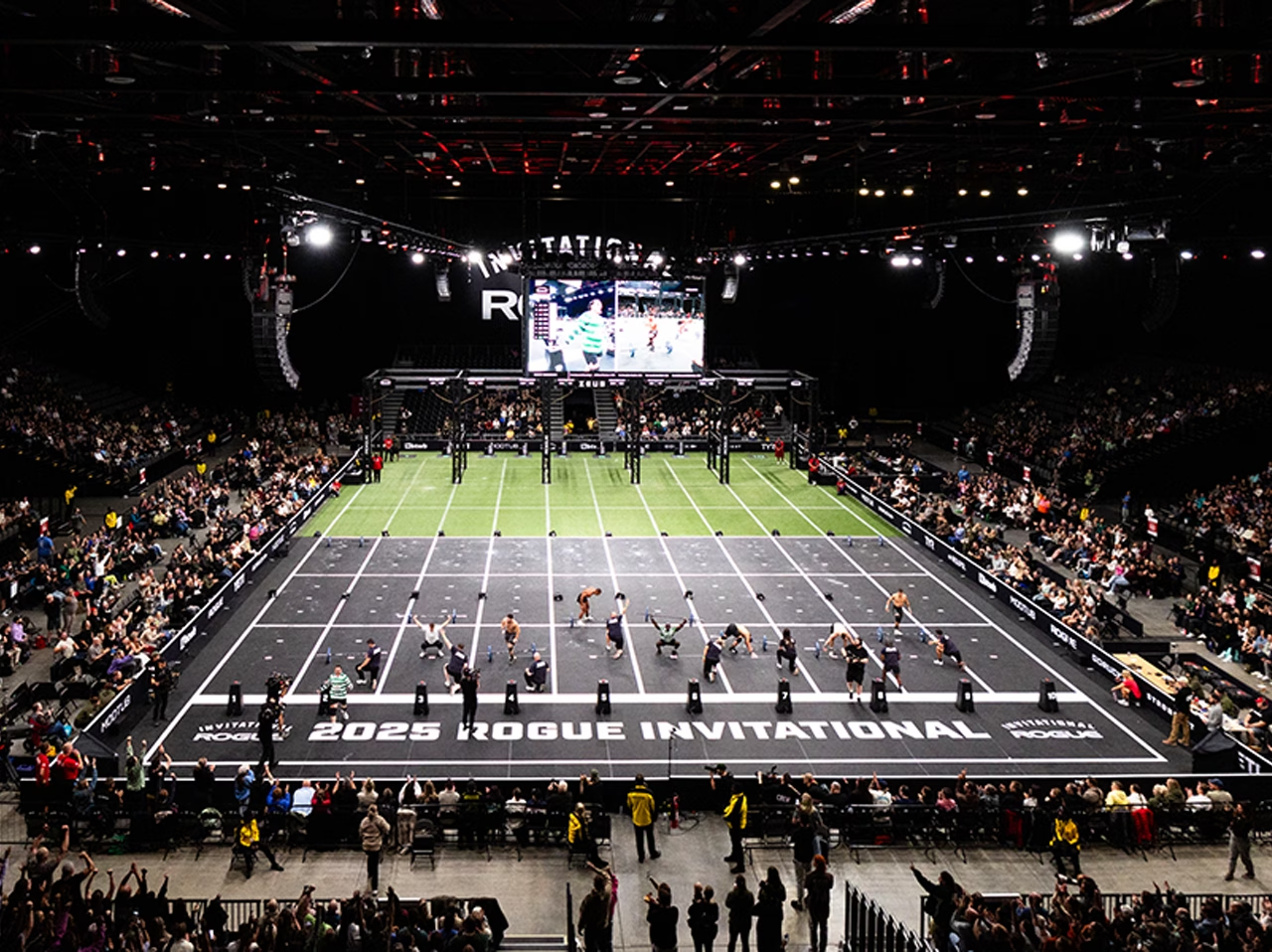
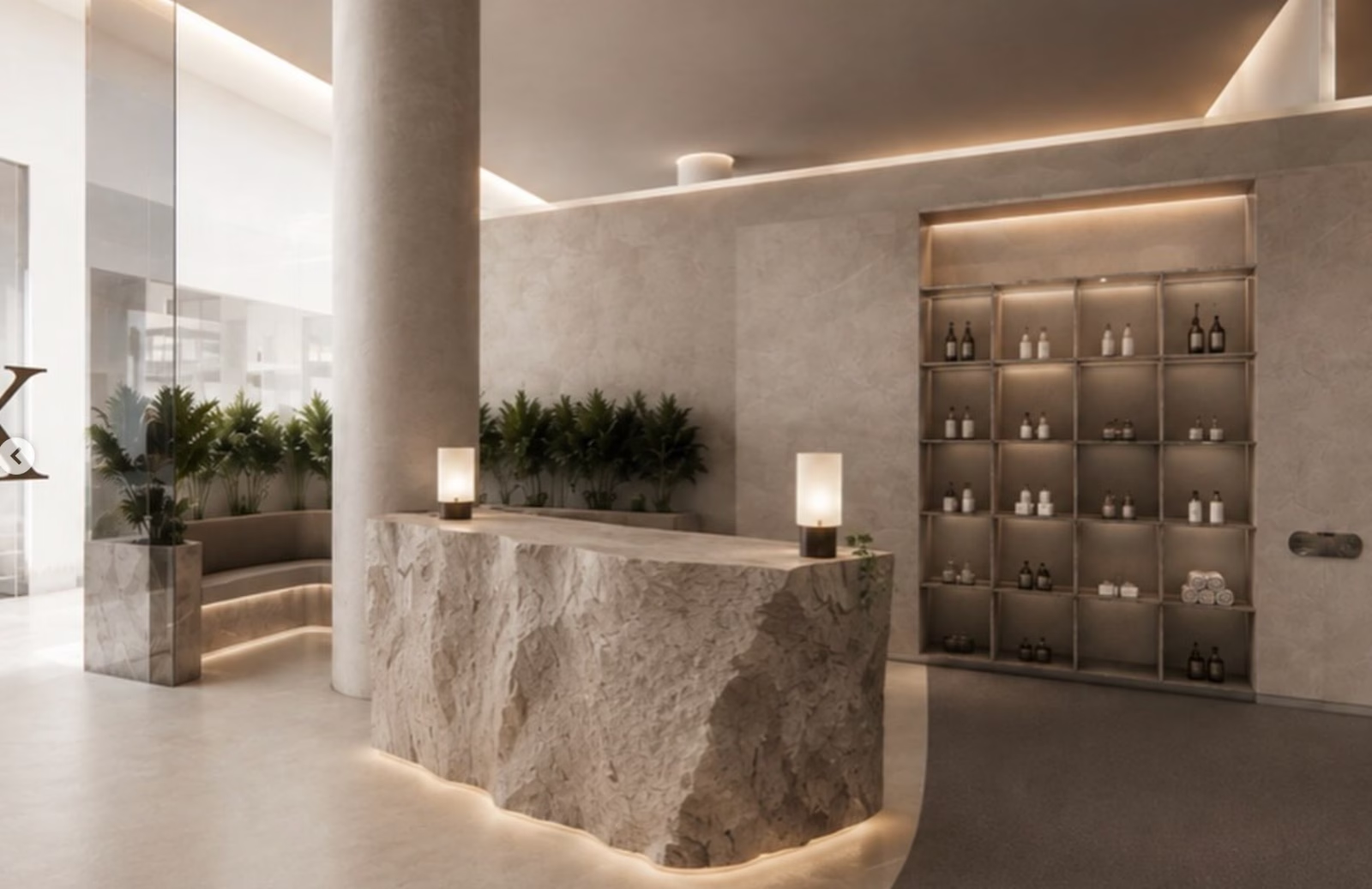
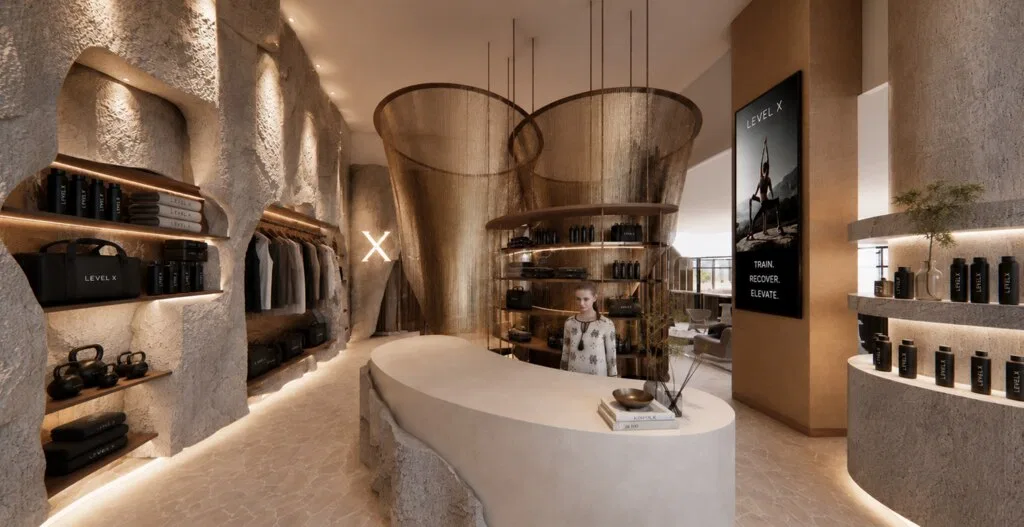
The plans, as reported, include a 50-metre performance zone, reformer Pilates and yoga studios, HYROX-style functional fitness classes, bathhouse-style plunge pools, traditional and herbal saunas, hammams, cryotherapy, red-light therapy, compression therapy, massage, hyperbaric oxygen therapy, IV drip therapy, a salt-therapy room, breathwork and meditation spaces, a nutrition-focused café and restaurant, co-working spaces and boardrooms, childcare, retail, and — according to reports — an MRI facility. The top membership tier reportedly comes with a private upstairs VIP area.
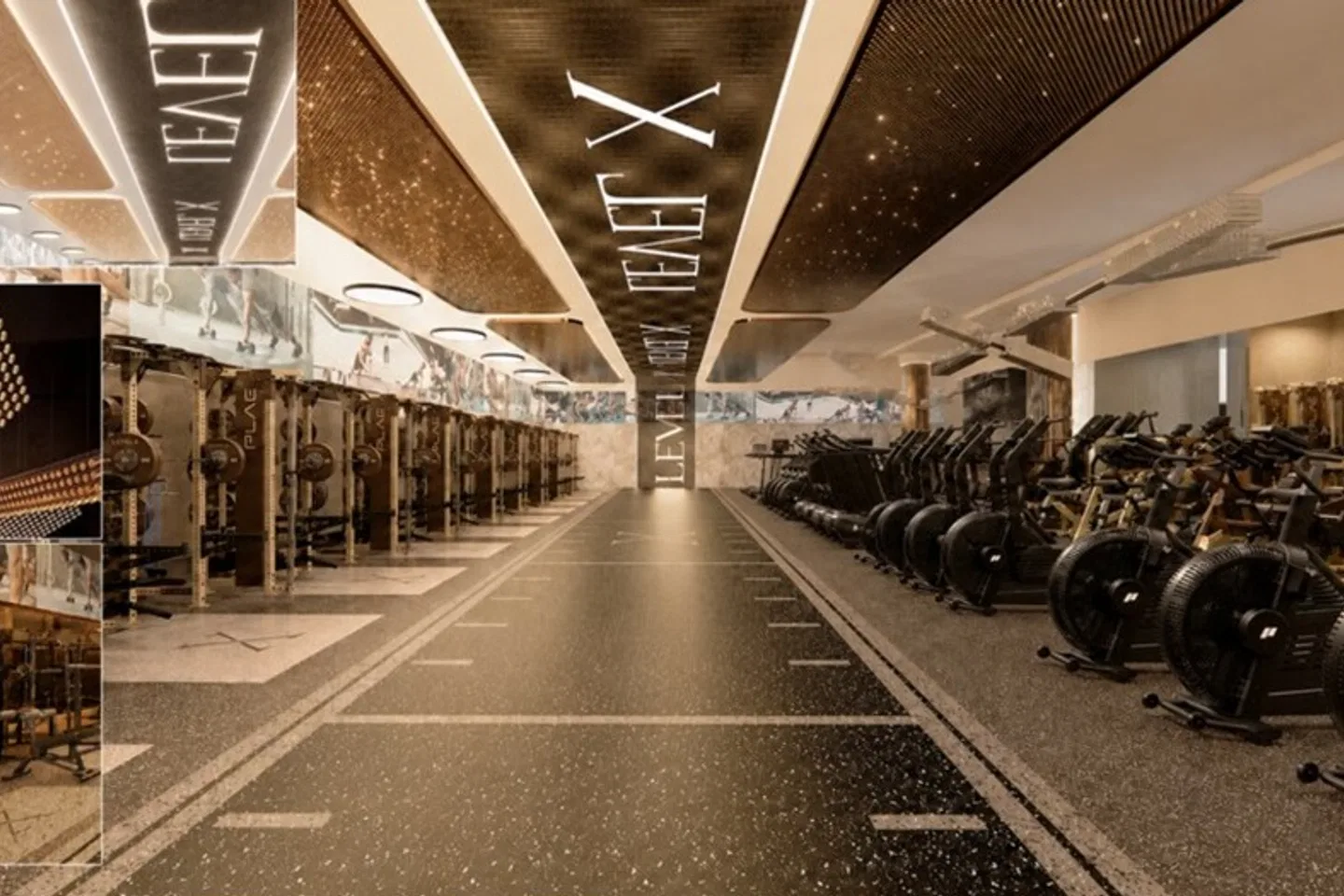
The company has described the project as not simply about building another gym. That’s a reasonable pitch, given the list above. A gym sells you access to equipment. This is selling an ecosystem: train, recover, eat, work, drop the kids off, and never technically have to leave the building.

It’s worth treating all of this as planned, not delivered. Level X’s own website currently lists the Queen’s Wharf site as “coming soon,” with further details still to be released. The gym and performance areas are reportedly expected to be finished by the end of January 2027, with the wellness component following about a month later — reported target dates, not confirmed opening dates.
What does the $1000 membership actually buy?
Strip away the marketing and the appeal of the top tier is presumably some mix of private VIP access, complimentary treatments, premium recovery facilities, exclusivity, and fewer daily obstacles between waking up and training. It’s not unprecedented locally, either — Sydney already has a gym experience capped at 12 clients, complete with a valet; Level X is effectively betting that model scales to a $30 million building.
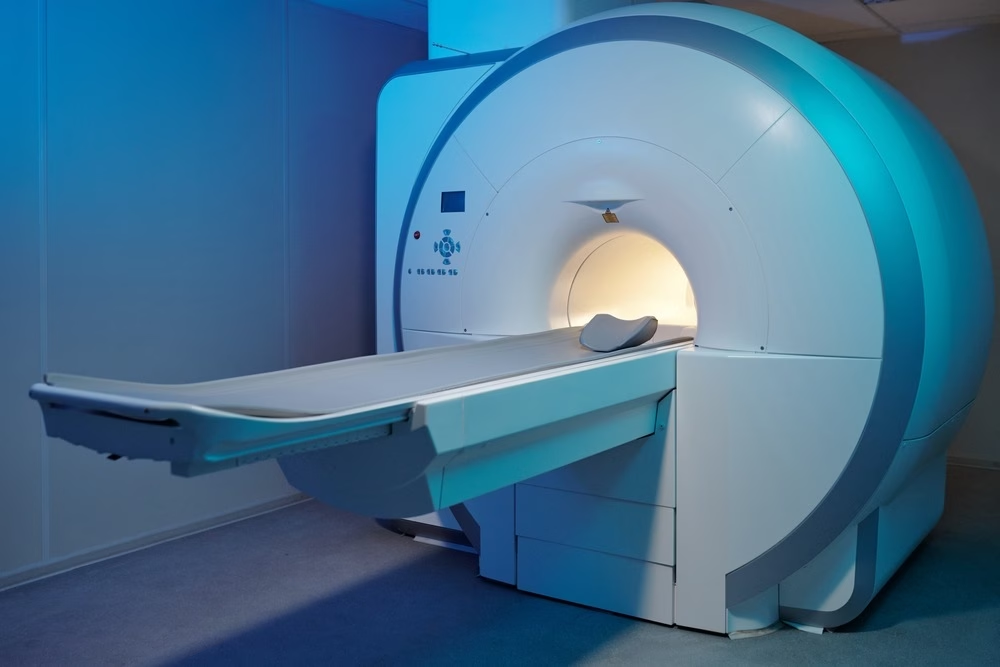
What’s genuinely unclear, at least from what’s been reported so far, is where the line sits between “included” and “extra.” Is the MRI included in membership, or a separate paid service? Are massages unlimited or rationed? Is the café part of membership, or just a tenant occupying the ground floor? And if there really is an MRI facility, is it diagnostic, preventative, or part of a referral pathway — because an MRI machine on the premises is not the same thing as a medical service, which would need its own clinical operators, radiology reporting and regulatory sign-off. None of this has been detailed publicly yet.
The new luxury-health trend
Level X isn’t inventing this shift so much as pushing it further than most — plenty of gyms have already been drifting toward what we’ve called the sohoification of gyms. Traditional gyms sell access to equipment. A growing tier of premium clubs increasingly sell recovery, longevity, convenience, social connection, food, networking, status, and a battery of testing and data.
The real product on offer may not be fitness at all — it may be adherence. If a member can train, shower, recover, work, eat and pick up the kids in one building, the club has quietly removed almost every excuse for skipping a session. That’s a genuinely interesting bet on human behaviour.
But convenience and results are not the same thing. A hyperbaric chamber and a salt-therapy room might make training more pleasant. They are not a substitute for actually training, and nobody has shown that stacking recovery treatments produces better outcomes than fewer treatments done consistently.
What ordinary gym members should make of it
None of the following requires an MRI, a $30 million fit-out, a private bathhouse, a red-light therapy room, or $1000 a week: progressive resistance training, regular aerobic work, enough protein, enough sleep, consistency, some form of recovery, and — the unglamorous one — not quitting after three months.
Level X’s own founder has reportedly claimed that almost 90 per cent of people give up within that window; treat that as a company talking point rather than an established statistic, but the underlying problem it’s describing is real enough.
You can build genuine strength well past the age most people assume it’s too late — Phil Earley didn’t start bodybuilding until 57, and was still winning championships at 60 — and he didn’t need a hammam to do it. Fancy surroundings don’t inoculate anyone against bad training decisions either; even elaborately staged gym challenges can still go wrong when the basics get skipped in favour of the spectacle.
Level X may be a genuine glimpse of where the fitness industry is heading: less sweaty warehouse, more private members’ club; less “gym membership,” more full-service health lifestyle.
Brisbane isn’t the first place a luxury gym bet has been made, either — one entrepreneur lost millions on a luxury gym before rebuilding his fitness business around simplicity. Whether it works depends entirely on what members are actually paying for. If it gets people training consistently — more consistently than a cheaper gym ever could — then $1000 a week might be a rational, if extravagant, purchase for someone who can afford it. If it mostly provides a beautiful place to avoid doing any actual exercise, Brisbane has just built the world’s most expensive procrastination room.