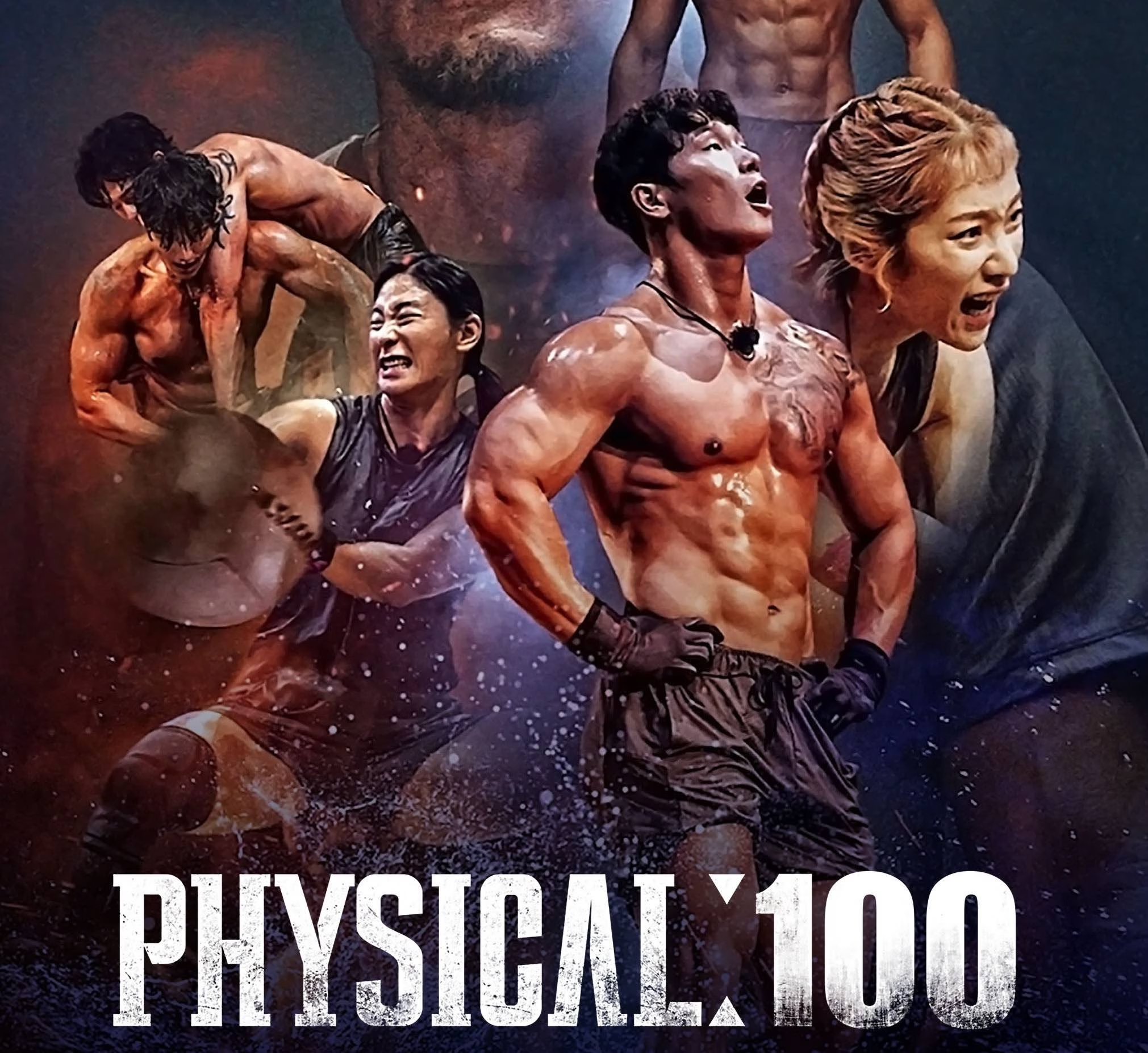
Spoilers: this covers every challenge in Physical 100: Mexico, including the final, and Physical 100: Italy.
Also known as: Habilidad física 100: México (Netflix in Spanish) and 100 % Physique : Mexique (Netflix in French).
Physical 100: Mexico ran 11 challenges over nine episodes on Netflix. It started with 100 athletes on stair machines and ended with two men racing sacks of up to 50 kg onto a scale. In between there were grappling duels, a 1,900 kg stone slab, a comeback round for the eliminated, and four trials the show calls the Ancestral Punishments, which cut 12 athletes to four in two episodes.
The athlete who got through all of it was Ángel Quintero, a 38-year-old obstacle racer. He wasn’t the biggest or the strongest, and his team was knocked out halfway through. That’s the point of this show: it doesn’t reward one big lift. It rewards an engine, grip, carrying and pacing, and the ability to do all of them when you’re already tired.
Below is every challenge in order: how it actually worked, who won and who went out, what it tests, and how to build that quality in a normal gym. For who’s who, see our Physical 100: Mexico cast guide.
All 11 challenges at a glance
- 1The Infinite PyramidEp 1100 stair climbers, three timed rounds of 10, 7 and 5 minutesOmar Zamitiz won; the order set the rankings100 ranked
- 2The DeathmatchesEps 2–3One-on-one: three minutes to control one ballMístico and El Matador among those out100 → 50
- 3The MonolithEp 4Teams drag a 1,900 kg slab on log rollers and stand it uprightTeams that failed went out, including Quintero’sTeams out
- 4The SacrificeEp 5Hold your own plaster torso up on a weighted pulleyLast four holding saved, including Quintero4 saved
- 5The CalendarEp 6Team race: build a heavy structure, then climb a pegged wall12 left for the Ancestral Punishments → 12
- 6Paso al abismoEps 7–8Three athletes: build and cross a suspended bridge 5 m upAldo Gutiérrez won3 → 1
- 7La piedra del solEps 7–8Three athletes push a nearly 100 kg stone ball up a rampJesús Cárcamo won3 → 1
- 8El Camino SagradoEps 7–8Three-person tag chase around a circuitÁngel Quintero won3 → 1
- 9Puerta al inframundoEps 7–8Three athletes hang from a tilting bar over waterMariana Khalil won3 → 1
- 10El AcueductoEp 9Semi-final: a 5 kg ball, two 20-minute stagesQuintero and Cárcamo through4 → 2
- 11El peso de la grandezaEp 9The final: 20–50 kg sacks onto a scaleÁngel Quintero won 3 million pesos2 → 1
- An aerobic engine: most challenges run for minutes, not seconds
- Strength endurance: producing moderate force over and over, not one big lift
- Grip: hanging, holding, pulling and carrying all fail at the hands first
- Loaded carries: moving awkward, heavy objects quickly
- Grappling strength: the one-on-one duels are closer to wrestling than lifting
- Pacing: knowing how hard you can go and still be going in 20 minutes
1. Infinite Pyramid: Stair Climbing Hell
How it works
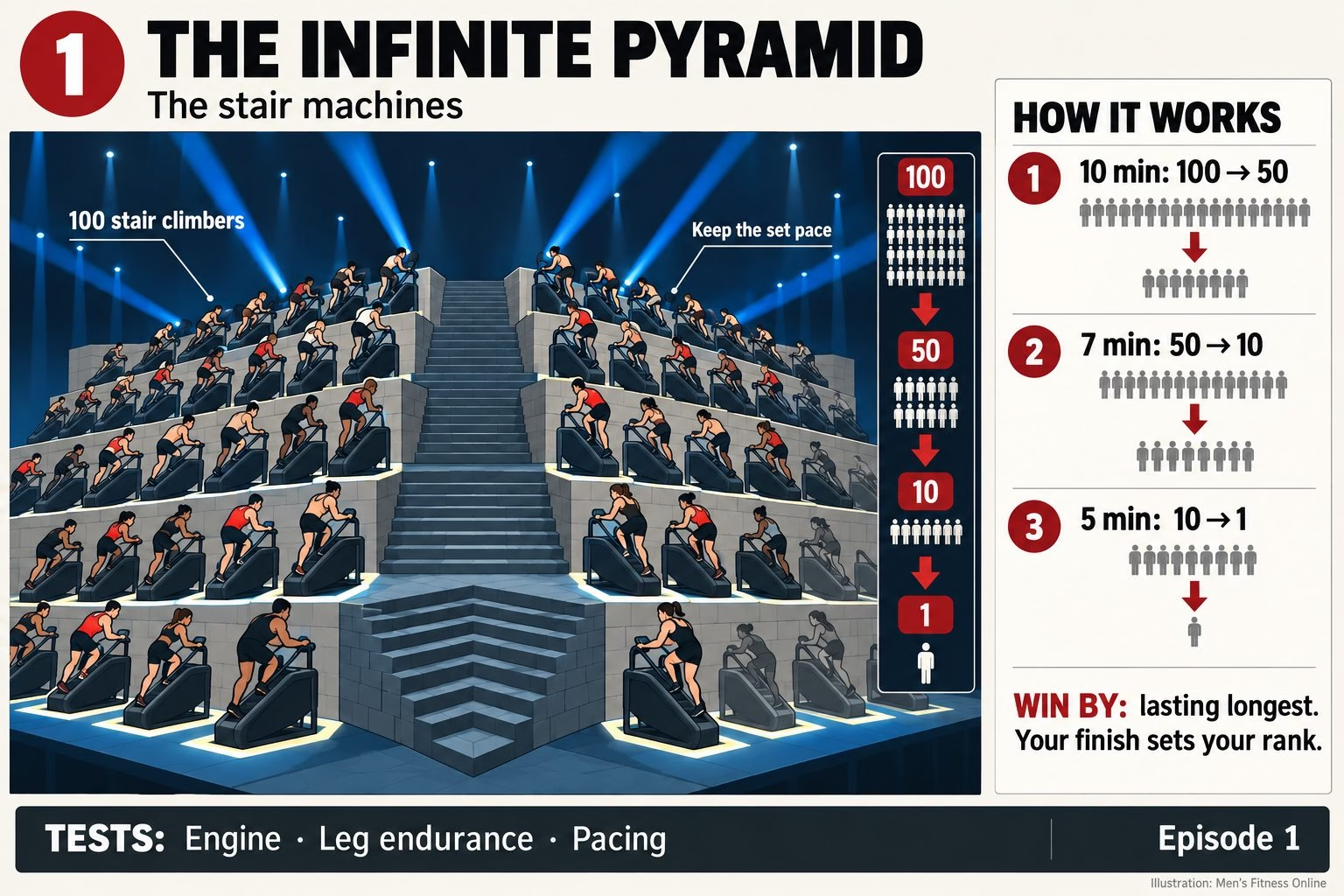
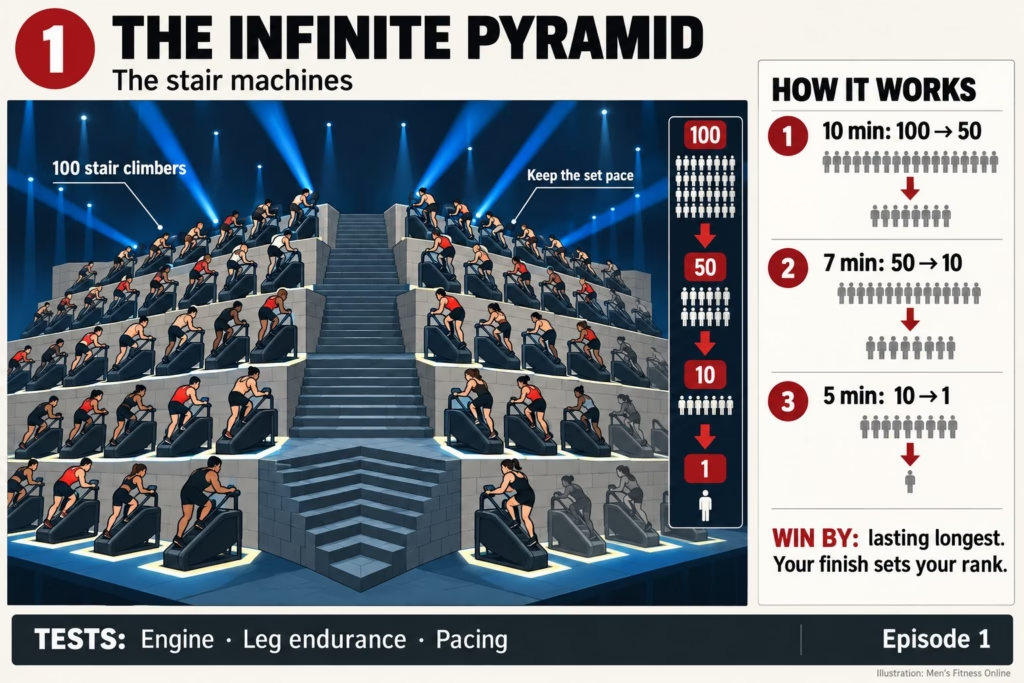
All 100 athletes started on stair-climbing machines laid out as a stepped pyramid, one machine each. The job was simple and brutal: keep up with the set pace. Fall off it and you were out of the round.
It ran in three rounds, each shorter than the last. Round one lasted 10 minutes and ended when 50 were left. Round two lasted 7 minutes and cut that to 10. The final round was 5 minutes to find a winner. Nobody went home here: the finishing order ranked the field, and the ranking decided who got to choose an opponent in the next challenge.
Who won and who went out
- Round 1: 10 minutes, 100 down to 50
- Round 2: 7 minutes, 50 down to 10
- Round 3: 5 minutes, won by personal trainer Omar Zamitiz
What it tests: Leg endurance, aerobic capacity and pacing. Nobody wins a long stair climb by sprinting the first minute.
How to train for it:
- Build an aerobic base first: two or three 30–45 minute sessions a week at a pace where you can still talk (on the stair climber, a bike or running).
- Add one interval session: 6–8 rounds of 2 minutes hard, 2 minutes easy on the stair climber.
- Strengthen the legs for the job with step-ups, walking lunges and split squats.
- Test yourself the way the show does: 10 minutes at a fixed level you choose at the start, then 7, then 5, with a few minutes’ rest between. Retest every four weeks at a higher level.
2. Natural Selection: Ball Duels
How it works
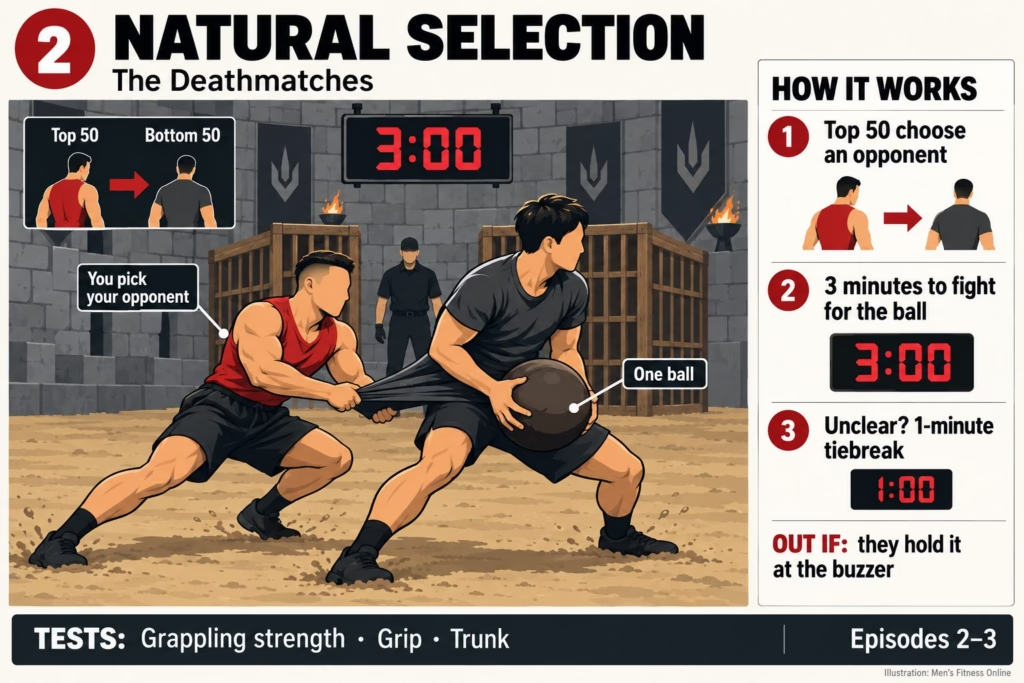
The first elimination round took two episodes. Using the Pyramid rankings, the top 50 each picked an opponent from the bottom 50, so the athletes chose who they wanted to fight.
Each duel lasted three minutes, with one ball between two people. Whoever had control of the ball when time ran out went through. If it wasn’t clear, they went to a one-minute tiebreak. The loser went home. It’s the closest the show gets to a fight, and it looks far more like wrestling than lifting.
Who won and who went out
- 100 athletes went in and 50 came out
- Lucha libre star Místico lost his duel to Olympic wrestler Brandon Díaz, who pulled his mask off in the struggle
- El Matador was also knocked out here (see the cast guide for everyone who went out)
What it tests: Grappling strength, grip, a strong trunk and the ability to go flat out for three minutes. Wrestlers, judoka and other combat athletes have a huge advantage here.
How to train for it:
- If you can, do a few wrestling, judo or Brazilian jiu-jitsu classes. Nothing else teaches you how to hold on to something someone else is trying to take.
- Train your hands: dead hangs, farmer’s carries and towel hangs. Our grip strength guide has a simple test and age norms.
- Bear-hug carries with a sandbag are the closest gym version of clutching a ball against a determined opponent.
- Condition for the time: work in 3-minute rounds (for example sandbag carries, burpees and rowing) with 1 minute rest.
3. The Monolith (the 1,900 kg team lift)
How it works
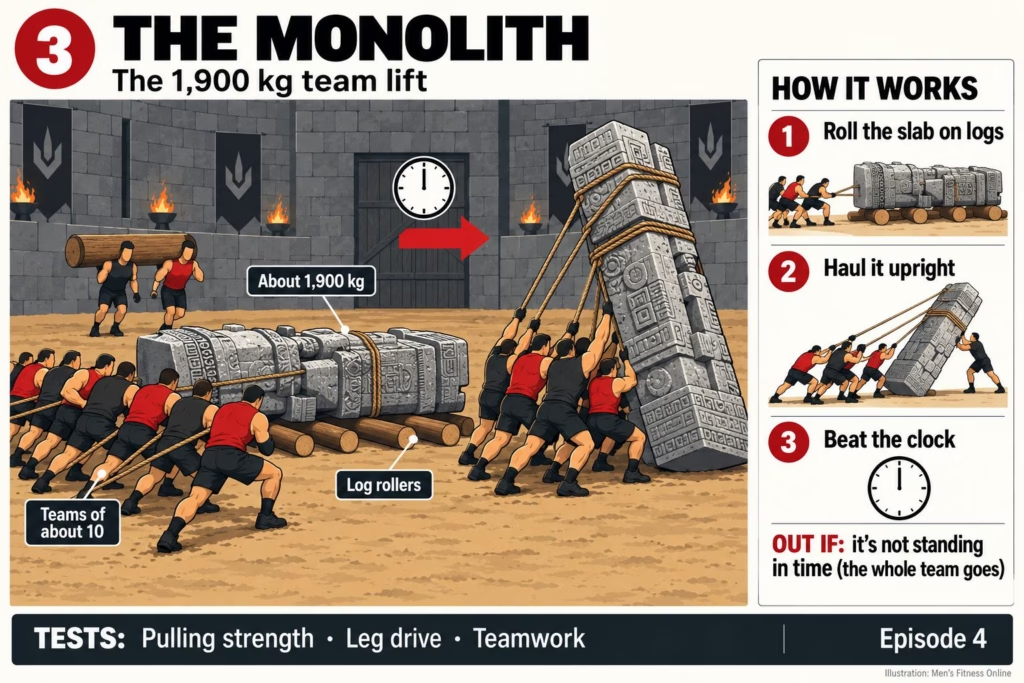
With the individual rounds over, captains picked their teams, and each team faced the same job: move a stone monolith of roughly 1,900 kg and stand it upright before time ran out.
There was no machinery. Teams of about ten dragged the slab over log rollers, then hauled it up on end. Every team that failed was eliminated as a whole. This is where Quintero went out the first time: his team didn’t get its monolith up.
What it tests: Pulling and pushing strength, leg drive and, above all, coordination. Ten strong people pulling at different moments are weaker than ten average people pulling together.
How to train for it:
- Sled pushes and sled drags build exactly this kind of strength. They’re also two of the HYROX stations.
- Learn to hinge properly with deadlifts or kettlebell deadlifts. Most people who hurt their backs moving heavy objects are rounding them.
- Rope pulls: hand-over-hand sled pulls or a heavy sled on a rope, then a tyre flip if your gym has one.
- If you train in a group, practise team lifts on a count. The Monolith is as much about timing as about strength.
4. The Sacrifice (the weighted pulley hold)
How it works
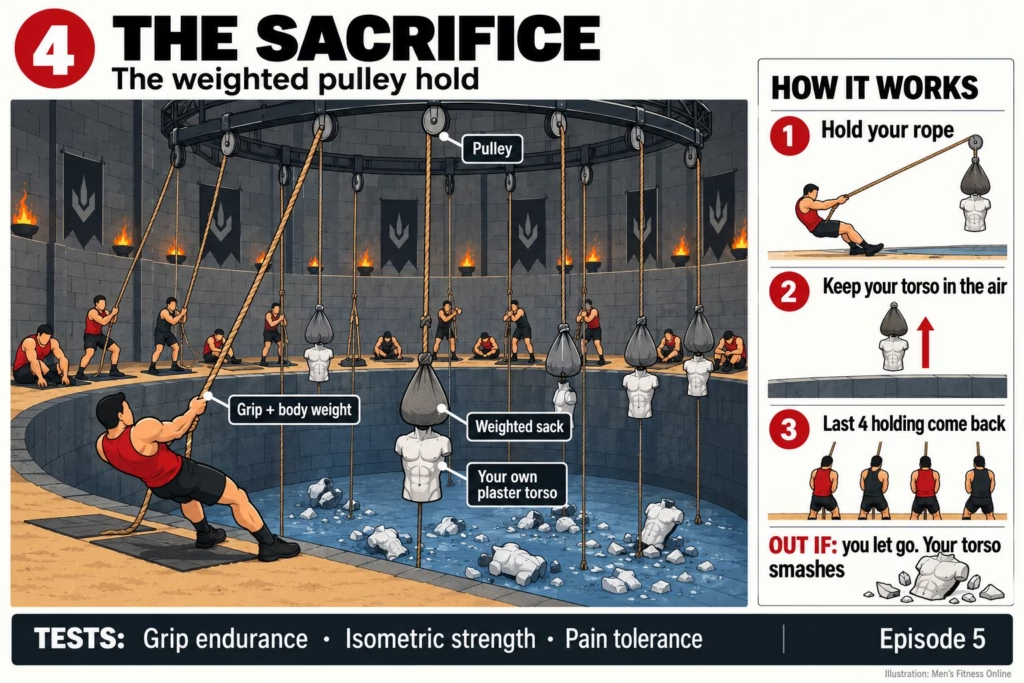
Episode 5 gave some of the eliminated athletes one way back, and it used the most personal object in the show: the plaster cast of their own torso, made at the very start of the competition.
The torsos were hung high above a circular pit, each with a heavy weighted sack tied on above it. From each one, a rope ran up over a pulley on a ring overhead and down to its athlete, standing at the edge of the pit. The job was to hold that rope and keep your torso in the air, using nothing but grip and your own body weight as a counterweight. Let go, or get dragged off your feet, and the weight and torso dropped into the pit and the plaster smashed. You were out.
There was no clock to beat: it was simply a question of who could hold on longest, while the pit filled up with broken plaster. “My hands are starting to bleed a bit,” one athlete says. Only the last four still holding were saved, and they came back into the game as their own team.
Who won and who went out
- Saved: four athletes, including Ángel Quintero, whose team had gone out in the Monolith and who went on to win the whole show, and the Legendary Bricklayer, Freddy Bautista
- Out: everyone whose torso was smashed
What it tests: Grip endurance, full-body isometric strength and a lot of pain tolerance. Body weight matters here too: a heavier athlete has more counterweight to lean against the load, but it’s grip that decides when it ends.
How to train for it:
- Dead hangs: build up to several sets of 30–60 seconds.
- Heavy holds for time: hold a heavy dumbbell or trap bar at your sides until your grip goes. Then try it with a towel looped through the handle.
- Rope work: hand-over-hand sled pulls, then hold the rope with the sled stopped and lean back against it. That’s the closest gym version of this challenge.
- Keep the shoulders set (pulled down and back) during long holds. Hanging passively on your joints for minutes is how people get hurt.
- Measure your grip against age norms with our grip strength guide.
5. The Calendar
How it works
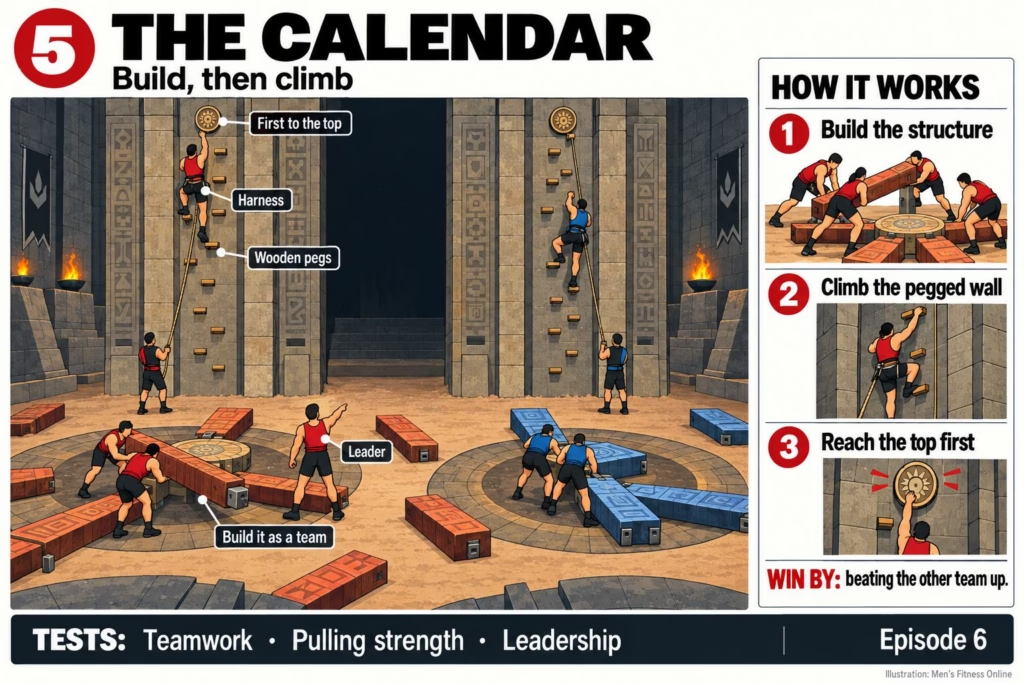
With the four saved athletes back as their own team, episode 6 turned the show into something closer to Survivor. The Calendar was a team race in two parts, on a set that leans hard into Mayan temple architecture.
First, each team had to build a heavy structure. That took muscle, but it also took a plan, clear communication and someone willing to lead, because a team pulling in different directions loses time it can’t get back. Then came the climb: team members, clipped into safety harnesses, went up a stone wall on a ladder of small wooden pegs to reach an object at the top. Two teams raced each other, and the first team there won.
Who won and who went out
- Teams raced head to head, two at a time
- By the end of the episode, 12 athletes were left for the Ancestral Punishments
What it tests: Teamwork and leadership under time pressure, strength for lifting and placing heavy pieces, and relative strength for the climb: pulling and stepping your own body weight up a wall on small holds.
How to train for it:
- Pull-ups, chin-ups and hanging knee raises. On a pegged wall, your arms and trunk carry you between steps.
- Step-ups onto a high box, one leg at a time, to build the single-leg drive for big steps between pegs.
- Try a few sessions at a climbing or bouldering gym. It teaches you to trust small footholds and keep your weight over your feet.
- For the build: team carries with heavy objects (a log, a sandbag or a heavy bar shared between two people), done on a count. As with the Monolith, the team that moves together moves fastest.
The Ancestral Punishments: 12 athletes, four trials, four survivors
Over episodes 7 and 8, the last 12 athletes were split into four groups of three. Each group faced a different trial, and only the winner of each went through to the semi-final. That meant eight people went out in two episodes, and there were no teams left to hide in.
6. Paso al abismo (the suspended bridge)
How it works
The first stage: build a hanging bridge five metres above the ground and cross it to the far end without falling.
The two athletes left then started from opposite ends of the same bridge and raced for an object hanging in the middle, using only three rungs to get there. Whoever reached it first went through.
Who won and who went out
- Won by: Aldo Gutiérrez
- Out: diver Jahir Ocampo and the Legendary Bricklayer, Freddy Bautista
What it tests: Grip, upper-body pulling strength, balance, and the nerve to work carefully at height when you’re tired.
How to train for it:
- Pull-ups and rope climbs (or towel pull-ups) for pulling strength that doesn’t depend on a perfect bar.
- Hanging traverses: move hand over hand along a bar or the monkey bars. It’s the closest gym version of swinging between rungs.
- Balance work on a low beam or a line on the floor, then on a bench, with a weight held out in front.
- Train for height only under supervision, in a climbing or ninja gym with proper mats. Don’t improvise it.
7. La piedra del sol (the 100 kg stone ball)
How it works
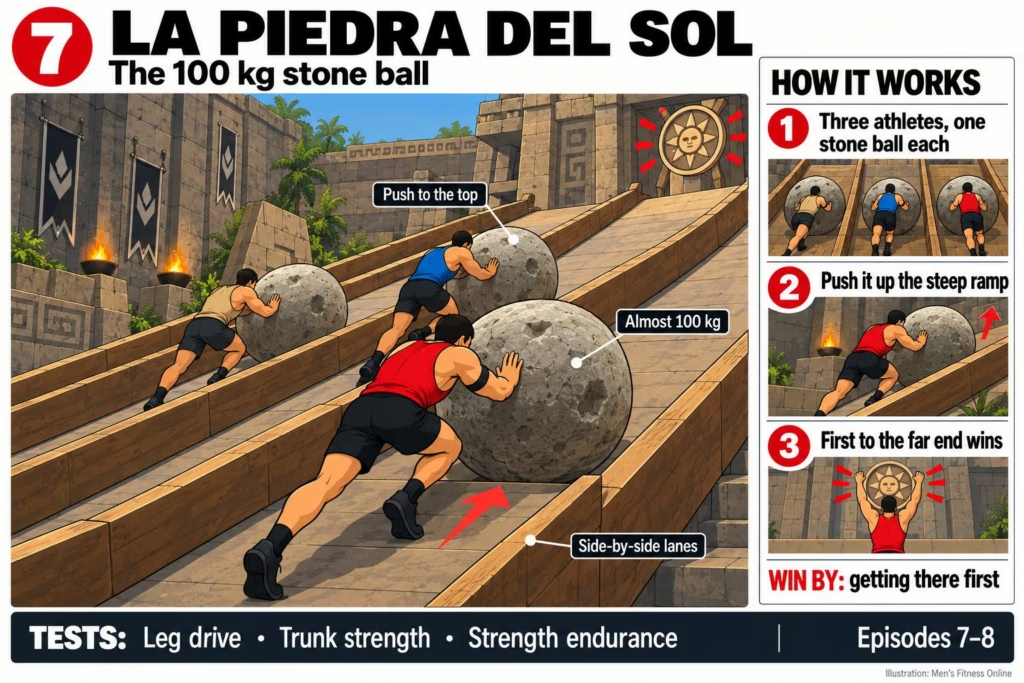
Each athlete had to push a huge round stone ball, weighing almost 100 kilos, from one end of the hill to the other: up a steep ramp, in lanes side by side with their rivals. A ball that heavy wants to roll back the moment you ease off, so there’s no resting on the way up. Your legs and trunk do the work, and your arms just transfer the force.
Who won and who went out
- Won by: army captain Jesús Cárcamo, who went on to reach the final
- Out: George Herrera and Pascal Nadaud
What it tests: Leg drive, trunk strength and strength endurance. It’s the same pushing pattern as the Monolith, done alone.
How to train for it:
- Heavy sled pushes (low handles, long arms, drive through the balls of the feet). The sled push is a HYROX station for a reason.
- Hill sprints or hill walks with a weighted vest.
- Front squats and walking lunges for the legs, and planks and bear crawls for the trunk.
- Stone or sandbag work: load a heavy sandbag to your shoulder and carry it, keeping your back flat on the pick-up.
8. El Camino Sagrado (the tag chase)
How it works
Three athletes ran continuously around a circuit, spaced out along it. Each one tried to catch and tag the runner in front while trying not to be tagged by the runner behind. Get caught and you were out.
That makes it a racing game rather than a straight race. Go too hard early and you have nothing left when someone closes on you. Go too easy and you get tagged.
Who won and who went out
- Won by: Ángel Quintero, which put him in the final four
- Out: Jazmín Lira and Dominick Ficachi
What it tests: Running fitness, repeated surges and pacing under pressure: the ability to change speed on demand and still recover.
How to train for it:
- Fartlek runs: 20–30 minutes of easy running with 20–40 second surges at random, when a lamppost or a song tells you to.
- 30-15 intervals: 30 seconds fast, 15 seconds easy, for 8–12 minutes.
- If you train with a mate, do chase runs: start a few metres apart on a track or oval, and see how long it takes to catch them. Swap and repeat.
- Our HYROX training guide shows how to build running into mixed sessions.
9. Puerta al inframundo (the tilting bar over water)
How it works
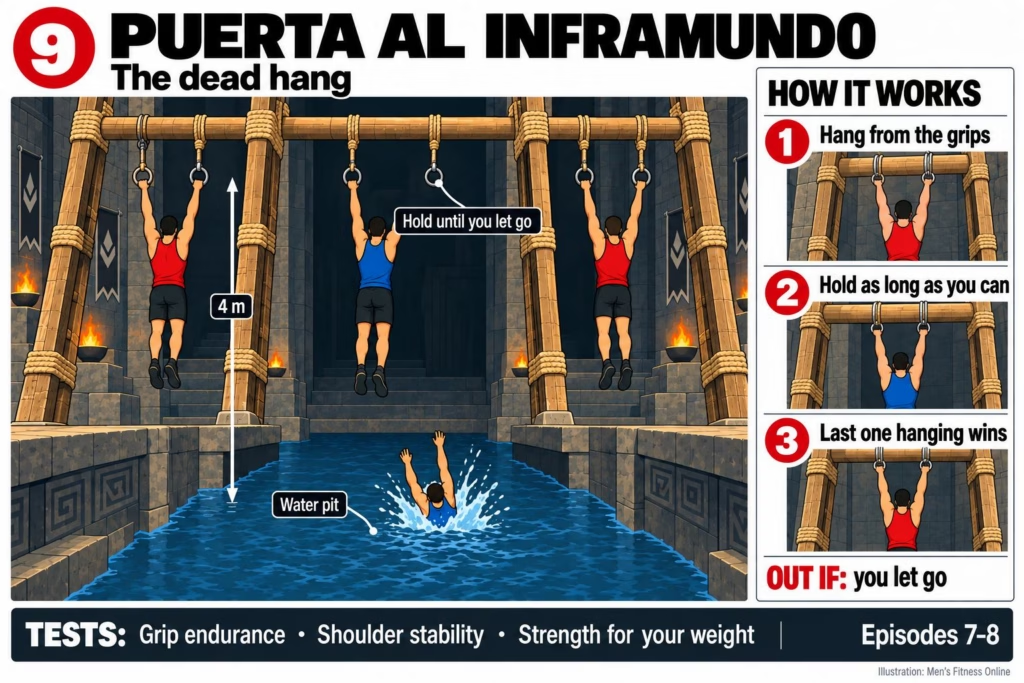
The three athletes hung from a bar four metres above a pool of water. The bar slowly tilted, making it harder to hold on the longer it went. The last one still hanging went through.
Who won and who went out
- Won by: Mariana Khalil, the only woman in the final four
- Out: Emmanuel Benítez and Iván Guerra
What it tests: Grip endurance above all, plus shoulder stability and body weight relative to strength. Lighter, strong athletes have a real edge in any hang.
How to train for it:
- Dead hangs for time. A good first target is 60 seconds; then build to repeated sets. Our dead hang guide has benchmarks and a six-week plan.
- Awkward hangs: towel hangs, thick-bar hangs, and hanging from one hand with the other just touching the bar.
- Active hangs: pull the shoulders down away from the ears and hold. That’s the position that protects the joint during long hangs.
- Test your grip against age norms with our grip strength guide.
10. El Acueducto (the semi-final)
How it works
The final four had to send a 5 kg ball down an aqueduct channel, run to catch it before it fell off the other end, and repeat the trip over and over for 20 minutes. Every lap counted.
After the first 20 minutes the lowest score went out. The three left did it all again, and the top two went to the final.
Who won and who went out
- Stage 1: Quintero 149 laps, Cárcamo and Gutiérrez 143, Mariana Khalil out on 117
- Stage 2: Quintero 79, Cárcamo 77, Aldo Gutiérrez out
What it tests: Repeat sprint ability and pacing. Stage one works out to roughly one lap every eight seconds, for 20 minutes, before doing it again in stage two.
How to train for it:
- Shuttle runs: 10–20 metre shuttles, 20 seconds on and 10 seconds off, building towards 10–15 minutes of work.
- Medicine ball work, such as throws and slams, followed immediately by a short sprint.
- Keep building the aerobic base. It’s what lets you recover between sprints.
11. El peso de la grandeza (the final)
How it works
The two finalists raced to carry sacks of 20, 30 and 50 kg onto a scale. Each load moved the opponent’s plaster torso closer to falling. First torso down lost.
It’s a carrying race with a strategy problem built in: do you move lots of light sacks quickly, or fewer heavy ones and risk blowing up?
Who won and who went out
- Won by: Ángel Quintero, who took the 3 million pesos
- Runner-up: Jesús Cárcamo, whose torso fell first
What it tests: Loaded carries, speed under load, picking heavy things off the floor safely when you’re exhausted, and strategy.
How to train for it:
- Sandbag and farmer’s carries, over 20–40 metres, several times a week. See our sandbag workout and kettlebell training.
- Practise picking up awkward objects from the floor with a flat back. That’s the part that breaks people in a long carry race.
- Try a carry medley: a mix of light and heavy carries for time, and see which strategy gets you there faster.
Italy’s challenges
Physical 100: Italy follows the same idea with different sets. The opening test was a plank on a suspended grid above a pool, dodging laser beams, and CrossFit athlete Elisa Fuliano lasted more than an hour and 27 minutes. Italy also used one-on-one ball-possession duels, a team challenge that involved building bridges and moving sand for 12 minutes, a redemption round built around water-filled pillars, a chariot race and a long hang above the pool before the final. It’s the same mix: endurance, grip, carrying and teamwork. Here’s every Physical 100: Italy challenge explained, with how to train for each one.
A sample Physical 100 training week
Across all 11 challenges, the same few qualities keep deciding who goes through. Here’s how to train them together for a few months:
- Day 1 – Strength and pulling: deadlifts or kettlebell deadlifts, pull-ups, split squats, then dead hangs.
- Day 2 – Engine: 30–45 minutes easy on the stair climber, bike or road.
- Day 3 – Carries and pushing: sandbag, farmer’s and bear-hug carries, then heavy sled pushes.
- Day 4 – Intervals: stair-climber intervals, 30-15 runs or shuttle runs.
- Day 5 – Mixed circuit and grip: 3-minute rounds mixing carries, bodyweight moves and short runs, then towel or thick-bar hangs.
- Days 6 and 7: rest, walking or an easy session.
Physical 100 challenges FAQ
How many challenges were in Physical 100: Mexico?
Eleven over nine episodes: the Infinite Pyramid, the Deathmatches, the Monolith, the Sacrifice, the Calendar, the four Ancestral Punishments (Paso al abismo, La piedra del sol, El Camino Sagrado and Puerta al inframundo), the Acueducto semi-final and the final, El peso de la grandeza.
What was the first challenge in Physical 100: Mexico?
The Infinite Pyramid: 100 athletes on stair-climbing machines, keeping to a set pace over three rounds of 10, 7 and 5 minutes. Personal trainer Omar Zamitiz won it.
What is the Monolith in Physical 100?
A team challenge in which teams had to drag a stone monolith of roughly 1,900 kg on log rollers and stand it upright before time ran out. Teams that failed were eliminated.
What was the Sacrifice in Physical 100: Mexico?
A comeback round for eliminated athletes. Each held a rope that ran over a pulley to the plaster cast of their own torso, weighted and hung above a pit, using grip and body weight. Let go and the torso dropped and smashed. The last four holding on were saved, including eventual winner Ángel Quintero.
What were the Ancestral Punishments?
Four trials that cut the last 12 athletes to four: a suspended bridge five metres up, a 100 kg stone ball pushed up a ramp, a three-person tag chase around a circuit, and a hang from a tilting bar four metres above water. Only the winner of each went through.
What was the Physical 100: Mexico final?
El peso de la grandeza: a race to carry 20, 30 and 50 kg sacks onto a scale, which moved the opponent’s plaster torso until one fell. Ángel Quintero beat Jesús Cárcamo.
What kind of athlete wins Physical 100?
So far, not the biggest. Mexico was won by an obstacle racer, and according to The National, CrossFit athletes won both Korean seasons. The format rewards endurance, grip, carrying and pacing over maximum strength.
How do I train for Physical 100?
Build an aerobic base, train grip and loaded carries, add interval work, and learn to move heavy, awkward objects safely. The sample week above is a good start.