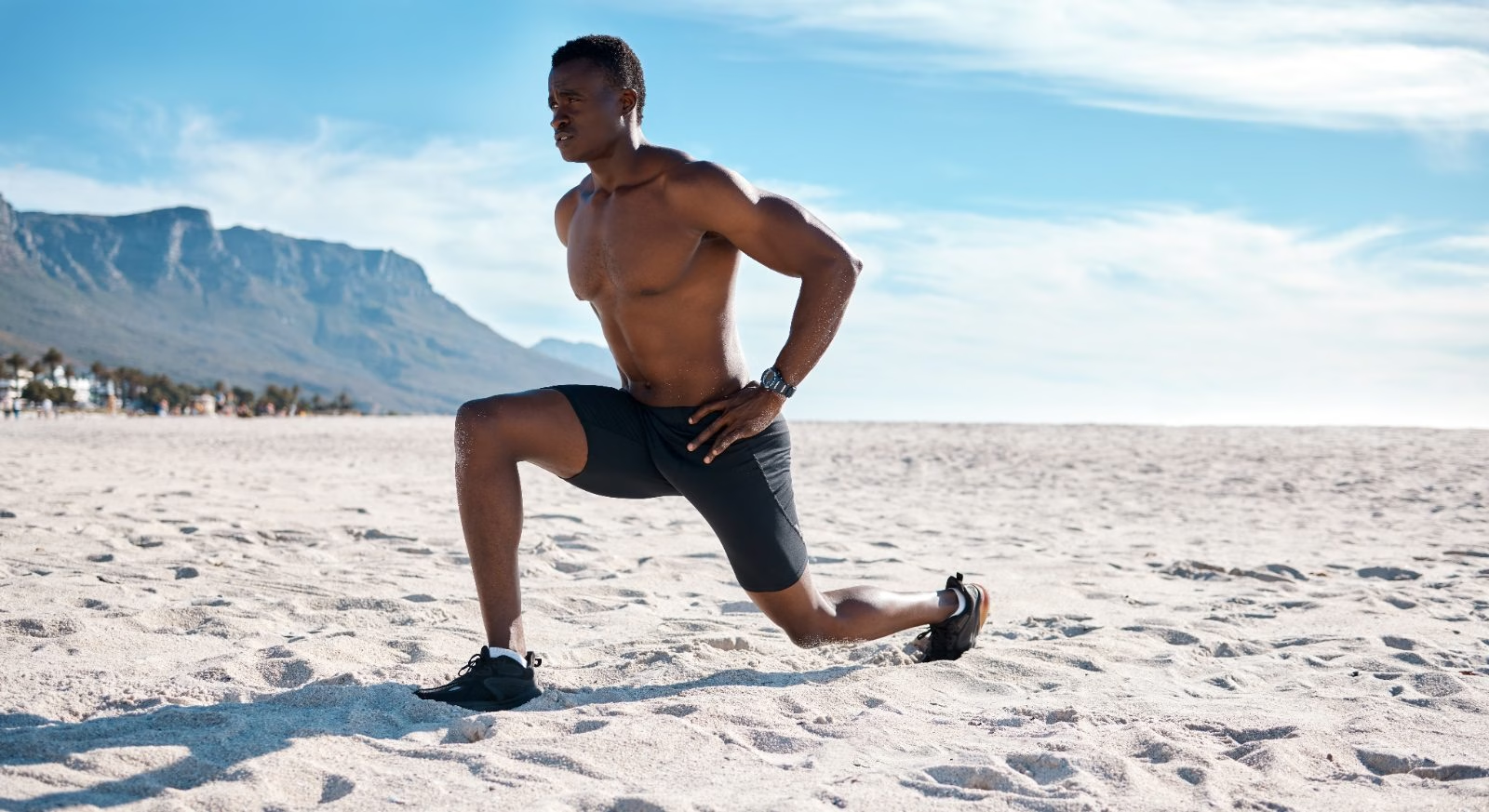

The lunge is the simplest way to train one leg at a time: step, drop, stand. It builds the quads and glutes, shows up any difference between your left and right side, and needs nothing but floor space. Small changes, like how far you step and how upright you stay, shift which muscles work hardest. Here’s how to do a lunge properly, which variation to pick and how to put them into a workout.
- The move: step forward, lower until both knees are bent to about 90 degrees, back knee just off the floor, then push back up
- Works: quads and glutes most, plus hamstrings, calves, inner thighs and the small hip muscles that keep your knee in line
- Start with: the reverse lunge: stepping back is easier to control and gentler on the front knee
- Beginners: 3 sets of 8–10 each leg, two or three times a week
- More glutes: take a longer step and lean your torso slightly forward
- Knee pain?: shorten the range, step back instead of forward, and keep your front knee in line with your toes
How to do a lunge
- Stand tall with your feet hip-width apart, hands on your hips or holding dumbbells at your sides.
- Step forward with one leg, about two to three feet. Keep your feet hip-width apart side to side, as if on train tracks, not a tightrope.
- Lower straight down until your front thigh is about parallel to the floor and your back knee hovers just above it. Your front knee stays over your foot, in line with your toes.
- Push back through your front foot to return to standing, then switch legs or finish the set on one side.
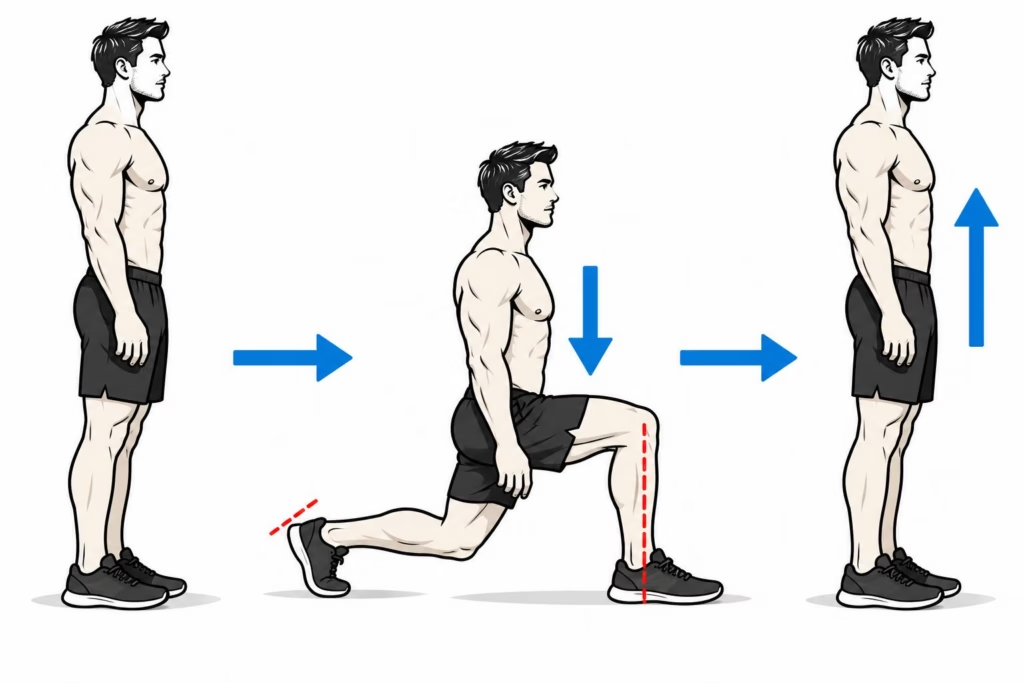
Keep your chest up and your trunk braced. Most of your weight should stay on the front foot; the back leg is mainly there for balance. Your front knee can travel a little past your toes: that’s normal, and trying to stop it completely usually makes you lean back and step too long.
Common lunge mistakes
- Feet on a tightrope. Stepping directly in front of your back foot makes you wobble. Keep them hip-width apart.
- Front knee caving in. Your knee should track over your second or third toe. If it drifts inwards, go lighter and slow down.
- Pushing off the back foot. It turns the move into a hop. Drive up through the heel and middle of your front foot.
- Slamming the back knee. Lower under control and stop just short of the floor. A folded mat under the knee helps while you learn.
- Steps too short. A tiny step piles stress on the front knee and leaves your glutes out of it.
What muscles do lunges work?
Mainly the quadriceps and gluteus maximus of your front leg, with help from the hamstrings, calves and inner thighs. The gluteus medius, on the side of your hip, works throughout to stop your knee and pelvis collapsing inwards, which is why lunges feel so different from squats.
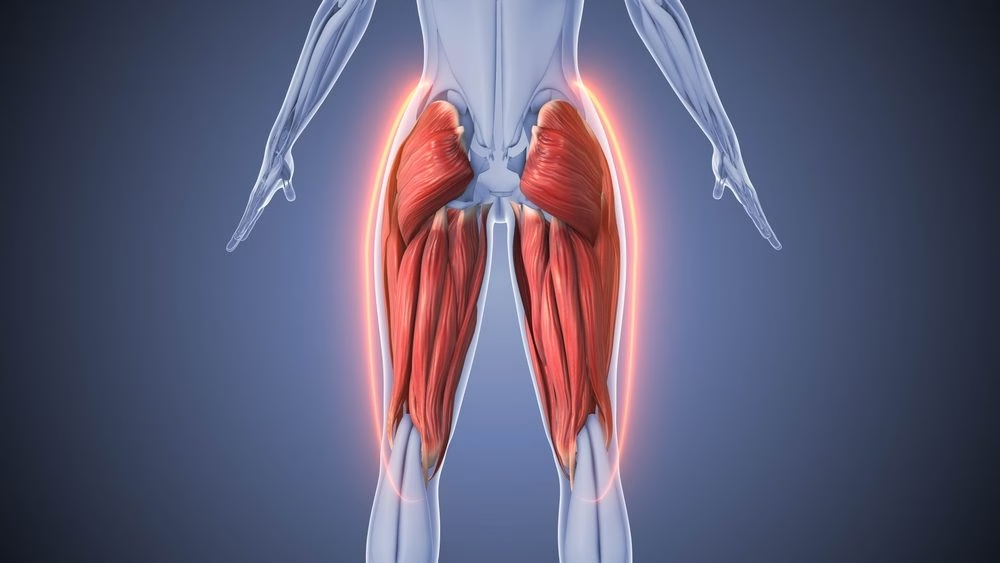
How you lunge changes the mix. In a 2025 study of 20 adults lunging with a weight they could lift 12 times, a long step produced more activity than a short one in the quads, hamstrings, calves, inner thighs and glutes, and stepping out and back worked the glutes harder than lunging up and down on the spot (Escamilla and colleagues, 2025).
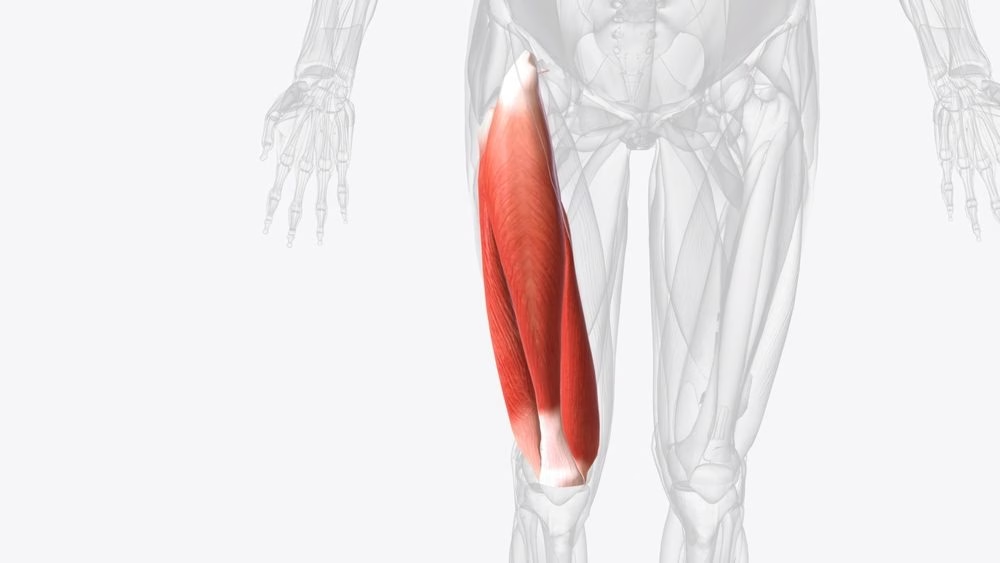
Leaning your torso slightly forward also brings in more glute and hamstring: in a study of 10 adults, a forward-leaning lunge raised activity in both compared with an upright one, while leaning back made no difference (Farrokhi and colleagues, 2008).
So for more glutes: a longer step, a slight forward lean from the hips, and step out and back each rep. For more quads: a shorter step and an upright torso.
The best lunge variations
Reverse lunge
Step backwards instead of forwards. Your front shin stays more vertical and you don’t have to brake a forward step, so most people find it easier to balance and kinder to the knees. Start here.
Forward lunge
The classic. Stepping forward and pushing back makes your front leg absorb and then reverse your momentum, which is harder on the quads and knee. Good once the reverse lunge is solid.
Walking lunge
Instead of stepping back, bring your back foot through into the next lunge and keep travelling. It adds a balance and conditioning challenge; with dumbbells it’s a staple finisher.
Weighted lunge
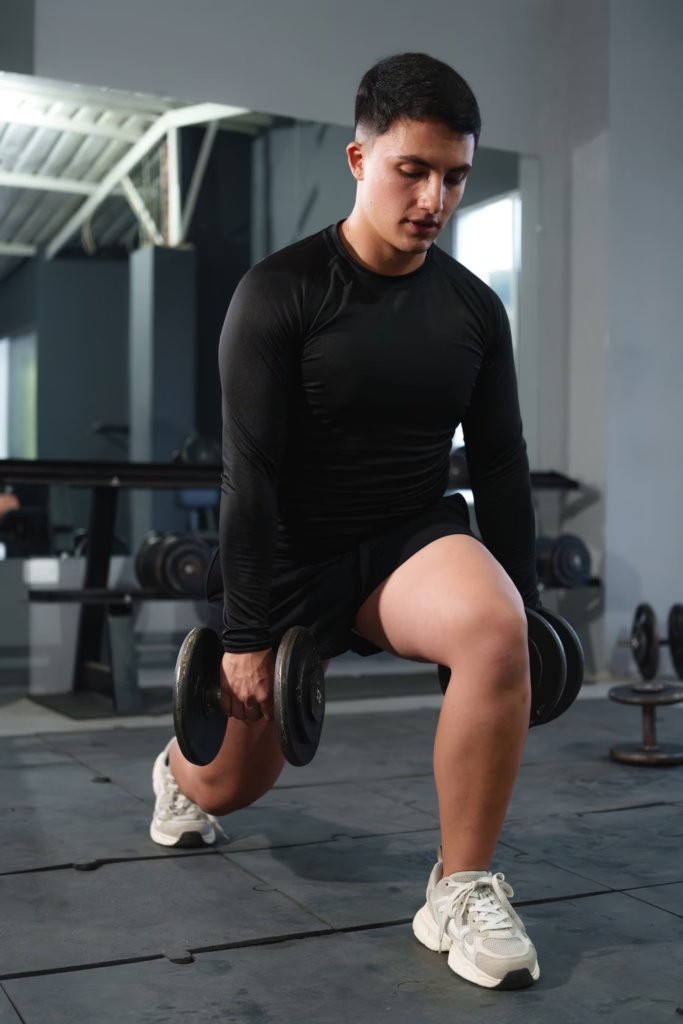
Once three sets of 10 bodyweight reverse lunges feel easy, add load. Dumbbells held at your sides are the simplest option: the weight hangs low, your balance barely changes and you can drop them if you wobble. Your grip will usually give out before your legs do, so use lifting straps or switch to a goblet hold, one dumbbell or kettlebell held against your chest, which also helps you stay upright.
A barbell across your upper back lets you go heaviest, but it’s the hardest to balance and the hardest to get out from under. Do it in a squat rack, stick to reverse lunges or split squats, and keep the weight light until the step is automatic.
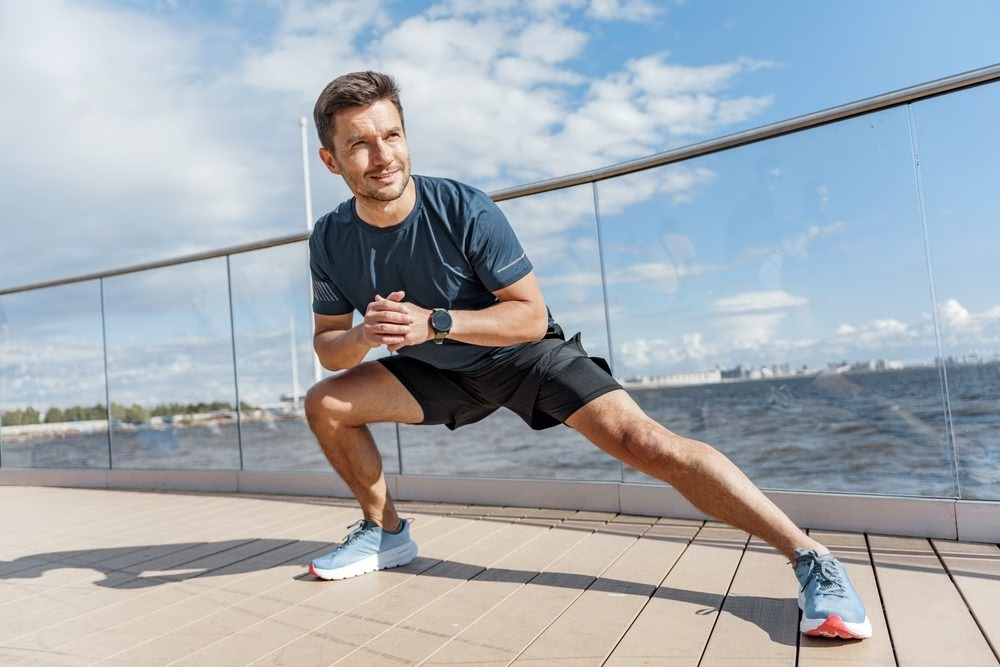
Lateral lunge
Step out to the side, sit back into that hip with the other leg straight, and push back. It works the inner thighs and glutes through a sideways movement most programs ignore.
Curtsy lunge
Step one leg diagonally behind the other, as if curtsying. It loads the side of the hip of the front leg. Keep the range small at first.
Split squat
A lunge without the step: feet stay planted in a staggered stance and you go straight up and down. It’s the easiest to load heavily. Put your back foot on a bench and you have the Bulgarian split squat.
| Variation | Best for | Difficulty |
|---|---|---|
| Split squat | Learning the position, heavy loading | Easiest |
| Reverse lunge | Most people, sore knees | Easy |
| Lateral lunge | Inner thighs, side-to-side strength | Moderate |
| Forward lunge | Quads, braking strength | Moderate |
| Walking lunge | Conditioning, balance | Harder |
| Bulgarian split squat | Maximum single-leg load | Hardest |
Sets and reps for beginners
Start with 3 sets of 8–10 reverse lunges on each leg, bodyweight only, two or three times a week with a day between. When all three sets feel controlled, hold a pair of dumbbells. That matches the American College of Sports Medicine’s advice of 2–3 days a week for novices (ACSM, 2009), and Australia’s guidelines ask adults to do muscle-strengthening work on at least two days a week (Department of Health).
A 20-minute lunge workout
Do the exercises in order with about 60 seconds’ rest between sets. You need a pair of dumbbells or a kettlebell and some floor space.
| Exercise | Sets and reps |
|---|---|
| 1. Reverse lunge | 3 x 10 each leg |
| 2. Goblet sumo squat | 3 x 10 |
| 3. Lateral lunge | 2 x 8 each side |
| 4. Walking lunge | 2 x 20 steps |
| 5. Side plank | 2 x 30 sec each side |
For the squat, see our sumo squat guide. For the hip-hinge half of a lower-body session, add swings from our kettlebell workout. For power, start the session with a few sets of box jumps while you’re fresh, and for your back and core with the same dumbbells, add the renegade row.
Lunges FAQ
Are lunges better than squats?
Neither is better; they do different jobs. Squats let you lift more weight with both legs. Lunges train each leg on its own and challenge your balance and hip stability. Most good programs include both: a squat such as the front squat for strength, and lunges for each leg.
Do lunges work the glutes?
Yes, especially with a long step, a slight forward lean and stepping out and back each rep, all of which raised glute activity in the studies above.
Why do lunges hurt my knees?
Usually a short step, a knee caving inwards or dropping too fast. Switch to reverse lunges, lengthen your step and slow down. If it still hurts, stop and see a physio or GP.
How many lunges should I do?
Three sets of 8–12 on each leg, two or three times a week, is plenty for most men. Once that’s easy, add weight rather than reps.
Sources: Escamilla and colleagues (2025), Journal of Functional Morphology and Kinesiology; Farrokhi and colleagues (2008), Journal of Orthopaedic & Sports Physical Therapy; American College of Sports Medicine position stand (2009), Medicine & Science in Sports & Exercise; Australia’s physical activity and exercise guidelines for adults. Checked 29 October 2026.