
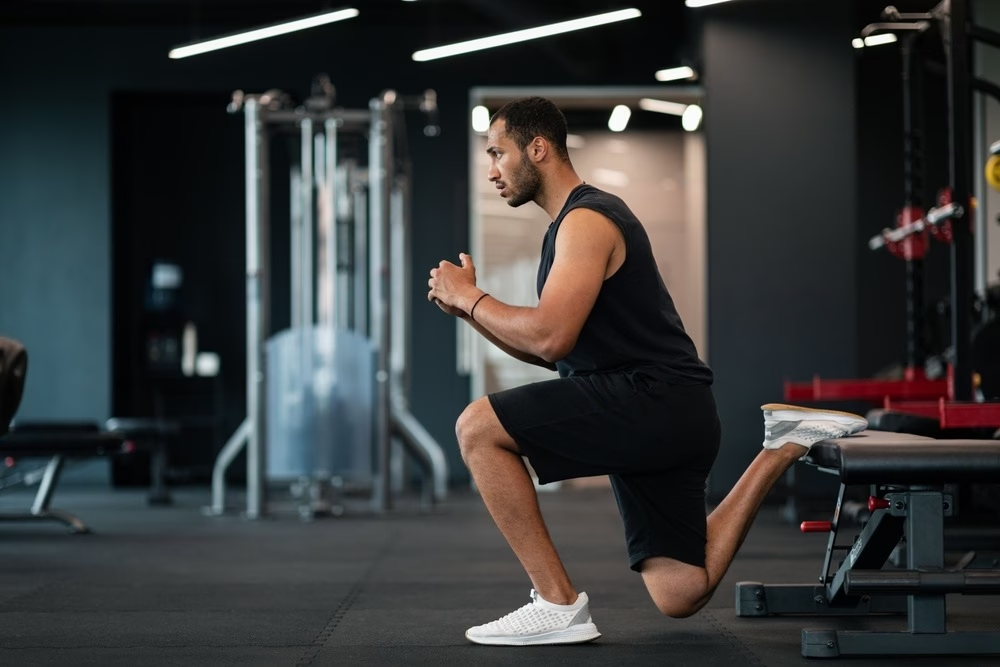
Some exercises let you cheat. Bulgarian split squats are not one of them. One leg does all the work, there’s no bigger side compensating for the weaker one, and if your balance or strength gives out, you’ll know about it immediately. That’s exactly why it’s one of the most effective leg exercises you’re probably not doing.
What is a Bulgarian Split Squat?
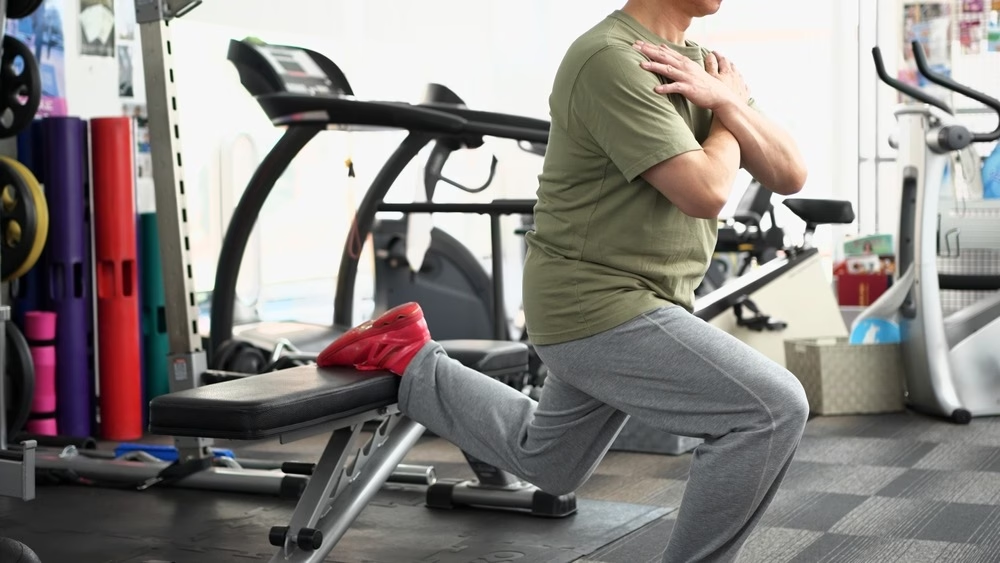
A Bulgarian split squat is a single-leg squat with your rear foot elevated behind you on a bench, box, or step. Your front leg does almost all the work while your back leg is there mostly for balance. It looks like a lunge, but the elevated back foot changes the mechanics completely, forcing your front leg through a deeper range of motion under more load than a standard lunge ever will.
Muscles Worked
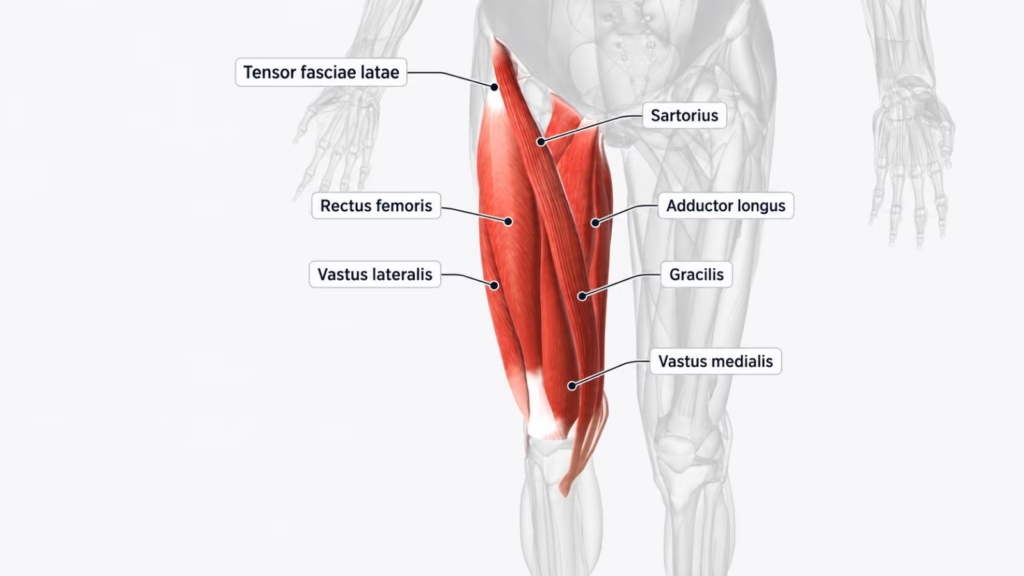
The Bulgarian split squat is primarily a quad-dominant movement, but it doesn’t stop there. It also loads the glutes heavily, particularly if you lean your torso slightly forward, and recruits the hamstrings and calves as stabilisers throughout the movement. Because you’re balancing on one leg, your core and hip stabilisers are working the entire time too — this isn’t just a leg exercise, it’s a single-leg control exercise that happens to build serious leg strength.
How to do a Bulgarian Split Squat
- Stand about two feet in front of a bench, facing away from it.
- Place the top of one foot on the bench behind you, laces down.
- Keep your torso upright (or lean slightly forward for more glute involvement) and lower your back knee toward the floor by bending your front leg.
- Go as low as your mobility allows — ideally until your front thigh is close to parallel with the floor.
- Drive through your front foot to return to the starting position.
- Complete all reps on one side before switching legs.
Hold dumbbells at your sides, or a barbell across your back, once bodyweight stops being challenging.
Common Mistakes
- Placing the front foot too close to the bench. This pitches your torso too far forward and turns the movement into an awkward lean instead of a controlled squat. Give yourself more distance than feels natural at first.
- Not going deep enough. A shallow Bulgarian split squat is a different, much easier exercise. Depth is where the benefit lives.
- Letting the front knee cave inward. Keep it tracking in line with your toes, especially as the weight goes up.
- Rushing the rep. This is not a movement to bounce through. Control the descent — that’s where most of the muscle-building work happens.

Bulgarian Split Squat Variations
- Dumbbell Bulgarian split squat — the standard progression once bodyweight is no longer enough. Hold dumbbells at your sides.
- Barbell Bulgarian split squat — allows for heavier loading once your balance is solid, but takes more setup and confidence under load.
- Front-foot-elevated Bulgarian split squat — elevating the front foot slightly increases the range of motion further, for lifters chasing extra depth and quad stretch.
- Bodyweight Bulgarian split squat — the right starting point for anyone new to the movement. Master the balance and range of motion before adding load.
Why it’s worth doing
Most leg training defaults to bilateral movements — squats, leg press, leg extensions — where your stronger leg can quietly pick up the slack for the weaker one. Bulgarian split squats remove that option entirely. Each leg has to earn its own strength, which matters more than it sounds: strength imbalances between legs are a common, often invisible, contributor to nagging knee and hip issues. It also carries directly into how the rest of your training holds up — leg training doesn’t come at the cost of your upper body, despite what the gym-floor mythology says.
The trade-off is that it’s genuinely difficult, both physically and technically, in a way a back squat isn’t. Balance takes time to build. Don’t be surprised if your working weight starts embarrassingly light — that’s the exercise doing its job, not a sign you’re bad at it.
Where it Fits in Your Training
Bulgarian split squats work well as either your primary leg movement for the day or as a heavy accessory after your main squat or deadlift work. Pair leg day with a solid core routine for stability that carries over into the movement, and don’t neglect the rest of a well-rounded upper-body split to go with it. Two to three sets of 8–12 reps per leg is a reasonable starting point — you’ll know soon enough if that’s too many.