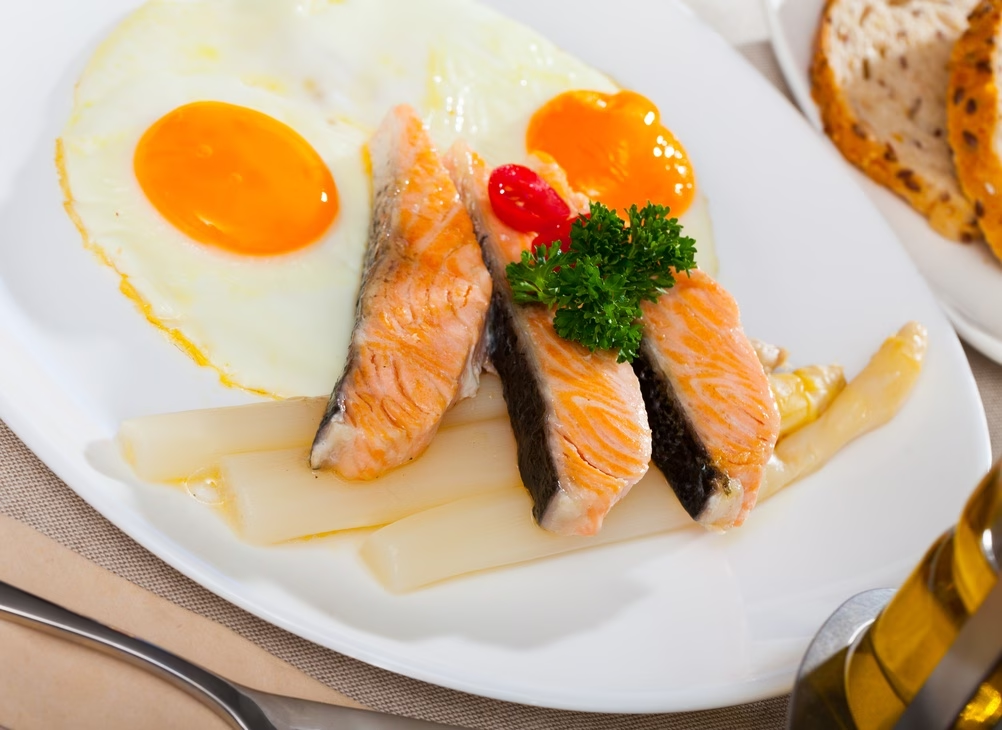

A genuinely high-protein breakfast means 25–40g of protein in one sitting — not a slice of toast with an egg on it. Eggs, Greek yoghurt and cottage cheese are the easiest bases, and combining two of them (eggs plus cheese, yoghurt plus a scoop of protein powder) is how most of the ideas below hit that number without needing a kitchen scale.
Why Breakfast Protein Actually Matters
Most people back-load their protein into dinner and barely touch it at breakfast — a piece of toast or a bowl of cereal might have 4–6g. That’s not a disaster on its own, but it means the rest of the day has to make up the difference, and mornings are usually when that’s least likely to happen (rushed, distracted, coffee-only).
A high-protein breakfast also tends to be more filling for longer, which matters more than any specific “metabolism boost” claim. Whether breakfast itself is worth eating at all is a separate, genuinely debated question — we’ve broken down the skipping-vs-eating debate for fat loss here. This page assumes you’re eating it, and covers what to put on the plate.
10 High Protein Breakfast Ideas
| Breakfast | Approx. protein | Why it works |
|---|---|---|
| 3 eggs + 2 slices smoked salmon + rye toast | ~35g | No prep beyond frying eggs; salmon adds omega-3s on top |
| Protein smoothie (whey, milk, banana, peanut butter) | ~35–40g | Fastest option — blend and go, good post-training too |
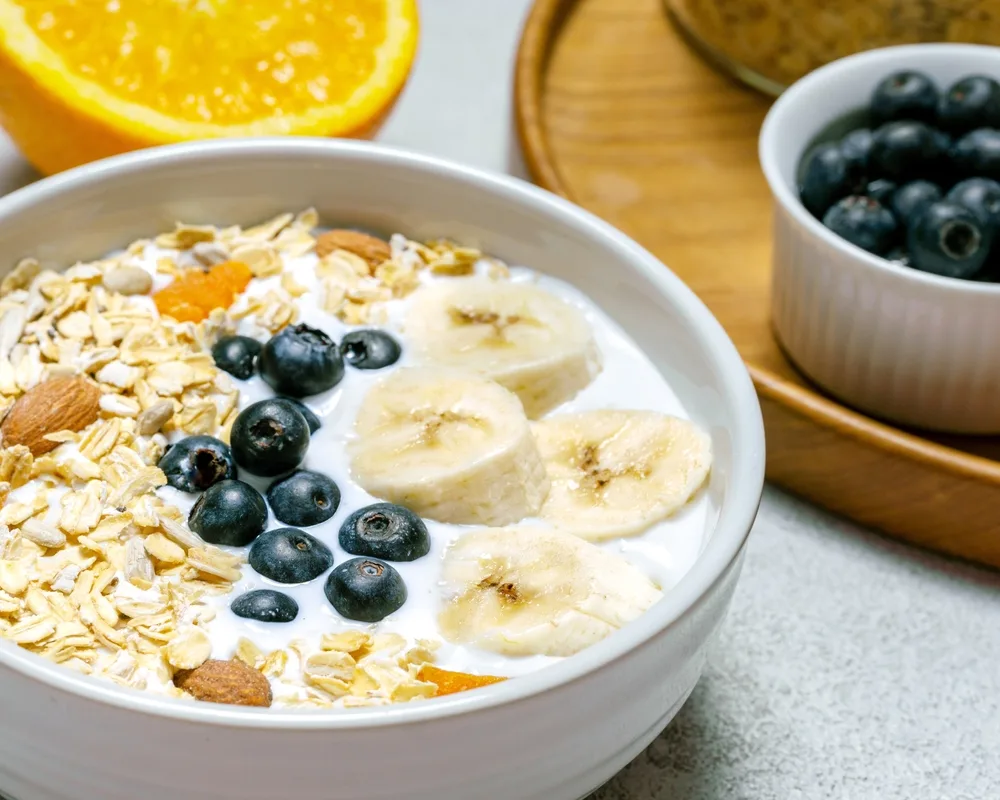
| Greek yoghurt power bowl (200g yoghurt, granola, berries, nuts) | ~28g | No cooking; scales up or down with portion size |
| Protein pancakes (oats, eggs, scoop of whey, blended) | ~30g | Feels like a treat, still hits the number |
| 3-egg veggie omelette with cheese | ~28g | Classic, cheap, uses up whatever vegetables are in the fridge |
| Overnight oats with protein powder and chia seeds | ~28g | Prep the night before, zero morning effort |
| Cottage cheese, fruit and nuts bowl | ~25g | The lowest-effort option on this list — nothing to cook |
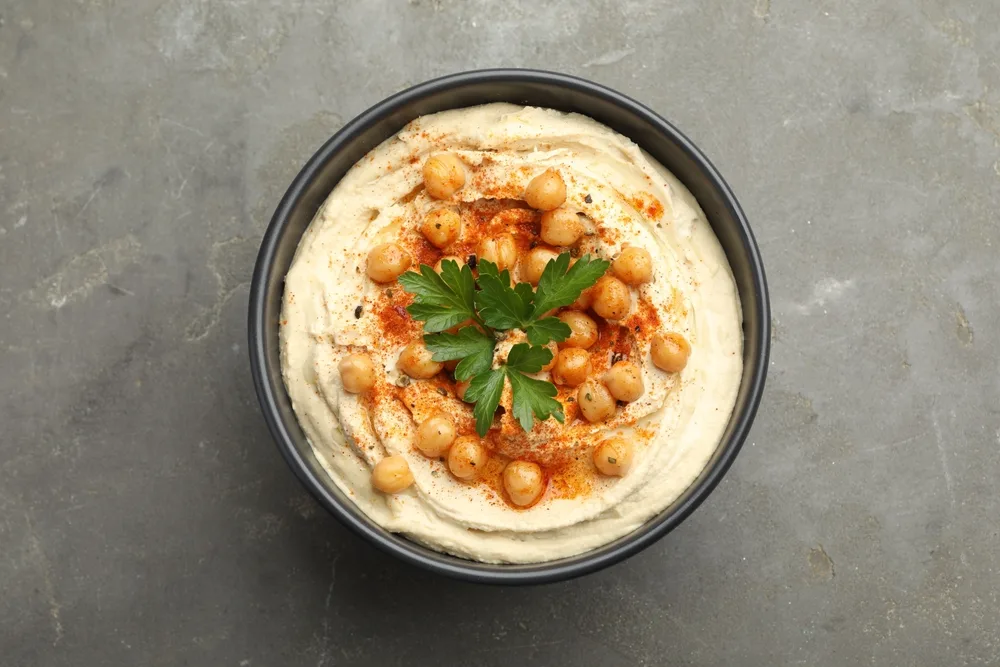
| Shakshuka (baked eggs in tomato and chickpea sauce) | ~24g | Legumes add extra protein on top of the eggs |
| Tofu scramble with nutritional yeast and vegetables | ~20g | The vegan/vegetarian option — pairs well with beans on the side |
| High-protein milk with cereal | ~20g | The least effort of all — swaps one ingredient for the same breakfast |
None of these need a food scale or a meal-prep habit you’ll abandon in three weeks. The common thread is combining a protein source with itself twice — eggs plus cheese, yoghurt plus protein powder, oats plus chia — rather than relying on one ingredient to do all the work.
What If You Don’t Eat Meat?
Eggs, Greek yoghurt, cottage cheese and protein powder cover most vegetarians without any changes to the list above. Fully plant-based is more work — tofu scramble, high-protein plant milks, and stacking legumes (baked beans, chickpeas) alongside whatever else is on the plate. For the bigger picture on why plant-based eaters specifically need to be deliberate about total protein, not just breakfast, see what happened to lean mass in a recent randomized trial when that compensation didn’t happen.
Protein Powder at Breakfast: Worth It?
A scoop of whey blended into oats, pancake batter or a smoothie is the single fastest way to add 20–25g of protein to a breakfast that otherwise wouldn’t get near it. If you’re choosing between whey concentrate and isolate for this, we’ve compared the actual difference and which is worth the extra cost. It’s a supplement, not a requirement — every idea above except the smoothie and pancakes works without it. Not sure how much protein you actually need across the day? Our macro calculator will work out a real target from your weight, activity and goal.
High Protein Breakfast FAQ
How much protein should be in a high-protein breakfast?
Aim for at least 25g if you can. That’s roughly double what a typical breakfast (toast, cereal, a single egg) provides, and it’s the point where most people notice a real difference in how long they stay full. For a full breakdown of daily protein targets and the highest-protein foods generally, see our complete high protein foods guide. Once breakfast is sorted, the same approach carries into lunch and dinner.
Can a high-protein breakfast help with fat loss?
Indirectly — mostly through satiety. A protein-heavy breakfast tends to reduce how much you eat later in the day, which matters more for fat loss than anything specific to the morning itself. Total daily protein and calorie balance still do the actual work.
What’s the quickest high-protein breakfast with no cooking?
A Greek yoghurt bowl or a cottage cheese and fruit bowl — both are assembly, not cooking, and both land around 25–28g of protein.