
Most high protein diet plans hand you a food list and leave the maths to you. So here’s the answer first. If you lift, aim for about 1.6 g of protein per kilo of body weight a day: 120 g at 75 kg, 144 g at 90 kg. In food, that’s oats and yoghurt or eggs at breakfast, 150 to 200 g of chicken or tuna at lunch, the same of beef, salmon or chicken at dinner, plus milk and nuts.
Below: seven days from an ordinary Australian supermarket shop, every one counted from the government’s food database.
- Target if you lift: about 1.6 g per kg a day
- This plan: 125 to 142 g a day at 75 kg, 152 to 171 g at 90 kg
- Energy: 7,853 to 8,769 kJ at 75 kg, 9,199 to 10,167 kJ at 90 kg
- Official minimum: 0.84 g per kg for men aged 19 to 70
- Kidney disease? See your GP before raising your protein
How much protein is a high protein diet?
Australia’s recommended intake for men aged 19 to 70 is 0.84 g per kilo a day, and 1.07 g over 70 (NHMRC Nutrient Reference Values). That’s a floor, not a training target.
For lifters, a meta-analysis of 49 trials and 1,863 people found extra protein added muscle during weight training, but the gains stopped rising past about 1.6 g per kilo a day (Morton et al., British Journal of Sports Medicine, 2018). The International Society of Sports Nutrition sets a range of 1.4 to 2.0 g per kilo for most people who exercise (ISSN position stand, 2017).
This plan clears 1.6 g every day and stays under 2.0. For your own figure, use our protein calculator.
The nine meals in the plan
Amounts are for a 75 kg man, with 90 kg amounts in brackets. Weights are raw or dry, as bought. Milk is reduced-fat.
| Meal, protein | What goes in |
|---|---|
| Oats 28 g (30 g) | 60 g (80 g) rolled oats, 250 mL milk, 200 g natural yoghurt, 1 banana |
| Eggs 35 g (39 g) | 3 eggs, 2 (3) slices wholemeal toast, 250 mL milk |
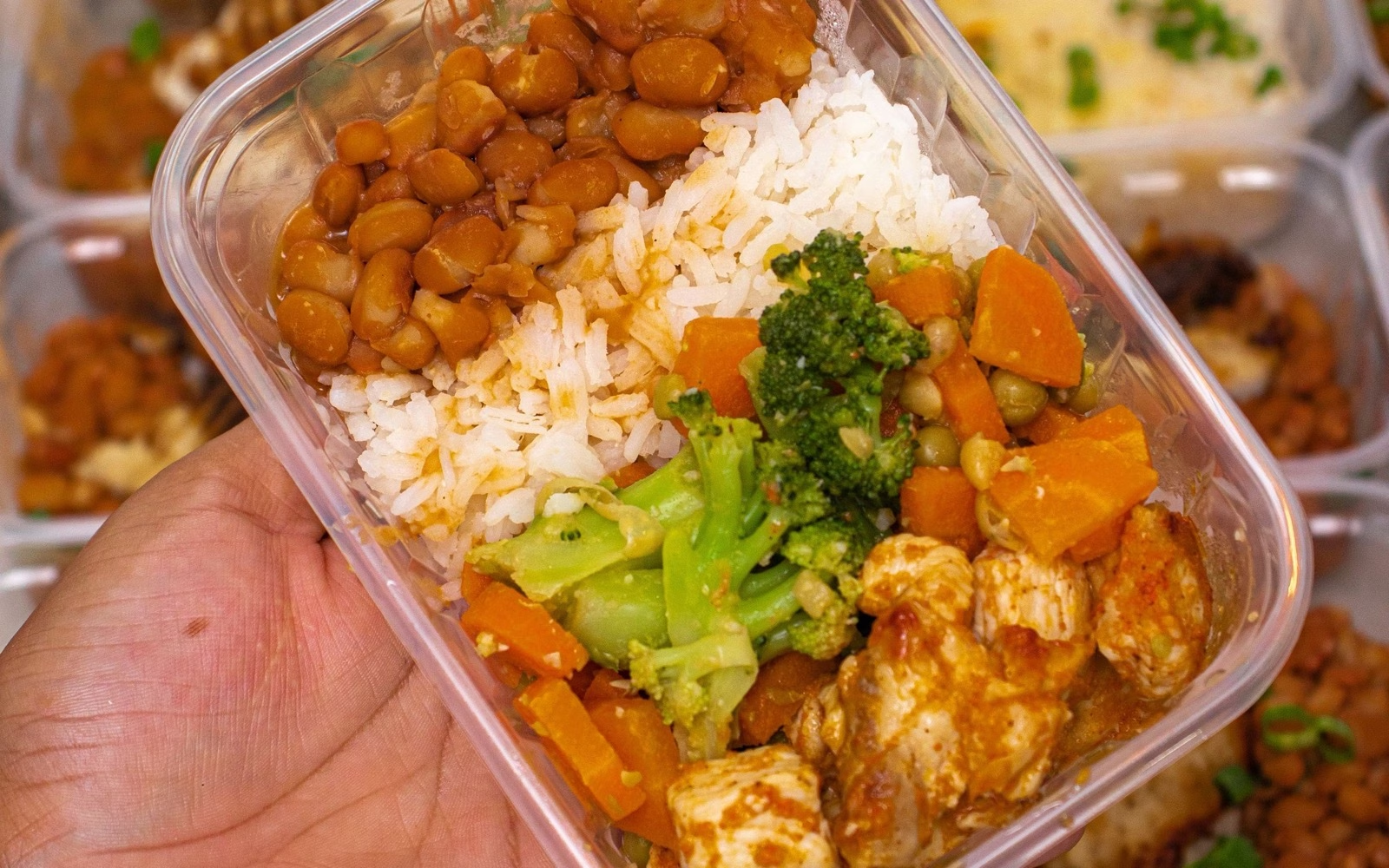
| Chicken box 42 g (55 g) | 150 g (200 g) chicken breast, 75 g (100 g) white rice, 150 g frozen mixed veg |
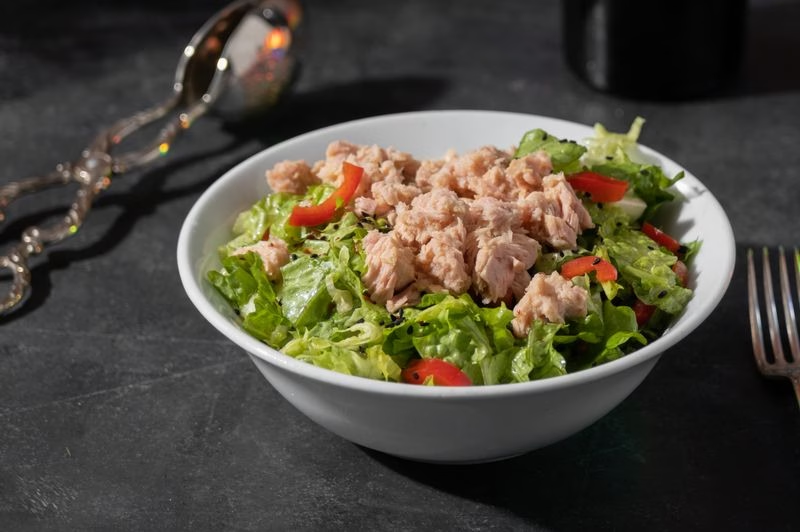
| Tuna salad 55 g (68 g) | 150 g (200 g) drained canned tuna, 125 g drained kidney beans, 2 slices wholemeal bread, 10 g olive oil, salad leaves |
| Bolognese 48 g (63 g) | 150 g (200 g) lean beef mince, 90 g (120 g) dry pasta, 200 g canned tomatoes, 10 g olive oil |
| Salmon 43 g (55 g) | 150 g (200 g) salmon fillet, 300 g (400 g) potato, 150 g broccoli |
| Steak 38 g (49 g) | 150 g (200 g) lean rump, 300 g (400 g) sweet potato, 150 g frozen mixed veg, 10 g olive oil |
| Tray bake 41 g (52 g) | 150 g (200 g) chicken thigh fillet, 300 g (400 g) potato, 150 g broccoli, 10 g olive oil |
| Snack 15 g | 30 g almonds, 1 apple, 250 mL milk |
The 7-day plan, with protein and kilojoules counted
Each day is a breakfast, a lunch, a dinner and the snack.
| Day | 75 kg protein, kJ (cal) | 90 kg protein, kJ (cal) |
|---|---|---|
| Monday Oats, chicken box, bolognese | 132 g 8,584 (2,052) | 163 g 10,167 (2,430) |
| Tuesday Eggs, chicken box, salmon | 134 g 7,853 (1,877) | 163 g 9,486 (2,267) |
| Wednesday Oats, tuna salad, steak | 135 g 8,538 (2,041) | 162 g 9,619 (2,299) |
| Thursday Eggs, chicken box, bolognese | 139 g 8,130 (1,943) | 171 g 9,747 (2,329) |
| Friday Oats, tuna salad, salmon | 140 g 8,769 (2,096) | 168 g 10,076 (2,408) |
| Saturday Eggs, tuna salad, steak | 142 g 8,083 (1,932) | 170 g 9,199 (2,199) |
| Sunday Oats, chicken box, tray bake | 125 g 7,884 (1,884) | 152 g 9,218 (2,203) |
That’s 1.67 to 1.89 g per kilo at 75 kg, and 1.69 to 1.90 at 90 kg.
How the numbers were counted
Every figure comes from the Australian Food Composition Database (Release 3) from Food Standards Australia New Zealand: protein and energy per 100 g, multiplied by the weight in the plan. Eggs are counted at 50 g each without the shell, bread at 35 g a slice, the banana at 100 g peeled and the apple at 150 g. Frozen veg uses the boiled figure, the only one listed. Salad leaves aren’t counted.
Two things throw a count out. One is raw against cooked: baked chicken breast is listed at 29.0 g of protein per 100 g, against 22.5 g raw. The other is brands: natural yoghurt is listed at 5.1 g per 100 g and a high-protein yoghurt at 9.6 g, so check your label.
How to make the plan work
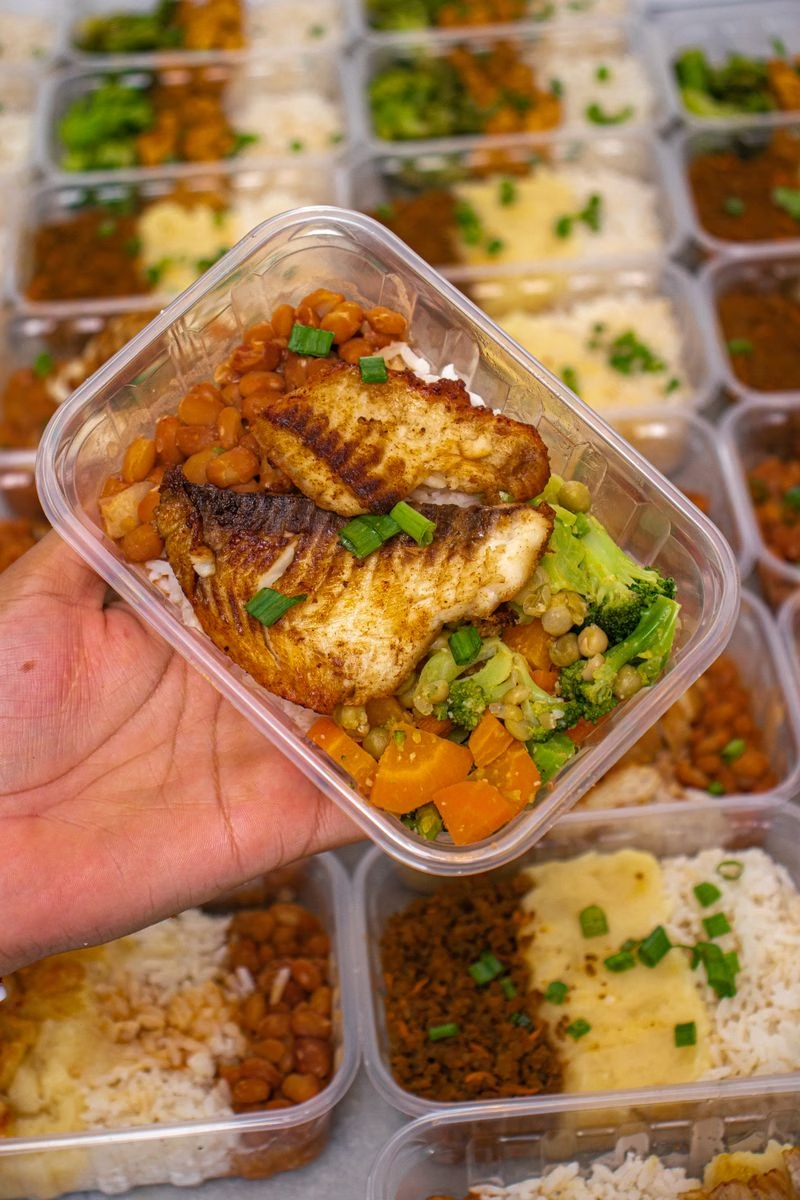
The lunches repeat on purpose, so one cook-up covers several days. Bored? Swap in any of these high protein meals, or build your own from the high protein foods list. Don’t eat meat? Start with these high protein vegetarian meals.
Still hungry? Add rice, pasta, oats or potato. That lifts the kilojoules and barely moves the protein.
Who should see a GP first
If you decide to eat more protein than the recommended daily amount, healthdirect says it’s a good idea to talk to your doctor or dietitian first. That matters most with kidney disease: people with kidney failure do better on protein-restricted diets (ISSN), so see your GP before you start. Victoria’s Better Health Channel warns that a very high protein diet can strain the kidneys and liver.
High protein diet plan FAQ
How much protein does a 100 kg man need?
By the same rule, 160 g a day. Six days of the 90 kg plan already reach it.
Do I need protein powder?
No. There’s no shake in this plan, and every day reaches the target on food alone.
Sources checked 23 November 2026. This is general information, not medical or dietary advice.