
The glute bridge is one of the simplest exercises you can do: lie on your back and lift your hips. It’s also one of the most useful for men who run, lift or sit at a desk all day, because it trains one of the biggest muscles in your body without loading your spine or needing any kit. Done properly, you should feel it in your backside, not your hamstrings or lower back. Here’s how to get it right, how to make it harder as you get stronger, and where it fits in a weekly plan.
- Set-up: on your back, knees bent, feet flat and hip-width apart, heels close enough to touch with your fingertips
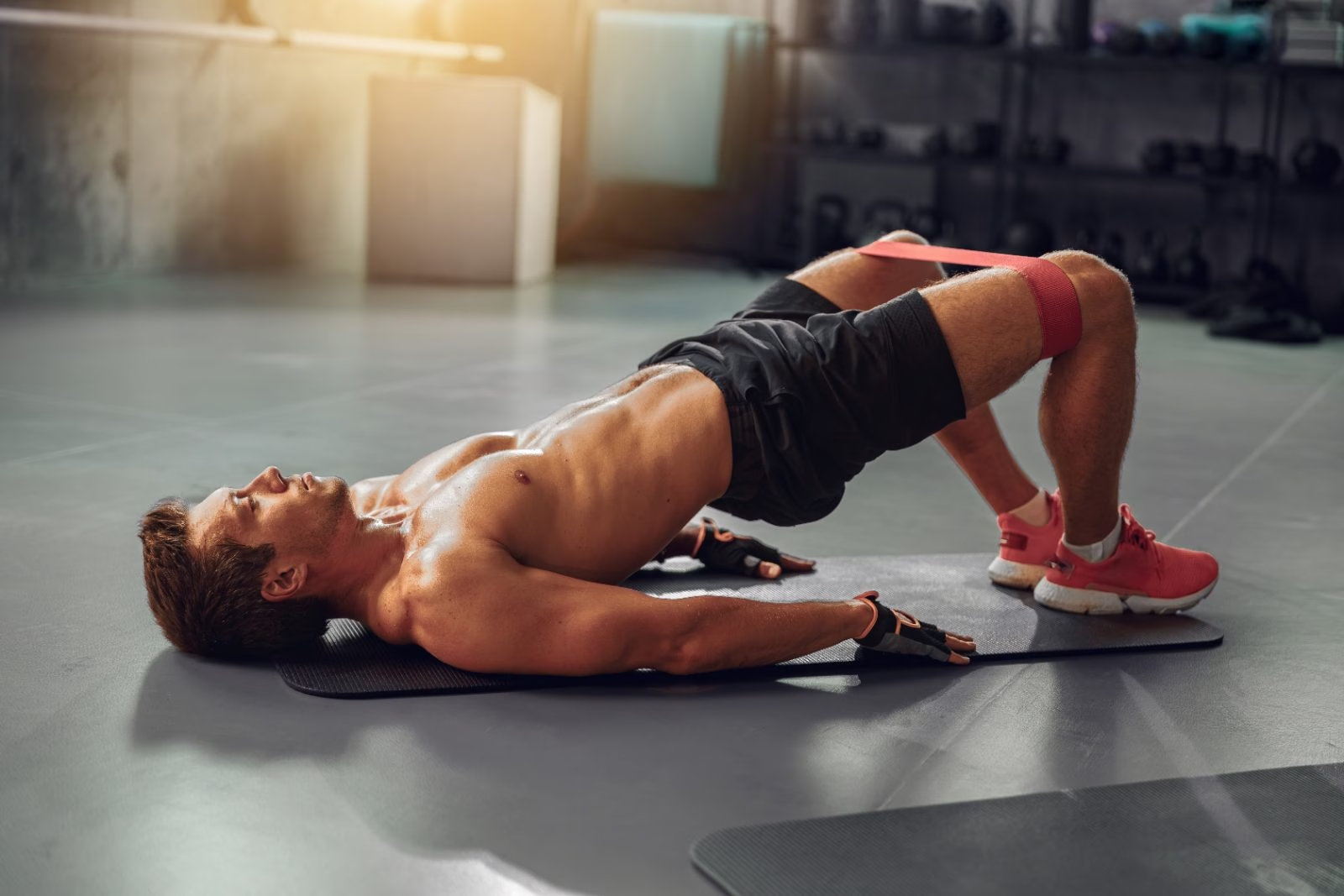
- The move: brace, squeeze your glutes and drive through your heels until your body is a straight line from shoulders to knees
- Hold: one to two seconds at the top, then lower under control
- Beginners: 3 sets of 12–15, two or three times a week
- Progress to: single-leg bridge, feet-elevated bridge, then the loaded hip thrust
- Feel it in your hamstrings? Bring your feet closer to your backside
How to do a glute bridge
- Lie on your back on a mat with your knees bent and your feet flat on the floor, hip-width apart. Walk your heels in until your fingertips can just brush them with your arms by your sides.
- Set your trunk. Tuck your pelvis slightly so your lower back is close to the floor, and brace your stomach as if you’re about to be poked in the gut.
- Drive up through your heels. Squeeze your glutes and push your hips towards the ceiling until your shoulders, hips and knees form a straight line. Keep your ribs down.
- Hold for one to two seconds and squeeze hard. This is where most of the work happens.
- Lower slowly until your backside just touches the floor, then go again without resting on the mat.
Breathe out as you lift and in as you lower. Your knees should stay pointing in the same direction as your toes the whole way: if they cave in, loop a mini band just above them (more on that below). Your weight stays on your heels and the outside of your feet; lifting your toes slightly can help you find them.
Common glute bridge mistakes
- Feet too far away. The further your heels are from your backside, the more your hamstrings take over. That’s why so many men cramp in the backs of their thighs. Bring your feet in until your knees are bent to roughly 90 degrees or a bit more at the top.
- Arching your lower back. Pushing your hips higher by bending your spine turns a glute exercise into a back exercise. Stop when your body makes a straight line; your ribs stay down.
- Pushing through your toes. It shifts the work towards your quads. Keep the pressure through your heels.
- Knees falling in or flopping out. Keep them in line with your feet. A mini band above the knees gives you something to push against.
- Rushing. Bouncing your hips off the floor uses momentum. Pause at the top, lower under control.
- Doing hundreds of easy reps. Once 20 reps feel easy, move up a step in the progression rather than adding more.
What the glute bridge works, and why it matters for men
The main target is the gluteus maximus, the large muscle that extends your hip: it’s what straightens you up from a squat, drives you forward when you run and locks out a deadlift. Your hamstrings help, your glute medius (on the side of your hip) works to keep your knees from caving in, and your abs and lower back muscles hold your trunk steady.
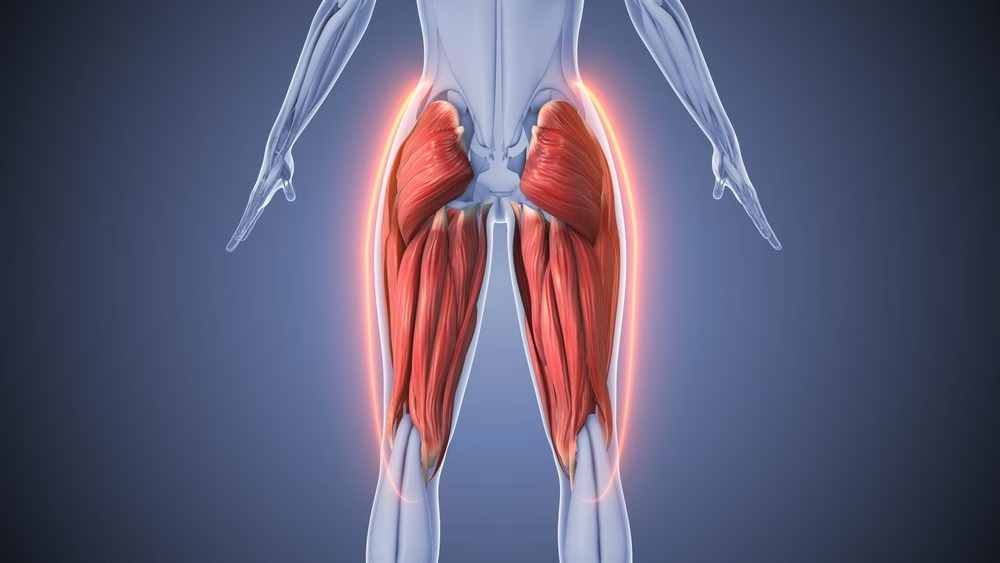
- Running. Every stride is a hip extension. Strong glutes help you push off and keep your pelvis level when you land on one leg, which is exactly what the single-leg bridge trains. If you’re building up to a race, our beginner marathon training plan includes strength sessions for this reason.
- Lifting. The squat and the deadlift both finish with your hips driving forward. The bridge and hip thrust train that last part directly, with almost no load on your spine.
- Your back. Hours of sitting leave many men with glutes that barely switch on. The bridge teaches you to extend your hips with your glutes rather than by arching your lower back. It isn’t a cure for back pain: if you have pain, get it assessed by a physio or GP before you train through it.
The research backs the hip thrust family as one of the best ways to work your glutes. A 2020 systematic review of 16 studies put the barbell hip thrust and the banded hip thrust among the exercises with the highest glute activity, alongside step-ups, deadlifts, lunges and split squats (Neto and colleagues, 2020). An earlier review of the hip thrust reached the same conclusion: it works the glutes and hamstrings harder than the squat (Neto, Vieira and Gama, 2019).
Glute bridge progressions: from bodyweight to barbell
Work through these in order. Move up a step when you can do every set at the top of the rep range with a pause at the top and no cramping.
| Exercise | Sets and reps |
|---|---|
| 1. Glute bridge | 3 x 12–15, 2 sec hold at the top |
| 2. Banded glute bridge | 3 x 12–15 |
| 3. Single-leg glute bridge | 3 x 8–12 each side |
| 4. Feet-elevated glute bridge | 3 x 10–12 |
| 5. Bodyweight hip thrust | 3 x 12–15 |
| 6. Barbell hip thrust | 3–4 x 6–12 |
Banded glute bridge
Loop a mini band just above your knees and push your knees out against it the whole time. It brings in the glute medius and teaches you to stop your knees caving, a common fault in squats and landings too.
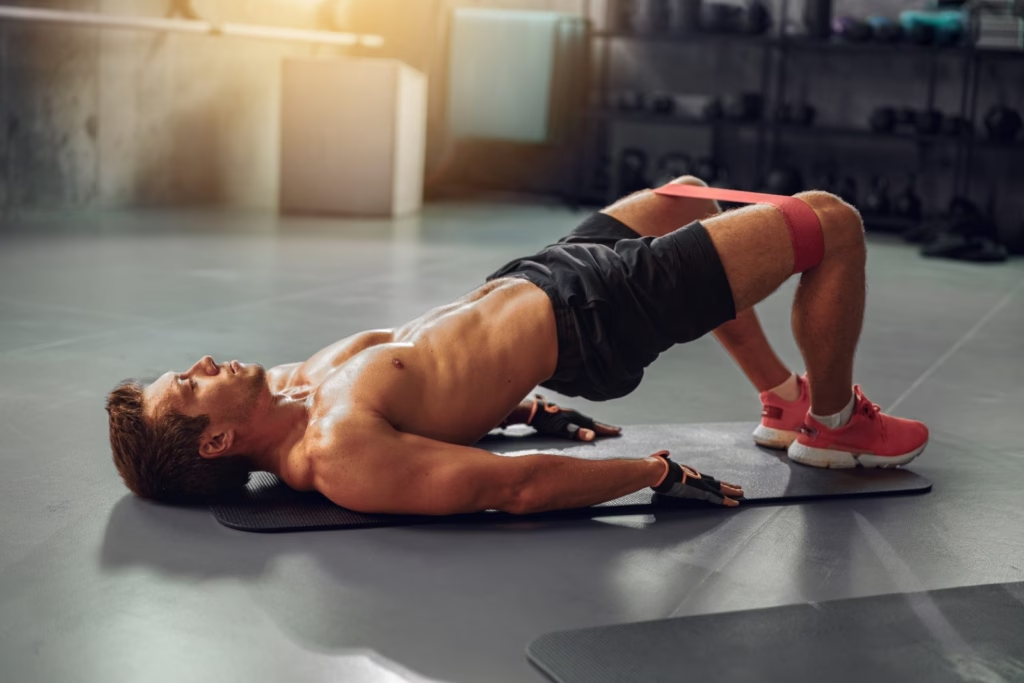
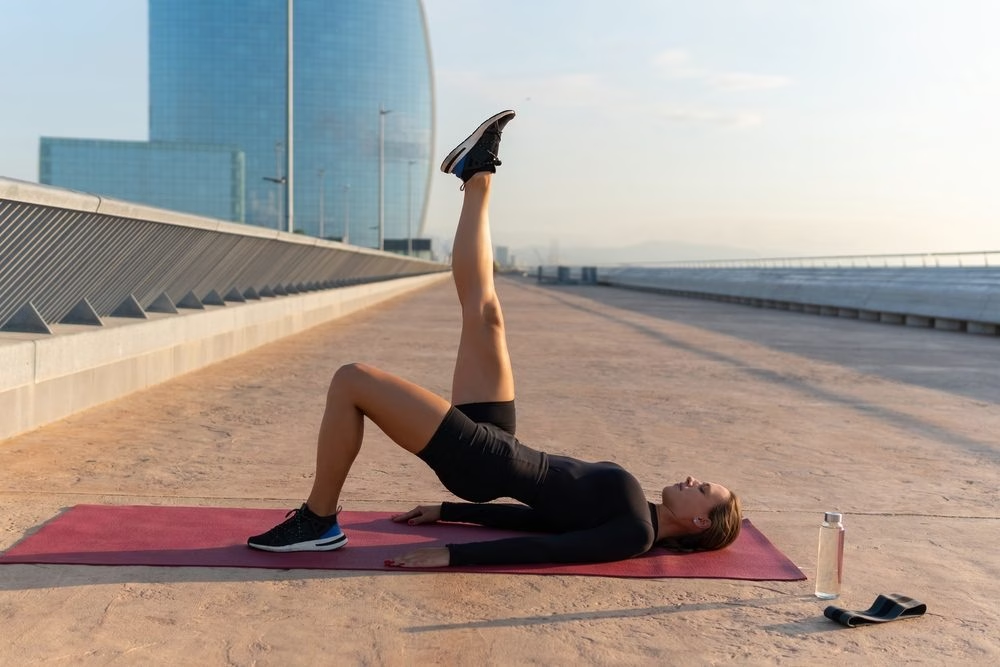
Single-leg glute bridge
Set up as normal, then straighten one leg or hug that knee to your chest. Drive up through the planted heel and keep your hips level: if one side drops, you’ve found a weak spot. It doubles the load on each glute without any equipment, so it’s the best home progression.
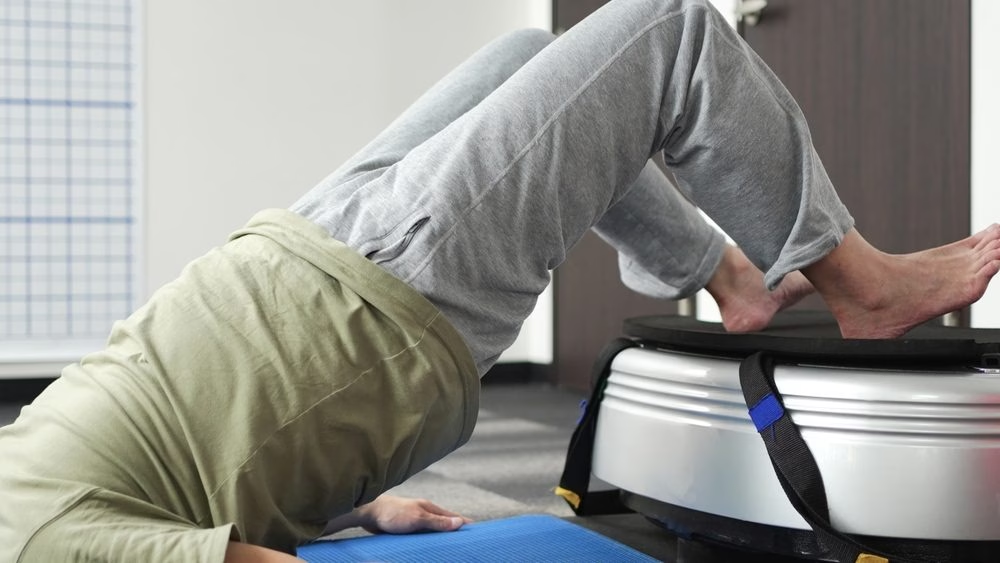
Feet-elevated glute bridge
Put your heels on a step, low bench or box. It increases the range of movement at your hips. Keep your heels pulled in towards you, because with your feet up the hamstrings are even keener to take over.
Hip thrust and barbell hip thrust
For a hip thrust, sit on the floor with your upper back (just below your shoulder blades) against a bench, knees bent and feet flat. Drive your hips up until your thighs and torso are flat like a tabletop, chin tucked, then lower. Once bodyweight is easy, roll a padded barbell over your hips, or hold a dumbbell or plate there. The longer range and the ability to add weight is why the hip thrust is the bridge’s grown-up version: unlike the bodyweight bridge, you can keep loading it for years.
Start light. A bar pad or folded mat across your hips saves you a bruise, and a low bench (around knee height) lets you set up without sliding.
Sets and reps for beginners
Start with 3 sets of 12–15 bodyweight glute bridges, with a one-to-two-second squeeze at the top, two or three times a week. That frequency is the standard advice for any muscle: the American College of Sports Medicine’s position stand recommends 2–3 days a week for novices (ACSM, 2009), and Australia’s physical activity guidelines ask adults to do muscle-strengthening work on at least two days a week (Department of Health).
Do them as a warm-up before squats or deadlifts, or as part of a short lower-body session like the one below.
A 20-minute glute workout
Do the exercises in order with about 60 seconds’ rest between sets. You need a mat, a bench or chair and a kettlebell. Twice a week is enough to start; add reps or weight each week.
| Exercise | Sets and reps |
|---|---|
| 1. Glute bridge (or hip thrust) | 3 x 12 |
| 2. Bulgarian split squat | 3 x 8 each side |
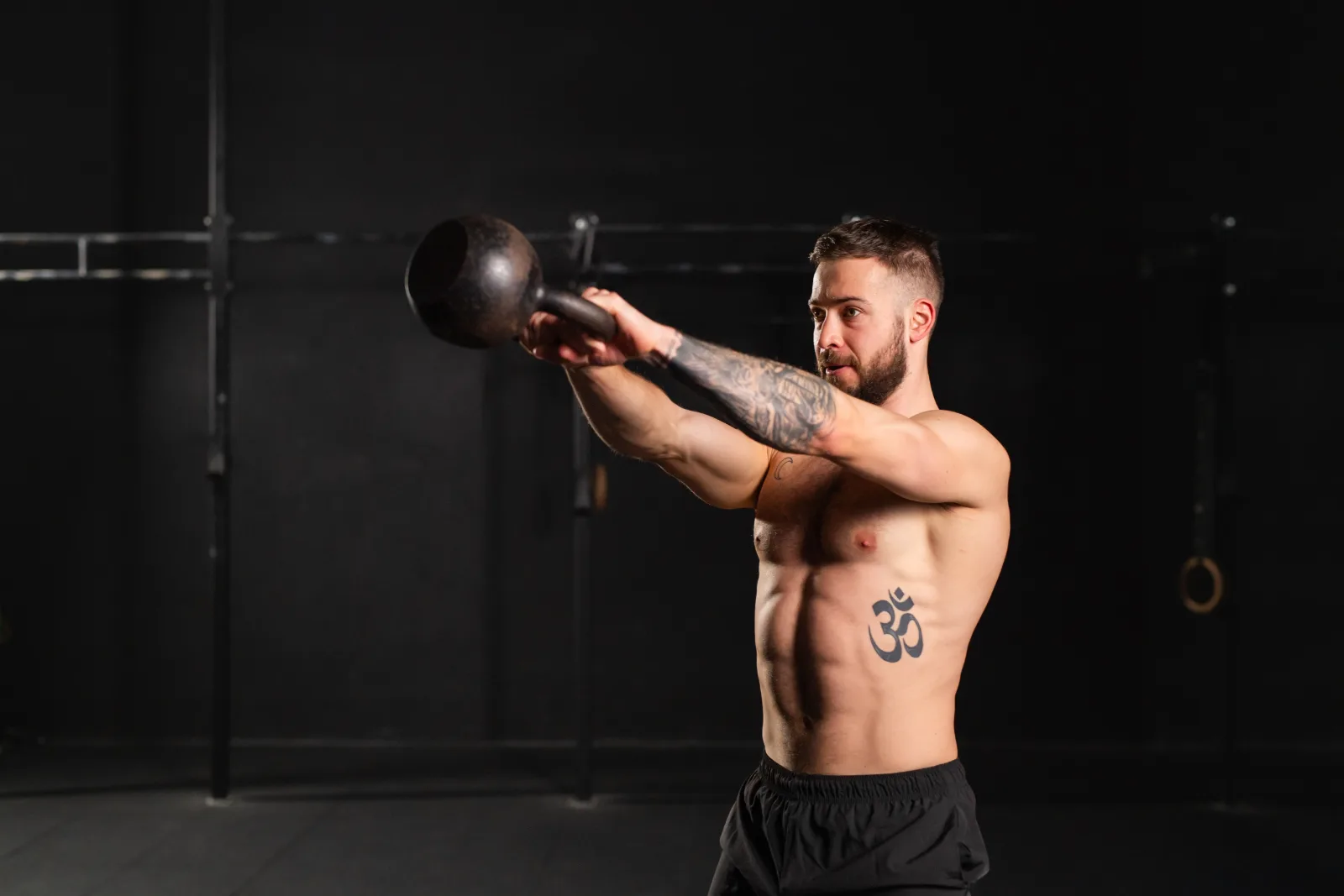
| 3. Kettlebell swing | 3 x 15 |
| 4. Single-leg glute bridge | 2 x 10 each side |
| 5. Side plank | 2 x 30 sec each side |
- Glute bridge or hip thrust: use whichever step of the progression you’re on.
- Bulgarian split squat: rear foot on a bench, drop your back knee towards the floor. Our Bulgarian split squat guide covers the set-up. No bench? Do a goblet sumo squat instead, 3 x 10.
- Kettlebell swing: a fast hip hinge that trains the glutes explosively. Learn it properly first with our kettlebell workout.
- Single-leg glute bridge: finishing work while your glutes are already tired.
- Side plank: for the trunk muscles that keep your hips level. For more, see our 20-minute ab workout.
If you train at home with no weights, swap the swing for 15 jump squats and use the single-leg bridge in place of the hip thrust. Our push-up guide gives you the upper-body half of a home session.
Glute bridge FAQ
What’s the difference between a glute bridge and a hip thrust?
In a glute bridge your shoulders are on the floor; in a hip thrust they’re on a bench. That raises your hips higher off the ground, so they move through a bigger range, and it makes it easier to load with a barbell. Measured by muscle activity, the barbell hip thrust beats the back squat for the glutes: in one study of trained women lifting 10-rep-max loads, glute and hamstring activity was markedly higher in the hip thrust (Contreras and colleagues, 2015), and a later review of 12 studies agreed (Neto, Vieira and Gama, 2019).
More activity hasn’t meant more growth, though. In a nine-week trial in untrained young adults, hip thrust and squat training built the glutes by similar amounts, and the squat built more thigh muscle (Plotkin and colleagues, 2023). A 12-week study in trained women found squats grew the glutes more than hip thrusts (Barbalho and colleagues, 2020). Our read: the hip thrust is a very good glute exercise, not a replacement for squats. Do both.
Can I do glute bridges every day?
A few sets of bodyweight bridges as a warm-up or a break from your desk won’t hurt. But if you’re training them hard enough to get stronger, with a single-leg version or a loaded hip thrust, two or three sessions a week with rest between will get you further. If you can do them daily without feeling it, make them harder.
Why do I feel glute bridges in my hamstrings?
Almost always because your feet are too far from your backside. With your knees less bent, the hamstrings do more of the work. A study of 25 active men found hamstring activity in the bridge was highest with the knees at 40 degrees and fell as the knees bent further, while the glutes worked hardest at 90–120 degrees (Ho and colleagues, 2020). A computer-model study of 15 young men found a similar pattern: more knee bend meant less hamstring force, and glute force tended to rise (Takeshita and colleagues, 2022). Walk your heels in and push through them. If you want to train the hamstrings on purpose, the Swiss ball hamstring curl in our Swiss ball exercises is a bridge with a curl added.
Why do I feel glute bridges in my lower back?
Usually because you’re lifting too high and arching your spine to get there, or your feet are too far away. Both studies above found the lower-back muscles worked harder with the feet further out (Ho and colleagues; Takeshita and colleagues). Tuck your pelvis before you lift, keep your ribs down and stop when your body is in a straight line. If it still hurts, stop and see a physio.
Do glute bridges make your backside bigger?
Bodyweight bridges will build some muscle in a beginner, but you’ll soon need more load. That’s what the single-leg bridge and the barbell hip thrust are for, along with squats, lunges and deadlifts.
Sources: Contreras, Vigotsky, Schoenfeld, Beardsley and Cronin (2015), Journal of Applied Biomechanics; Neto, Vieira and Gama (2019), Journal of Sports Science and Medicine; Neto and colleagues (2020), Journal of Sports Science and Medicine; Plotkin and colleagues (2023), Frontiers in Physiology; Barbalho and colleagues (2020), International Journal of Sports Medicine; Ho, Ng, Lee and Luk (2020), Research in Sports Medicine; Takeshita and colleagues (2022), Journal of Healthcare Engineering; American College of Sports Medicine position stand (2009), Medicine & Science in Sports & Exercise; Australia’s physical activity and exercise guidelines for adults. Checked 28 October 2026.