
A Swiss ball, also called a stability or exercise ball, makes simple exercises harder by taking away a stable base. Your core has to work to keep you on it, which turns a plank, a hamstring curl or a push-up into a full-body balancing job. It’s cheap, it’s in nearly every gym, and it’s especially good for core training at home. Here are eight Swiss ball exercises and a 20-minute workout.
- Best moves: stir the pot, rollout, hamstring curl, pike, jackknife, push-up, dead bug, back extension
- Ball size: sit on it: your hips should be level with or a little above your knees
- Works: mainly your core, plus hamstrings, glutes, chest and shoulders depending on the move
- Not for: heavy lifting: don’t stand on it or squat with a barbell on it
- How often: two or three times a week, as a core session or a finisher
Which size Swiss ball?
Sit on the ball with your feet flat on the floor. Your hips should be level with your knees or a little higher. As a rough guide, a 55 cm ball suits people up to about 170 cm tall, 65 cm suits most men between about 170 and 185 cm, and 75 cm suits taller men. Buy an anti-burst ball, which deflates slowly rather than popping if it’s punctured, and pump it until it’s firm.
8 Swiss ball exercises
1. Stir the pot
Get into a plank with your forearms on the ball, feet wider than hip-width. Without letting your hips move, draw small circles with your forearms, five one way and five the other.
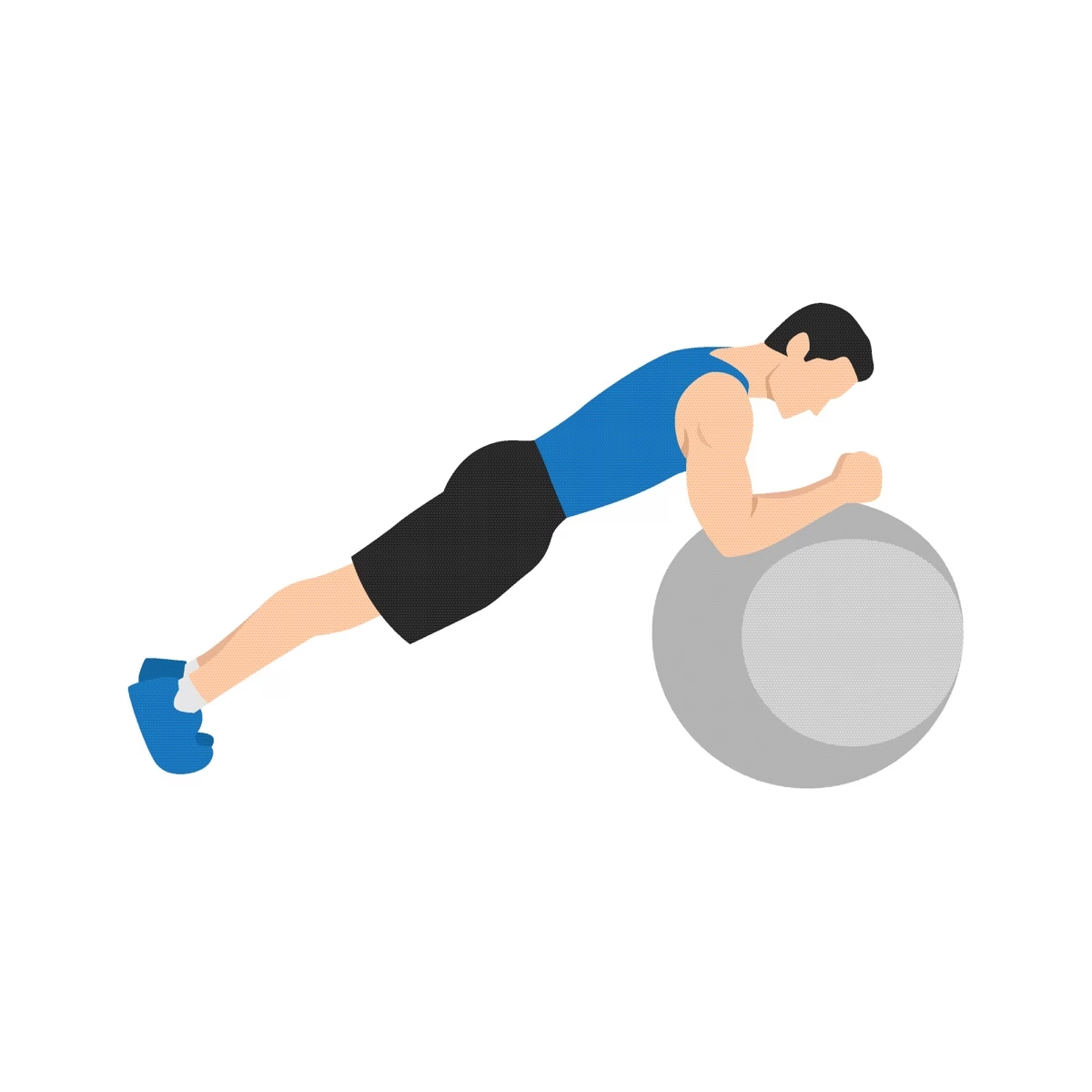
Tip: start with tiny circles. If your lower back sags, stop the set.
2. Swiss ball rollout
Kneel with your forearms on the ball, body straight from knees to head. Roll the ball forward, letting your arms extend and your body lower, as far as you can without your back arching. Pull it back with your abs.
Tip: squeeze your glutes the whole time. It’s an easier version of the ab-wheel rollout.
3. Hamstring curl
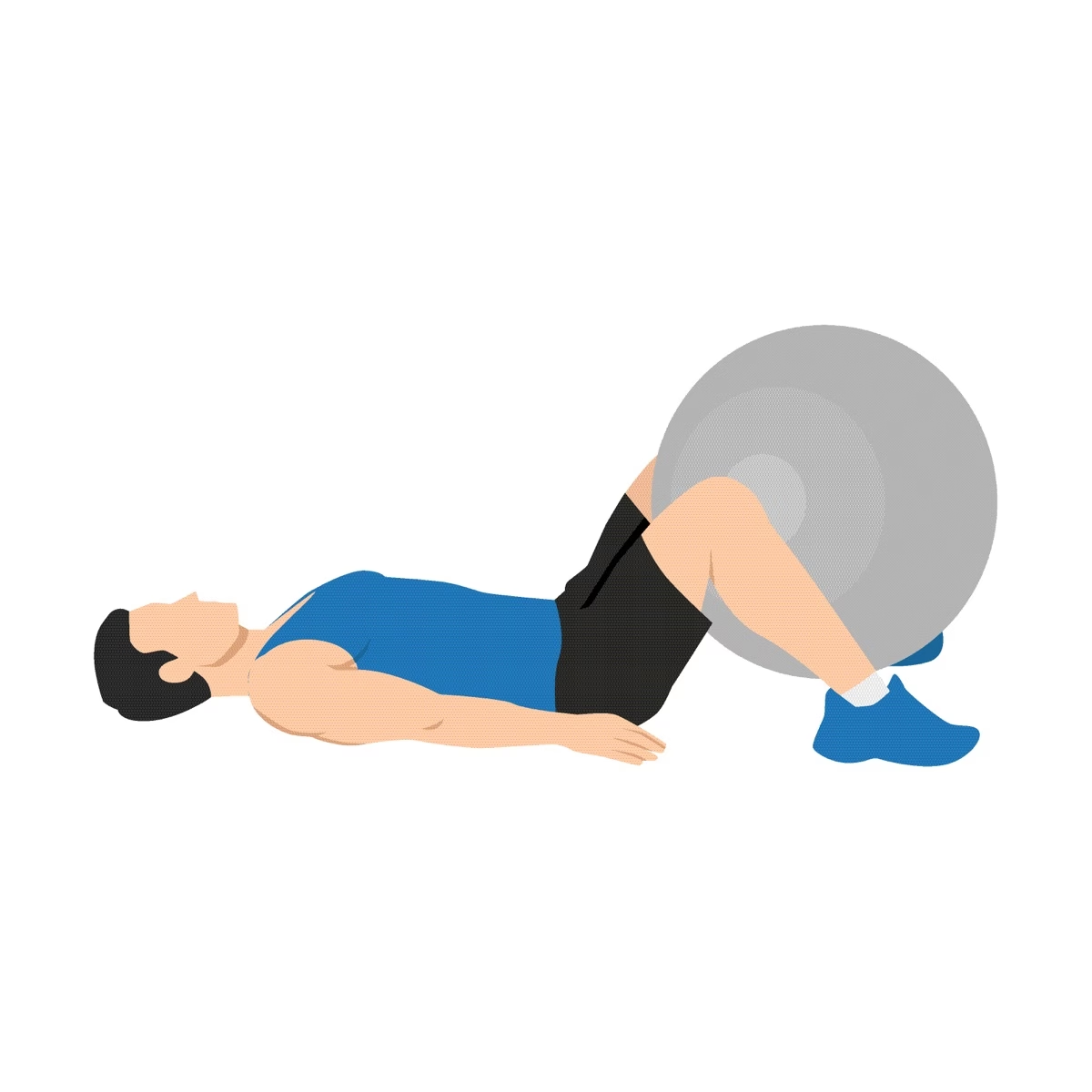
Lie on your back with your heels on the ball and arms flat by your sides. Lift your hips so your body is straight, then pull the ball towards you with your heels until your knees are bent, keeping your hips up. Roll it back out slowly.
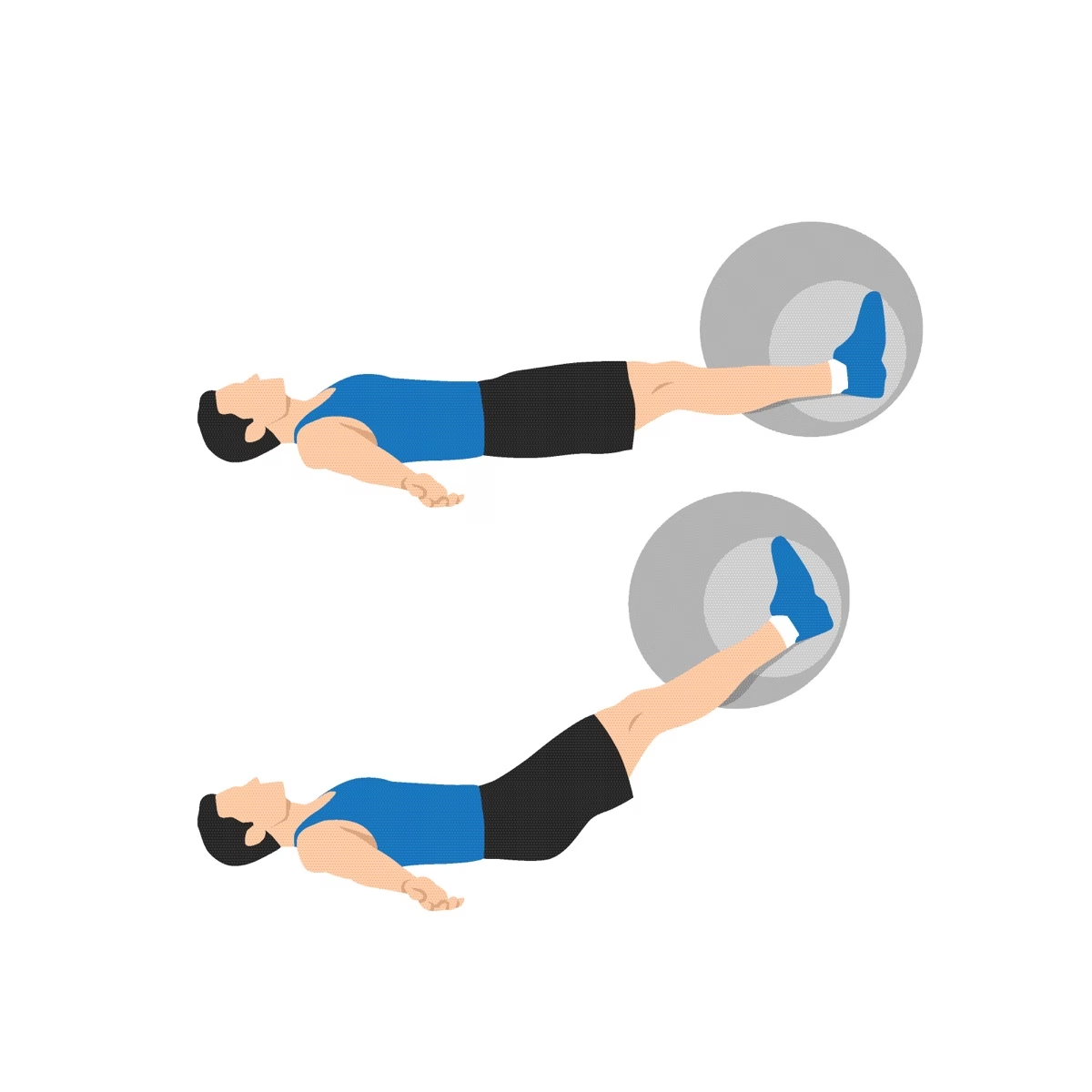
Tip: keep your hips high throughout. Do it with one leg when two gets easy.
4. Pike
Get into a push-up position with your shins on the ball. Keeping your legs straight, lift your hips towards the ceiling so the ball rolls to your toes, then lower back to the plank.
Tip: the hardest move here. Learn the jackknife first.
5. Jackknife (knee tuck)
Same start as the pike, shins on the ball. Pull your knees in towards your chest, rolling the ball forwards, then push it back out to a straight plank.
Tip: keep your shoulders over your hands, not drifting back.
6. Swiss ball push-up
Do push-ups with your shins on the ball for an easier version or your feet on it for a harder one. For a much harder version, put your hands on the ball.
Tip: hands on the ball is a big step up. Brace hard and keep your elbows at about 45 degrees.
7. Dead bug with a ball
Lie on your back holding the ball between your hands and knees, arms straight and knees over your hips. Lower your right arm and left leg towards the floor while the other hand and knee keep squeezing the ball. Return and swap.
Tip: press your lower back into the floor the whole time.
8. Back extension
Lie face down with your hips on the ball and your feet against a wall, wider than your hips. With your hands by your ears, lift your chest until your body is straight, then lower it slowly.
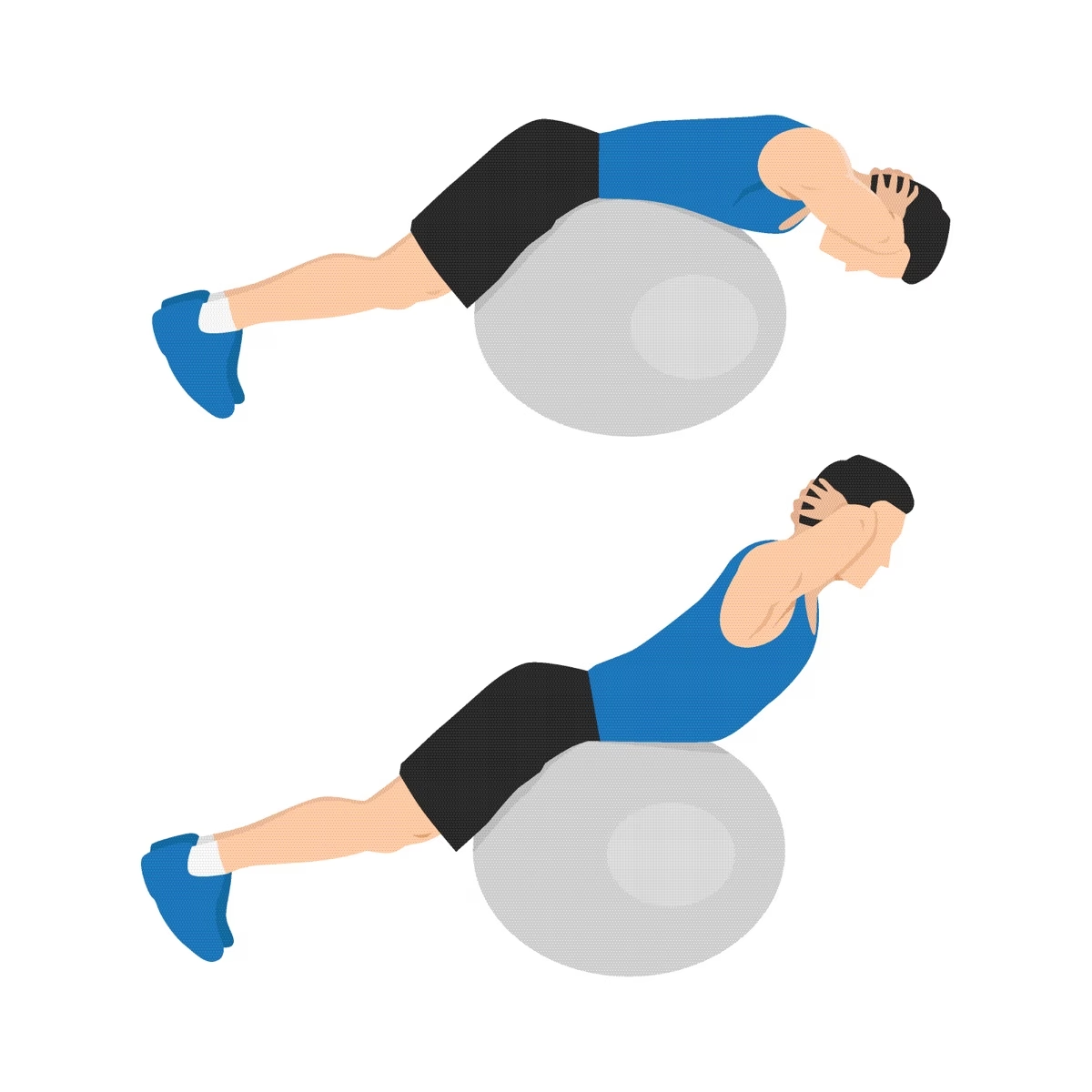
Tip: don’t overarch at the top. Straight is enough.
A 20-minute Swiss ball workout
Do one set of each exercise back to back, rest 90 seconds, and repeat three times.
| Exercise | Reps |
|---|---|
| 1. Hamstring curl | 10 |
| 2. Jackknife | 10 |
| 3. Swiss ball push-up (feet on the ball) | 8–12 |
| 4. Stir the pot | 5 each way |
| 5. Back extension | 12 |
For more core work, see our 20-minute ab workout and our guide to bicycle crunches. Our push-up guide has more push-up progressions.
Common Swiss ball mistakes
- Wrong size or underinflated. A soft ball is harder to control and less stable in a bad way. Pump it until it’s firm.
- Sagging hips. In every plank-based move, keep a straight line from head to heels.
- Going too far, too soon. Roll out or pike only as far as you can control.
- Loading it like a bench. Light dumbbell presses on the ball are fine; heavy weights and standing on it aren’t.
How often to train with a Swiss ball
Two or three Swiss ball sessions a week is enough, with a day between them. That matches the American College of Sports Medicine’s advice of 2–3 days a week for novices (ACSM, 2009), and Australia’s guidelines ask adults to do muscle-strengthening work on at least two days a week (Department of Health).
Swiss ball FAQ
Are Swiss ball exercises good for abs?
Yes. Rollouts, stir the pot, jackknives and pikes all work your abs hard, because you’re fighting to keep your body still on an unstable surface. They’re among the best ab exercises you can do with cheap kit.
Can I lift weights on a Swiss ball?
Light dumbbell presses and flyes lying on the ball are fine. For building strength, a bench is better: you can lift more on a stable base. Never stand on the ball.
Swiss ball or stability ball: what’s the difference?
None. Swiss ball, stability ball, exercise ball and fit ball are names for the same thing.
Is a Swiss ball good for lower back pain?
Physios often use them for gentle core work, but if you have back pain, get advice before you start.
Sources: American College of Sports Medicine position stand (2009), Medicine & Science in Sports & Exercise; Australia’s physical activity and exercise guidelines for adults. Checked 29 October 2026.