Sauna, ice bath, sauna, ice bath. Contrast therapy is the recovery ritual every footy club, bathhouse and fitness influencer seems to swear by, and it can genuinely help you bounce back from a hard session. Here’s what it is, a simple protocol you can follow (times, temperatures, rounds and whether to finish hot or cold), what the research actually backs, the one catch for blokes trying to build muscle, and where to do it in Australia.
- What it is: alternating heat (sauna or hot water) with cold (ice bath or cold plunge), usually for a few rounds
- Sauna version: about 10 to 15 minutes hot, 1 to 3 minutes cold, 2 to 3 rounds
- Research version (water only): about 1 minute hot, 1 minute cold, up to roughly 15 minutes in total
- Best evidence: less soreness and less strength loss in the days after hard exercise, compared with doing nothing
- The catch: regular cold water straight after lifting can blunt muscle growth
- Finish hot or cold? No study shows a clear winner. Our read: cold if you want to feel switched on, warm if you’re heading to bed
What is contrast therapy?
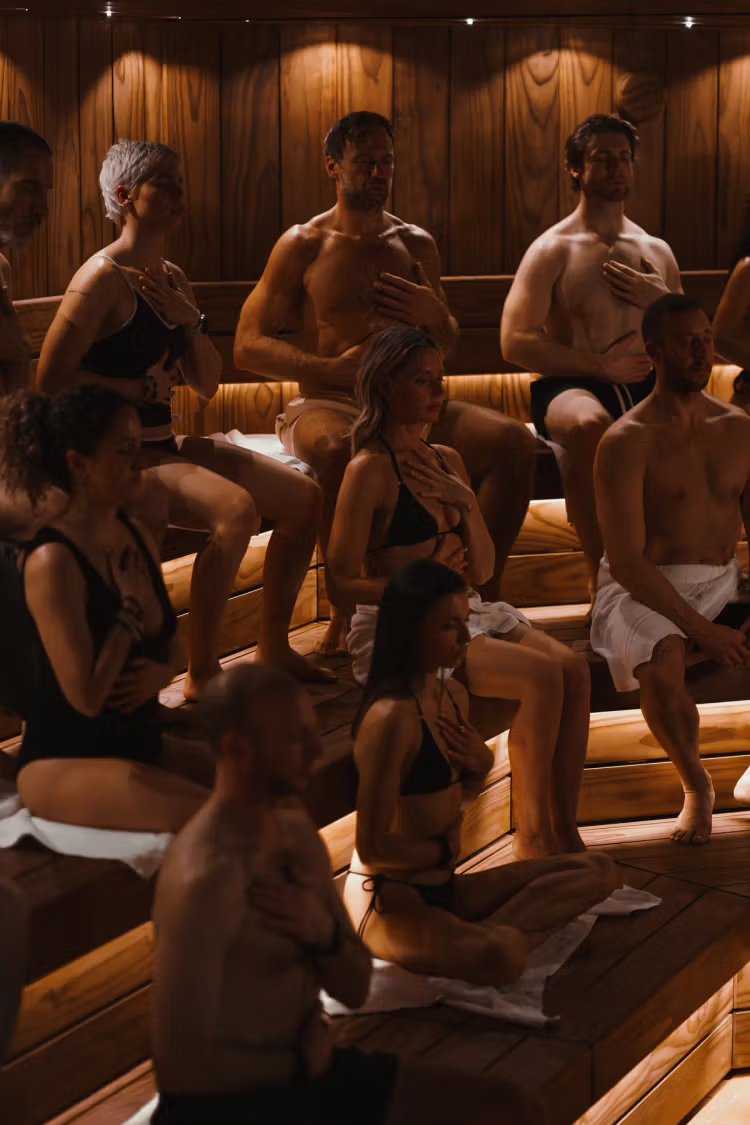
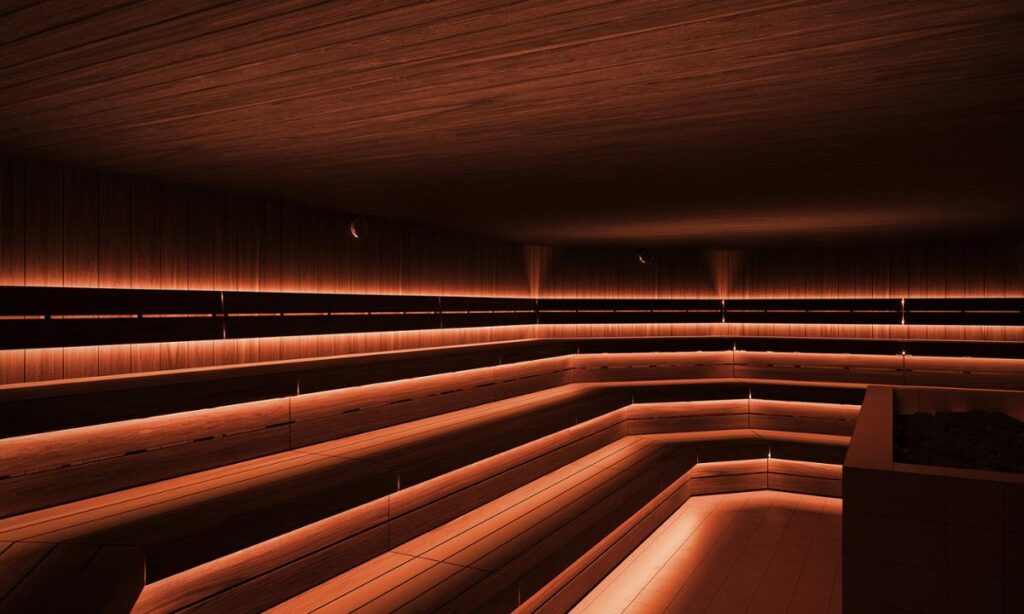
Contrast therapy means swapping between hot and cold, on purpose, a few times in one session. In a bathhouse or recovery club that’s a sauna followed by an ice bath or cold plunge, then back again. In sports science it’s usually called contrast water therapy: alternating dips in a hot tub and a cold tub.
In the main meta-analysis on contrast water therapy, researchers defined cold water as 15°C or below and hot water as above 35°C (Bieuzen et al., PLoS One, 2013). A traditional dry sauna is much hotter than any tub, typically running between 80°C and 100°C (National Collaborating Centre for Environmental Health; UNSW, which gives 70°C to 100°C).
The idea is simple. Heat opens up the blood vessels in your skin, cold clamps them down, and going back and forth is meant to help you recover. It also feels great once you’re out, which is a big part of why people keep coming back.
How to do contrast therapy: a simple protocol
There’s no single official recipe. The numbers below are the common ground across industry guides from ice bath and sauna makers (Brass Monkey; Verve Fitness), trimmed to sit inside the safety advice further down. Treat them as a starting point, not a prescription.
Sauna and ice bath (what you’ll do at a recovery club)
| Step | What to do |
|---|---|
| 1. Sauna | 10 to 15 minutes. First time? Start with 5 to 10 and sit on a lower bench, where it’s cooler. |
| 2. Cold | 1 to 3 minutes in the ice bath or plunge. Get in slowly, breathe out long and slow. |
| 3. Rest | A minute or two to settle your breathing before you head back into the heat. |
| 4. Repeat | 2 to 3 rounds in total is plenty. |
| 5. Finish | Cold to feel alert, or warm (sauna or a warm shower) to wind down. |
Pick a cold temperature you can actually control your breathing in. XtraClubs, for example, runs its ice baths at two settings between 3°C and 14°C (XtraClubs). The warmer one is the place to start.
Hot tub and cold tub (the version in the research)
Most studies don’t use a sauna at all. They use two tubs and short swaps. A review of the research found contrast water therapy is most likely to help performance recovery when you spend equal time hot and cold, each dip is short (about a minute), and the total is up to about 15 minutes (Versey et al., 2013). The trials pooled in the main meta-analysis mostly used one-minute cold dips at 8°C to 15°C and one to three minutes hot at about 35°C to 45°C, with sessions lasting 6 to 24 minutes in total (Bieuzen et al., 2013). Two of those trials tested Australian footballers, after training and after a match.
| Step | What to do |
|---|---|
| 1. Hot | About 1 minute in water above 35°C (a spa or hot tub) |
| 2. Cold | About 1 minute in water at 15°C or below |
| 3. Repeat | Keep swapping, for up to about 15 minutes in total |
Should you finish hot or cold?
This is the question everyone argues about online, and the research doesn’t settle it. Most trials in the big meta-analysis finished on cold, but none compared finishing hot with finishing cold, so the research can’t say which is better (Bieuzen et al., 2013). Industry guides tend to say finish cold for alertness and recovery, and hot for relaxation and sleep (Verve Fitness; Brass Monkey).
Our read: finish on cold in the morning or before work, when you want the jolt. Finish warm in the evening, or any time you’re shivering and can’t stop. And if you’ve just done a heavy lifting session, read the next section before you finish anywhere near the ice.
Contrast therapy benefits: what the evidence says
Less soreness and faster bounce-back
This is the strongest claim. A systematic review and meta-analysis of 18 trials found contrast water therapy led to less muscle soreness and less loss of strength over the four days after muscle-damaging exercise than simply resting (Bieuzen et al., PLoS One, 2013; PubMed abstract).
Two catches. Every trial had a high risk of bias, and contrast therapy didn’t clearly beat other recovery methods such as cold water alone, warm water, compression, active recovery or stretching. The authors said the size of the benefit may matter most to elite athletes. So it works better than sitting on the couch, but it isn’t magic. For how it stacks up against the rest, see our guide to the best recovery methods.
The sauna half may be good for your heart
The heat is where the long-term health data sits. A Finnish study followed 2,315 men aged 42 to 60 for a median of about 21 years. Compared with men who used a sauna once a week, those who went four to seven times a week had a 63% lower risk of sudden cardiac death and a 40% lower risk of dying from any cause, after adjusting for other risk factors (Laukkanen et al., JAMA Internal Medicine, 2015; BioSpace).
It’s an observational study, so it shows a link, not proof that the sauna did it. Men who sit in a sauna most days may differ in plenty of other ways. And it’s about sauna use, not the cold plunge in between.
Energy, mood, metabolism and immunity
You’ll see contrast therapy sold for all sorts of things: energy, mood, sleep, immunity, fat loss. Most people do feel alert and calm afterwards, and that’s worth something. But the research behind those bigger claims is thin, and much of what you’ll read comes from companies selling saunas and ice baths.
One Danish study of experienced winter swimmers, men who combined cold dips with hot sauna sessions two to three times a week, found their bodies handled cold differently, and the researchers floated winter swimming as a possible way to burn more energy (Søberg et al., Cell Reports Medicine, 2021). Our read: interesting, but it’s a small study, and it’s no substitute for diet and training if fat loss is the goal.
The catch: cold after lifting can blunt your gains
If you’re training for size and strength, timing matters. In a 12-week study, men strength trained twice a week and followed every session with either 10 minutes of cold water immersion or an easy active warm-down on a bike. The warm-down group gained more muscle and strength. In a second experiment from the same paper, cold water after a workout dampened the muscle-building signals in the muscle (Roberts et al., Journal of Physiology, 2015; ScienceDaily).
A 2024 meta-analysis of eight studies came to the same conclusion: cold water immersion straight after resistance training may reduce muscle growth, though the studies were of fair to poor quality (Piñero et al., European Journal of Sport Science, 2024). We’ve covered this in more detail in cold plunges kill gains.
Our read: if muscle is the goal, keep contrast therapy away from your lifting sessions. Do it on rest days, after cardio, or at least several hours after you lift. If you’ve got a game this weekend and just need to feel fresh, that’s when it earns its keep.
Is contrast therapy safe?
For most healthy men, yes, if you’re sensible about it. Researchers from UNSW and the University of Sydney say to start with short sauna sessions of 5 to 10 minutes, drink water before, during and after, skip alcohol and big meals beforehand, and get out if you feel dizzy, sick or tight in the chest (UNSW). Harvard Health also warns against alcohol and suggests no more than 15 to 20 minutes in the sauna (Harvard Health).
Talk to your doctor first if you have heart disease, uncontrolled or low blood pressure, an irregular heartbeat or diabetes, or you take medication such as blood pressure tablets. Rare sauna deaths usually involve existing heart disease, alcohol or being alone (UNSW). The cold has its own risk: the gasp reflex when you hit cold water. Lower yourself in, never dunk your head straight away, and read up on cold water shock if you’re taking it to the ocean.
Where to do contrast therapy in Australia
Recovery clubs with saunas and ice baths under one roof have spread fast. Sydney’s XtraClubs now lists clubs at Bondi Junction, Green Square, Manly, Marrickville and Parramatta, with Canberra opening on 15 November 2026, all open 6am to 11pm, seven days (XtraClubs). We covered the XtraClubs launch and its Marrickville and Manly expansion.
At the top end, Brisbane’s planned Level X club has been reported to charge up to $1000 a week: here’s our take on the $1000-a-week gym. Plenty of day spas, bathhouses and bigger gyms now have a sauna and plunge too, so check what’s near you.
No club? A home version works. A spa or hot bath and a cold bath or wheelie bin of cold water will do the job. Hot and cold showers are the cheapest option, but the review authors flagged studies using hot showers instead of pools as one reason some trials found no benefit (Versey et al., 2013), so don’t expect the same effect.
The social bathhouse boom
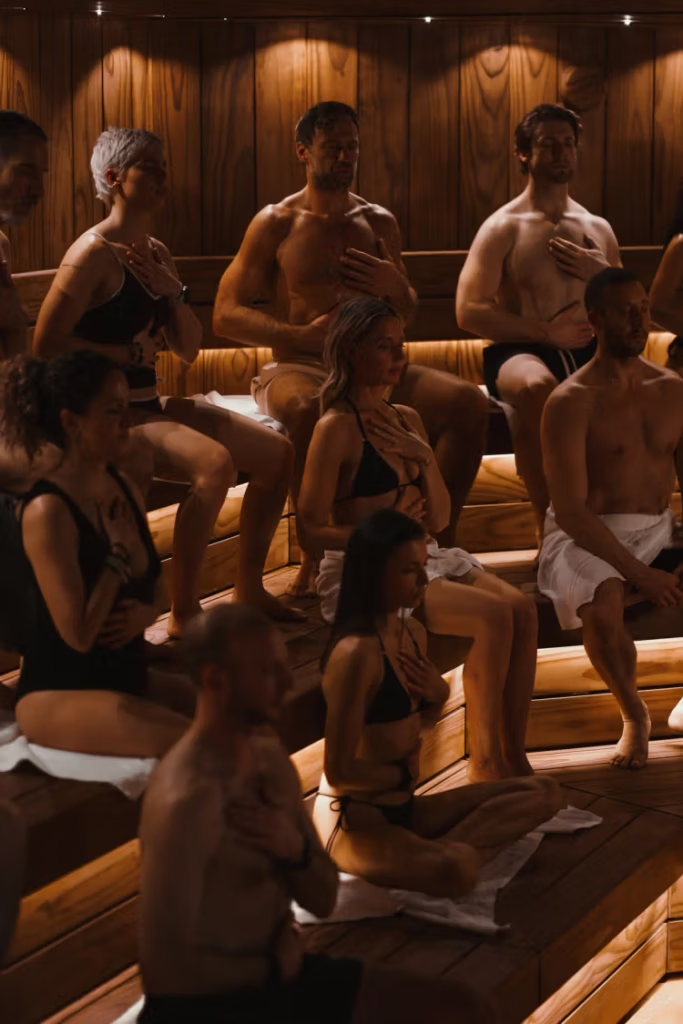
Contrast therapy has gone from footy change rooms to a social night out. London’s Arc opened in Canary Wharf in January 2025 as a dedicated contrast therapy club, built around a 65-person sauna (Time Out; Dezeen). Its plunge room has eight two-person ice baths, plus an amphitheatre-style lounge designed to feel more like a nightclub than a gym (Dezeen; Canary Wharf Group).
The pitch is the same one driving the Aussie clubs: people want somewhere to look after their health that isn’t a lonely session on a treadmill. The wellness industry has been talking up social connection as the future of wellness for a while now. Our read: for a lot of blokes, a sauna with mates beats a beer with mates, and it’s a much easier sell than therapy.
Contrast therapy FAQ
What is contrast therapy?
Alternating heat and cold in one session, usually a sauna or hot tub followed by an ice bath or cold plunge, repeated for a few rounds.
How long should you do contrast therapy for?
With a sauna, about 10 to 15 minutes hot and 1 to 3 minutes cold, for 2 to 3 rounds. With hot and cold tubs, about a minute in each, for up to roughly 15 minutes in total. Beginners should go shorter.
Should you end contrast therapy on hot or cold?
The research doesn’t pick a winner. Finish cold if you want to feel alert, warm if you want to relax or sleep, and warm if you can’t stop shivering.
Is contrast therapy good after a workout?
After a game, a hard run or a conditioning session, it can reduce soreness. Straight after lifting, the cold part may blunt muscle growth, so leave several hours or do it on a rest day if size and strength are the goal.
How often should you do contrast therapy?
There’s no proven ideal dose. Our read: once or twice a week is a sensible start. In the Finnish sauna study, men who used a sauna more often had better heart outcomes, but that’s sauna use alone and it shows a link, not cause and effect.
Can you do contrast therapy at home?
Yes. A hot bath or spa plus a cold tub works. Hot and cold showers are the easy version, but they’re probably less effective than full immersion.
Who shouldn’t do contrast therapy?
Check with your doctor first if you have heart disease, blood pressure problems, an irregular heartbeat or diabetes, or you take medication that affects your heart or fluids. Never do it after drinking, and don’t do it alone.