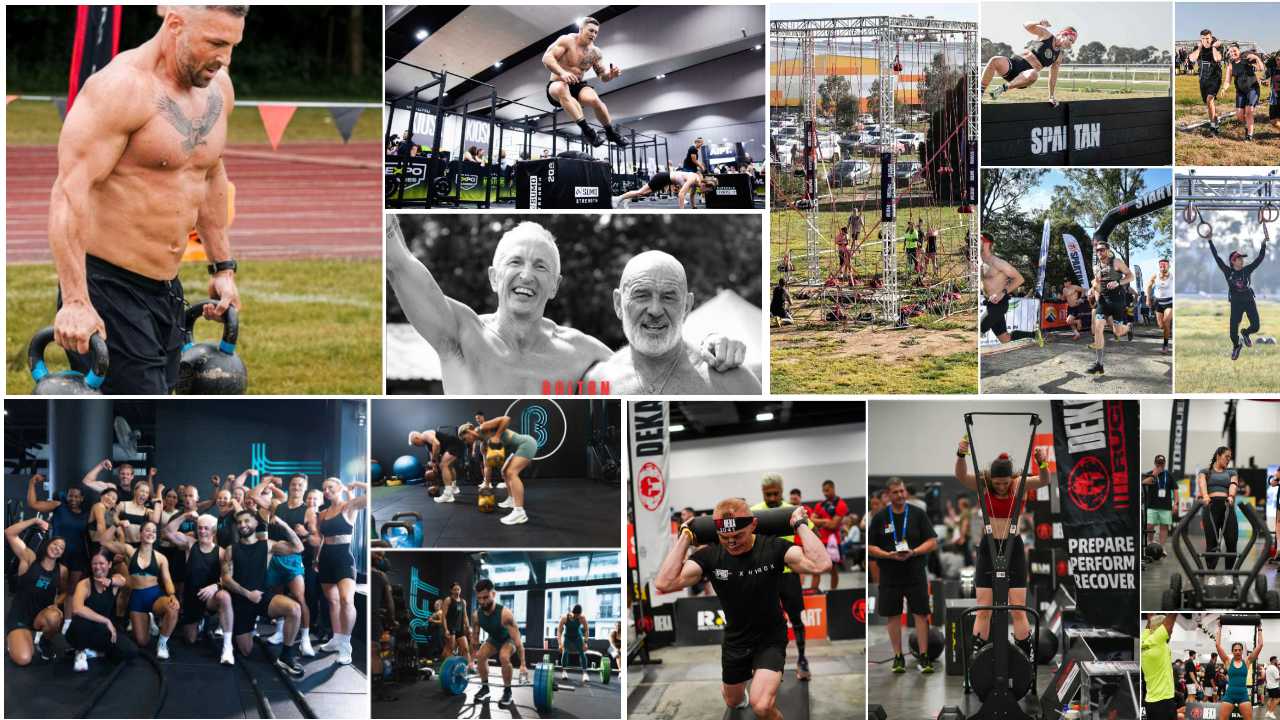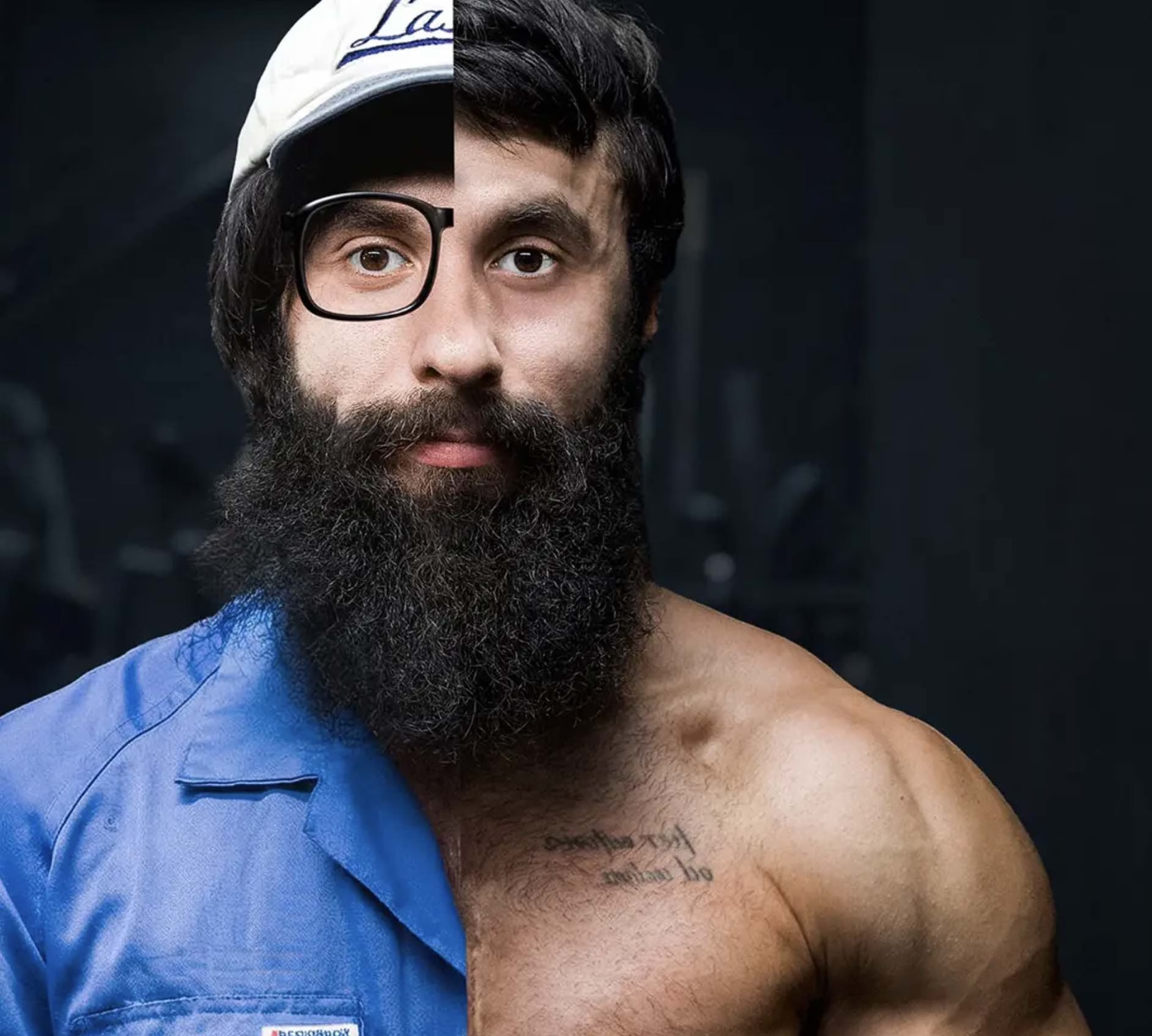

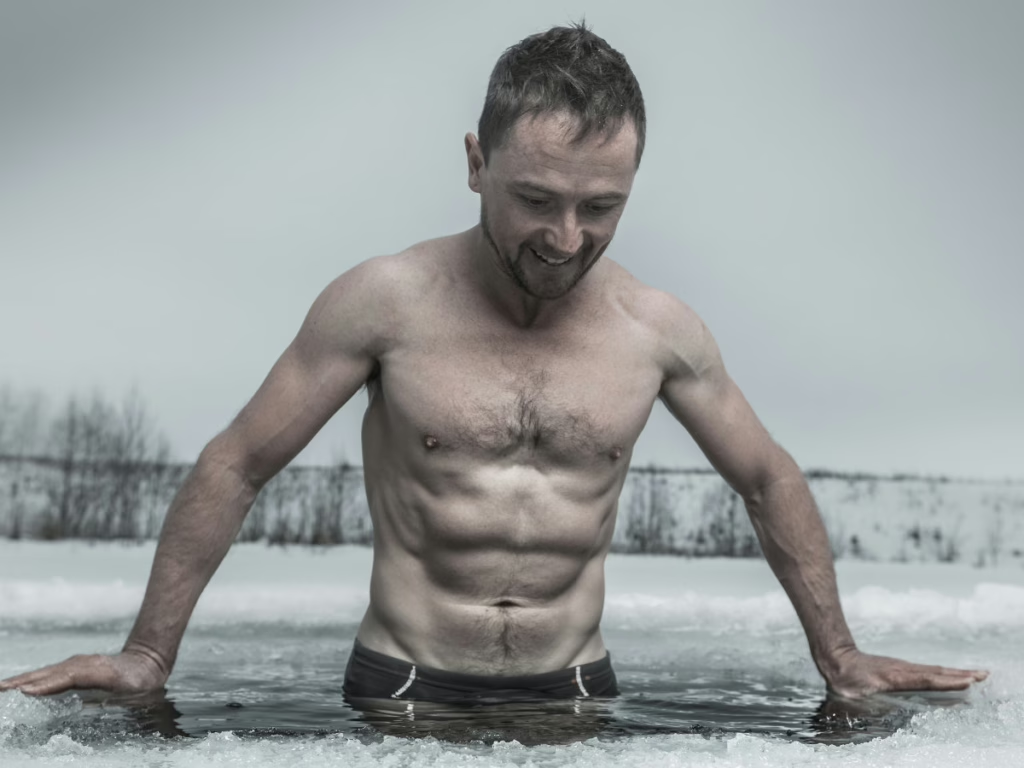
Matt trains at 5.30am. Heavy squats. Controlled negatives. Proper depth. Then he walks straight to the ice bath. Three minutes at 10°C. He settles in, thinking he’s “optimising recovery”. When in fact, he is probably suppressing muscle growth.
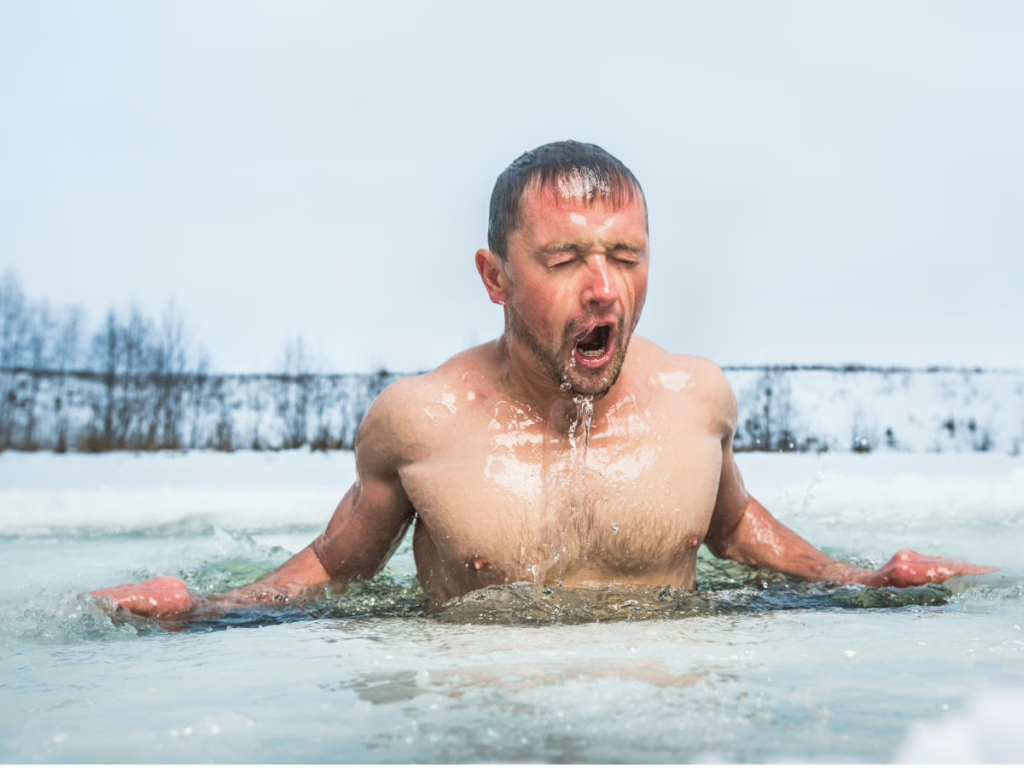
The most cited study on this comes from Roberts et al. (2015), published in The Journal of Physiology. Over 12 weeks, subjects performing resistance training were split into two groups: cold water immersion or active recovery. The cold group gained significantly less muscle mass and strength. The researchers concluded that regular post-exercise cold water immersion “attenuated long-term gains in muscle mass and strength.”
The mechanism is not mysterious. Resistance training triggers anabolic signalling pathways, particularly mTOR activation and satellite cell activity. The same study found cold exposure reduced the activity of pathways involved in muscle hypertrophy. In simple terms: you are dampening the signal that tells your body to grow.
A 2019 review in Sports Medicine reinforced this concern. The authors noted that while cold water immersion reduces delayed onset muscle soreness, its chronic use after strength training “may impair long-term adaptations of strength and hypertrophy.”
Even The New York Times covered the issue. In 2021, they reported on emerging evidence suggesting that frequent post-lift ice baths may interfere with muscle growth goals, quoting researchers who warned that what helps you feel better short term may blunt adaptation long term.
This is where the fitness industry muddies the water.
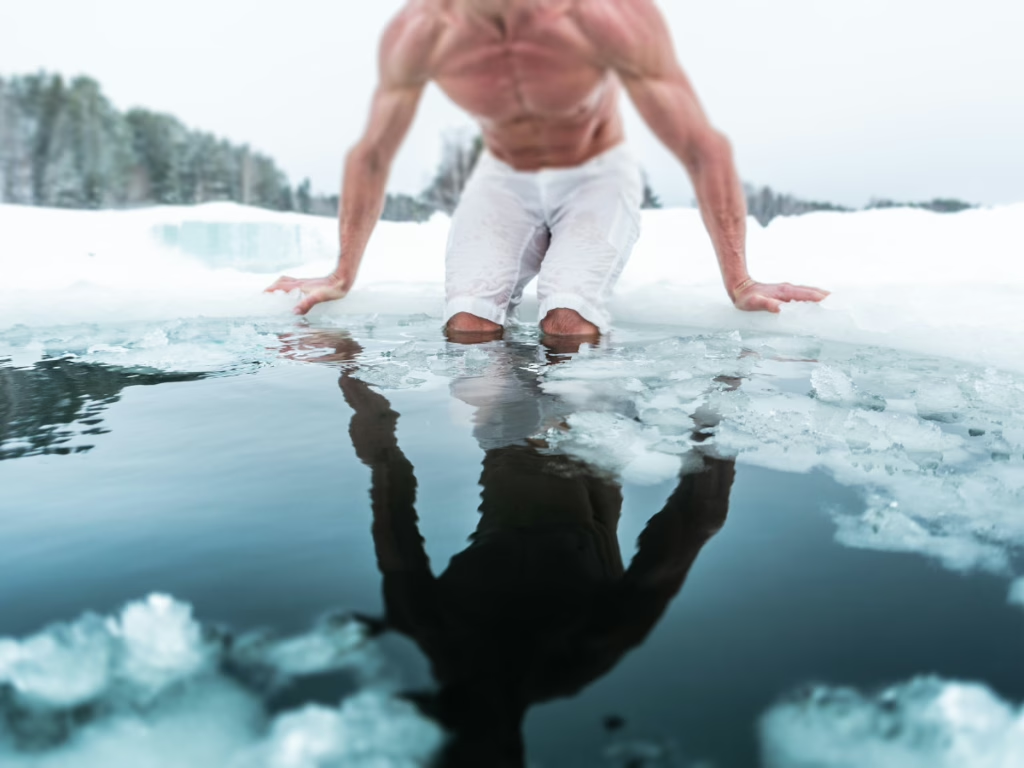
Cold immersion is useful in high-frequency competition settings. Tournament sport. Back-to-back fixtures. Situations where reducing soreness tomorrow matters more than maximising adaptation over 12 weeks. But most men reading MFO are not playing State of Origin on Sunday.
They are trying to add 3–5 kg of lean mass this year. They are trying to get stronger. In that context, blunting inflammation is not always helpful. Inflammation is part of the growth signal.
There is also the psychological appeal. Ice baths look hardcore. They signal discipline. They create content. But muscle hypertrophy is boring. Progressive overload. Adequate protein. Sufficient calories. Sleep. Repeat.
The evidence does not say cold plunges are useless. It says timing and frequency matter. If hypertrophy is your primary goal, avoid regular cold immersion immediately after lifting sessions. Separate it from strength blocks. Use it strategically, not ritualistically.
That nuance is missing in most Instagram advice.
FAQ SECTION
Multiple studies, including a 2015 paper in The Journal of Physiology, show that regular cold water immersion after resistance training can reduce long-term muscle mass and strength gains.
Ice baths can reduce soreness and perceived fatigue. They are useful in competition settings where short-term recovery is more important than long-term adaptation.
If your primary goal is hypertrophy or strength development, avoid regular cold immersion immediately after lifting sessions.
Ice baths are most useful for competitive athletes in high-frequency competition phases. If you’re playing tournament sport, training twice a day, or needing rapid recovery between matches, cold water immersion can reduce soreness and perceived fatigue. In those cases, short-term performance may matter more than long-term muscle growth.
If hypertrophy is your goal, avoid ice baths immediately after resistance training. Use them on conditioning days, during deload weeks, or several hours after lifting rather than straight post-session. Separating cold exposure from heavy strength work may reduce its impact on anabolic signalling.
Yes. Research consistently shows cold water immersion can reduce delayed onset muscle soreness (DOMS) and perceived fatigue. The key distinction is that feeling less sore does not necessarily mean you are adapting better. Reduced inflammation can also blunt the cellular processes involved in muscle growth.
Generally, yes. Endurance athletes benefit more from improved recovery between sessions and races. Since hypertrophy is not the primary adaptation for endurance sport, the potential blunting of muscle growth is less of a concern. For lifters in a mass-building phase, the trade-off becomes more relevant.