
If you ran marathons or rode long distances more than 10 or so years ago, you probably remember your first energy gel mid race. Something between condensed milk from the tube and cake icing, the taste was hard to swallow, literally. You downed it and hoped your stomach and bowels didn’t rebel halfway through the race.
Early products helped define endurance fuelling in the 1990s and early 2000s. The premise was simple: deliver quick carbohydrates in a small, portable packet athletes could consume mid-race. They worked, sort of. But they weren’t exactly pleasant.
“At the time the sports nutrition available was incredibly sweet and really hard to stomach,” says Marewa Sutherland, ex-athlete, sports nutritionist and co-founder of New Zealand-based PURE Sports Nutrition. “This was an area when nutrition companies of the day had massive margins with these poor ingredients, and little science behind them as well.”
So PURE Sports Nutrition was born. Marewa Sutherland and her brother Simon Kraak launched the company in 2012 after struggling to find endurance nutrition in NZ that athletes could actually tolerate while still delivering the fuel needed to perform.

Over the past decade, the company has grown and sports nutrition research has changed how endurance athletes think about fuelling, catching up the with brother-sister duo’s thinking. Instead of the old “one gel every hour” rule, many runners, cyclists and triathletes now aim for far higher carbohydrate intake during prolonged exercise.
Modern guidelines suggest endurance athletes may need 60 to 90 grams of carbohydrate per hour, and sometimes more in elite competition. That shift is forcing sports nutrition companies to rethink the humble gel.
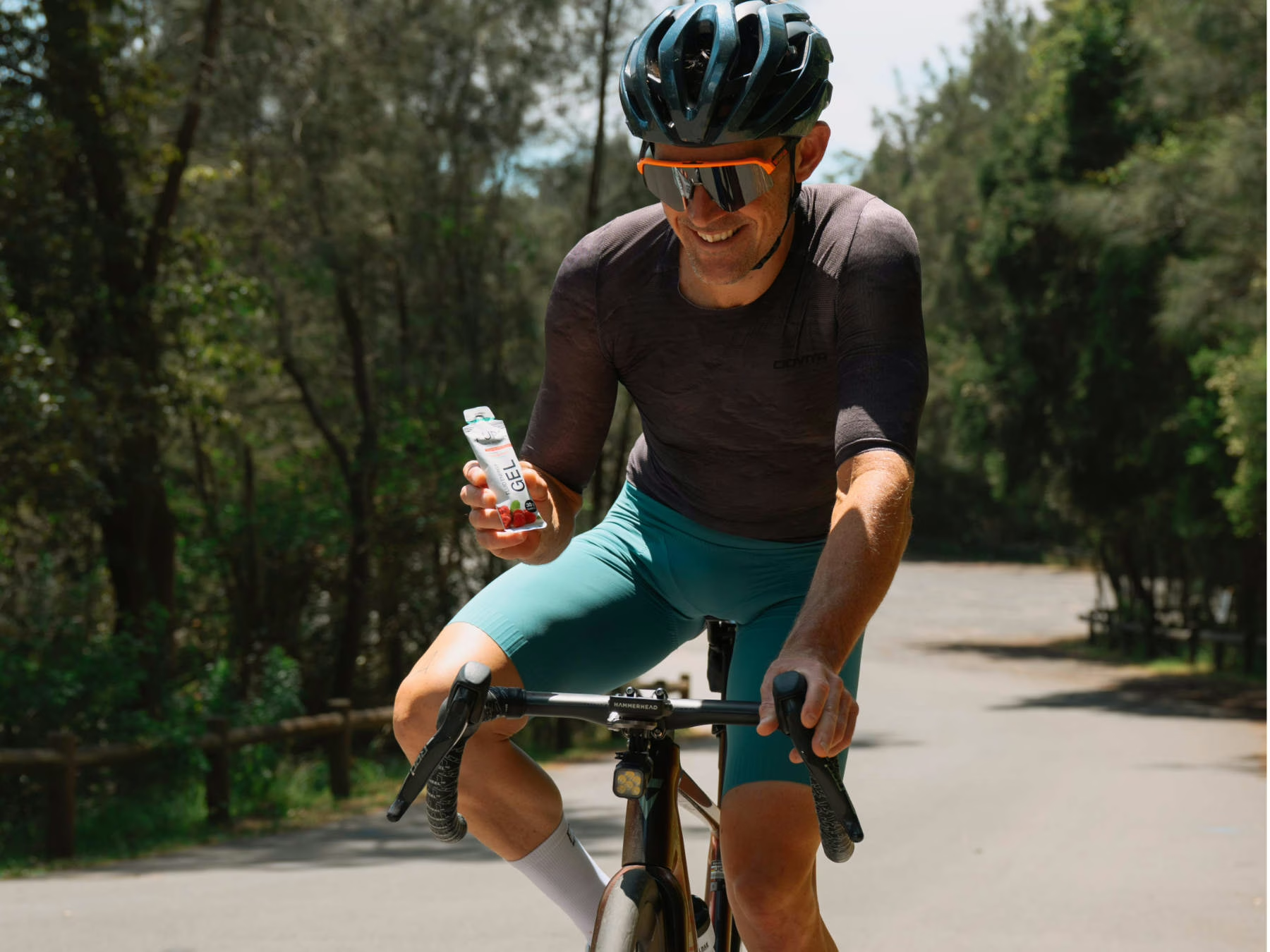
The New Zealand company launched its Race Energy Gel as part of its Performance+ range. Each sachet delivers 38 grams of carbohydrate, a noticeably larger fuel load than many traditional gels.
“For endurance athletes the biggest challenge is simply getting enough fuel,” says Sutherland. “The science has moved toward higher carbohydrate intake for performance.”

That focus on stomach comfort is one reason gels have evolved so much. High carbohydrate intake only helps performance if athletes can absorb it without gastrointestinal distress.
Today’s formulations often rely on combinations of carbohydrate sources designed to increase absorption rates and reduce gut issues during exercise. The goal is to deliver more energy without overwhelming the digestive system.
PURE’s Race Energy Gel follows that philosophy, pairing its carbohydrate load with 200 mg of sodium and 400 mg of citrulline malate, a compound used in sports nutrition to support blood flow and help reduce fatigue.

“Citrulline supports nitric oxide production,” Sutherland explains. “That helps widen blood vessels so more oxygen and nutrients can reach working muscles.”
Whether that translates to measurable endurance gains is still debated in sports science circles, but the ingredient is appearing more frequently in modern performance supplements.
Another option is caffeine. PURE’s gel includes a version delivering 80 mg of caffeine, roughly the equivalent of a strong coffee. Caffeine remains one of the most researched performance aids in sport, consistently linked to improvements in endurance and perceived effort.

But caffeine isn’t always smooth for athletes during competition. To address that, the caffeinated version also includes L-theanine, an amino acid sometimes used to soften caffeine’s stimulating effects.
“The idea is to maintain the focus benefits of caffeine without the jittery feeling some athletes experience,” Sutherland says.
Beyond ingredients, the broader endurance fuelling conversation is shifting toward the practical mistakes long distance athletes still make. And surprisingly, the biggest ones remain simple.
“I think the biggest mistake is fuelling and dehydration,” says Marewa. “There is such solid science that shows that once we lose, um, over 2% of our body weight, our performance lowers”.

Under-fuelling is another issue. Despite better sports nutrition products, many recreational runners still consume far less carbohydrate than recommended during races or long training sessions.
Part of the problem is habit. Many athletes simply follow outdated fuelling strategies from years ago. Yet gels remain one of the simplest and most effective tools endurance athletes have.
“They’re still the fastest way to deliver energy during exercise,” Marewa says. “There’s no real replacement for that.”
The Details
• 38 g carbohydrates per sachet
• 200 mg sodium
• 400 mg citrulline malate
• Optional 80 mg caffeine + L-theanine version
• Flavours: Lemon and Cola
• Larger pouch option with 100 g carbohydrates for longer sessions
Available through selected retailers across Australia and New Zealand.
RRP from $6.49
More information: https://www.puresportsnutrition.com