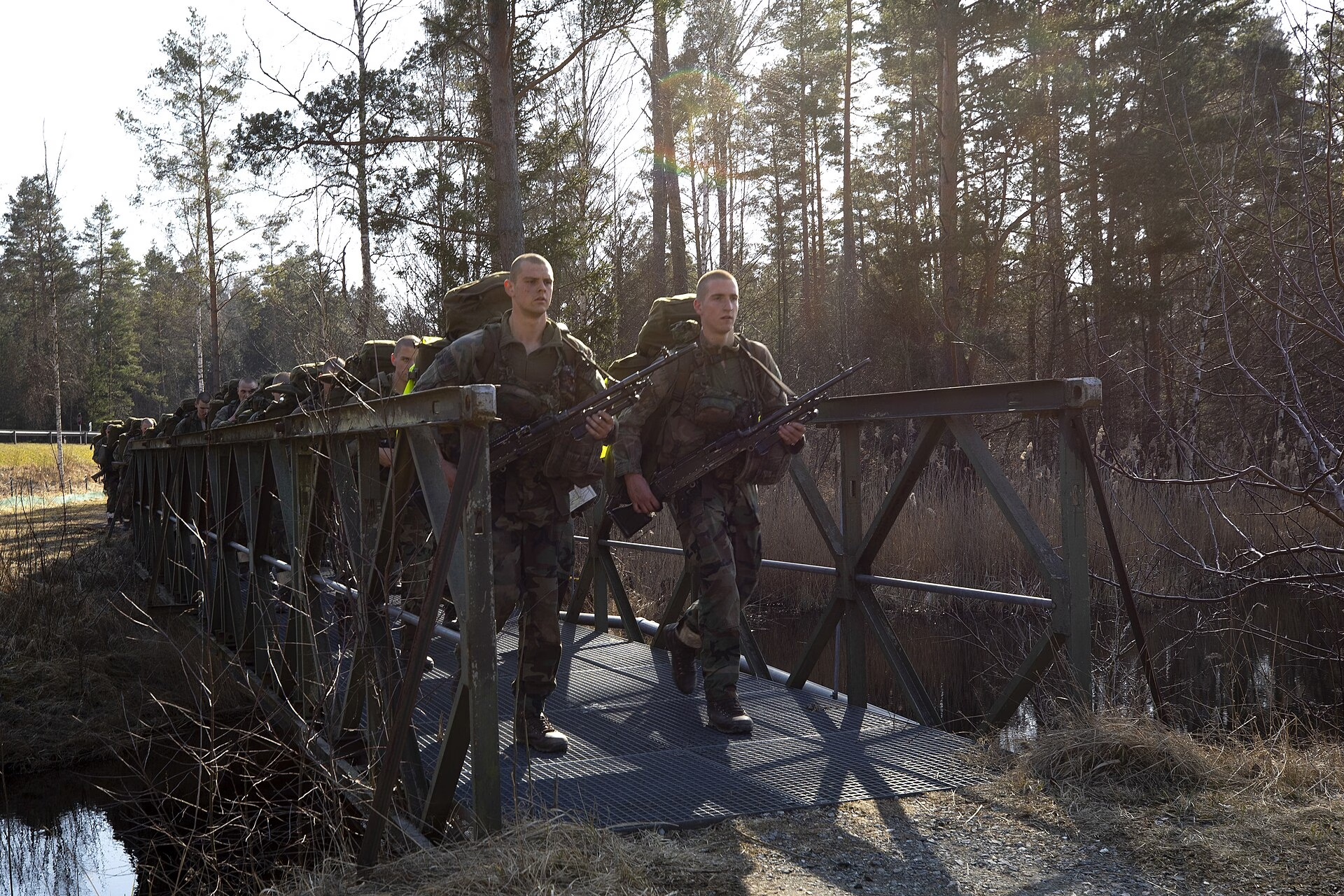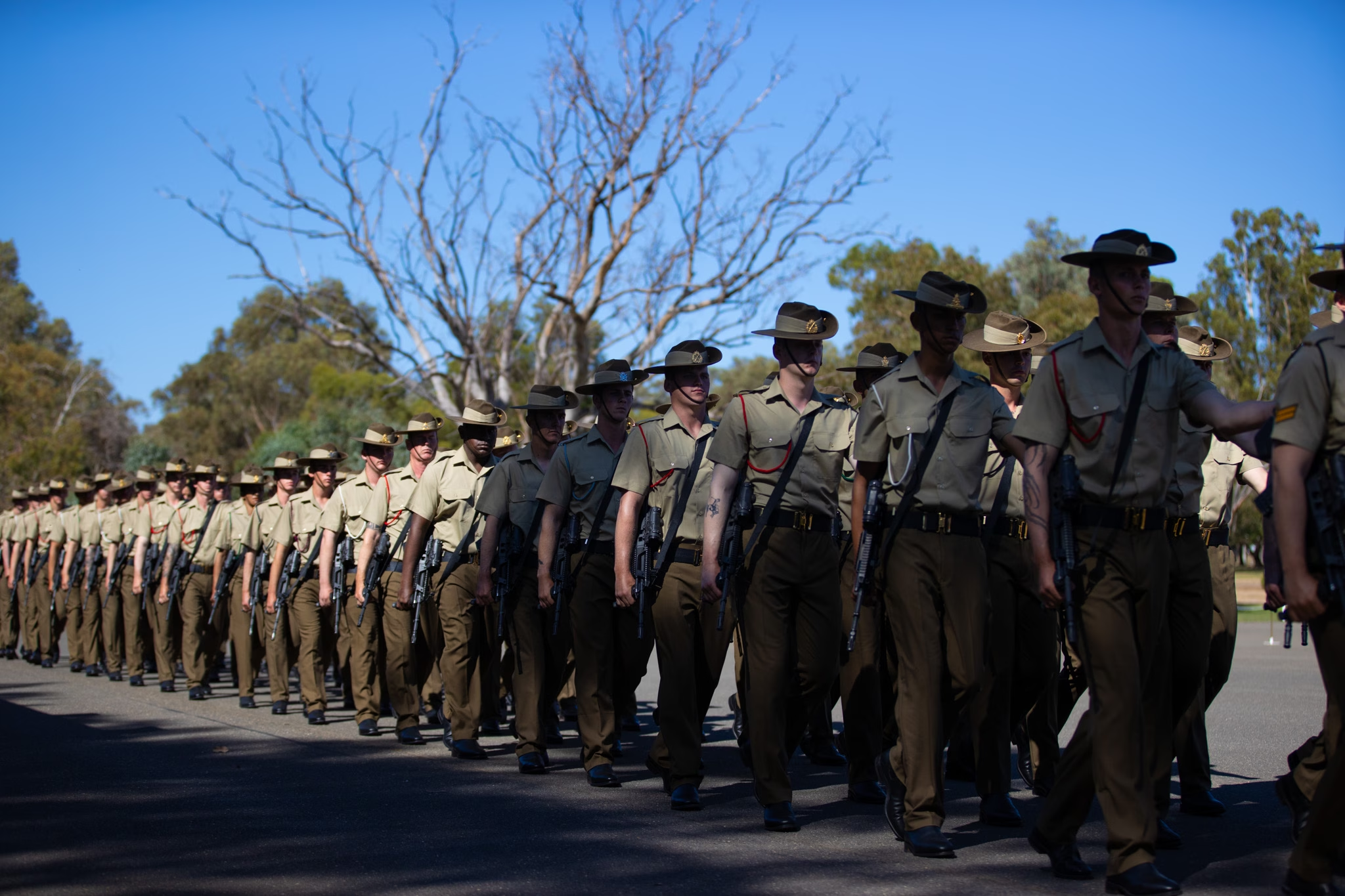
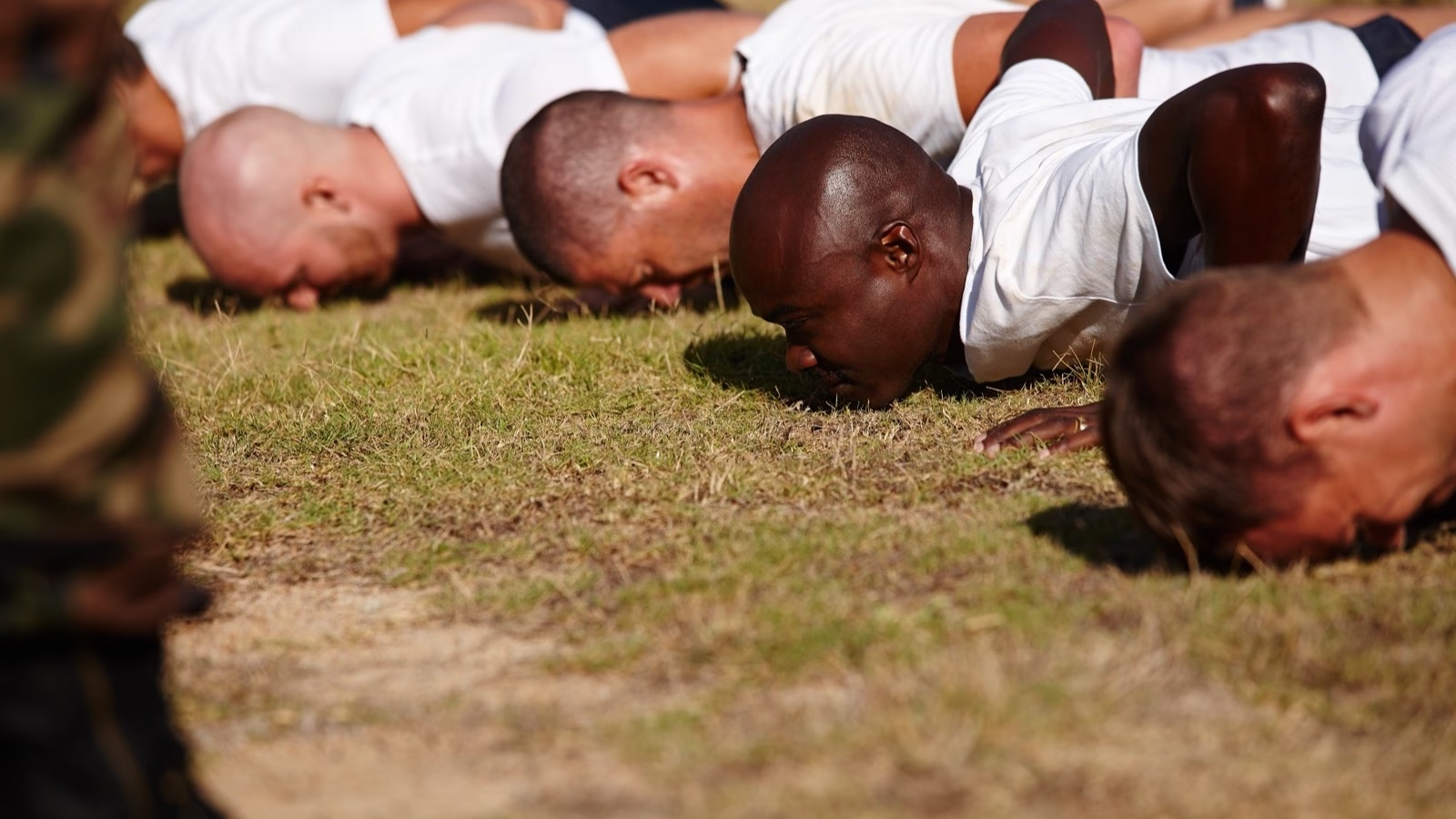

Planning to join the Army? The fitness test depends on where you’re applying. In Australia, you sit a Pre-entry Fitness Assessment before you join, and the standard depends on your role. In the US, the Army Fitness Test starts at Basic Training: it isn’t a test you pass to enlist. Here’s every event, the score you need at your age, the new combat standard and Combat Field Test, and how to train for both. The standards come straight from the official sources.
- US Army: the Army Fitness Test (AFT): deadlift, hand-release push-ups, sprint-drag-carry, plank and a 2-mile run
- Scoring: 0 to 100 points per event, 500 maximum
- When: from Basic Training on. It isn’t a pre-enlistment test
- To pass: at least 60 points in every event, and 300 in total. 21 combat jobs need 350, still with 60 in every event
- New for combat jobs: the Combat Field Test: seven events back to back in boots, in 30 minutes or less, for 24 combat jobs
- Australian Army: the Pre-entry Fitness Assessment (PFA), before you join: push-ups, sit-ups and the beep test
- To join a combat role here: 15 push-ups, 45 sit-ups and level 7.5 on the beep test
What is the Army Fitness Test?
The Army Fitness Test (AFT) has been the US Army’s official fitness test since 1 June 2025. It replaced the Army Combat Fitness Test (ACFT), and the Army says the new standards were built using RAND Corporation analysis and nearly a million test records (US Army). You don’t sit it to get in: it starts at Basic Training for soldiers and at initial training for officers (GoArmy).
The big change is for combat jobs. In 21 combat specialties, including infantry and armour, the standard is now sex-neutral but still age-normed: men and women in the same age group are scored on the same column. They need 350 points instead of 300, and still at least 60 in every event. That applies from 1 January 2026 for the active Army and from 1 June 2026 for the Reserve and National Guard.
The five events
| Event | What you do | Kit |
|---|---|---|
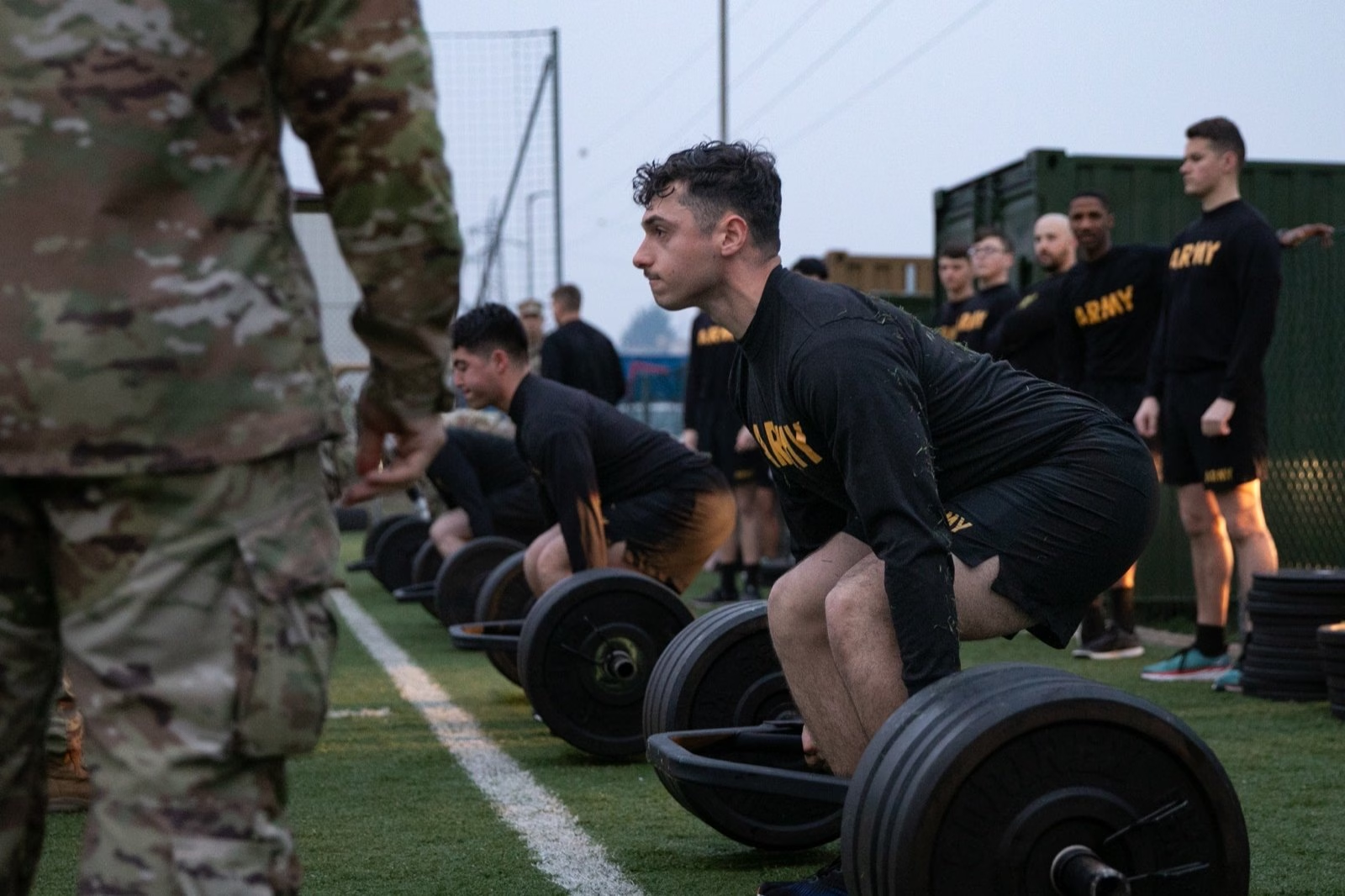
| 1. Three-rep max deadlift | The heaviest weight you can lift for three reps in a row. Two attempts | Hex bar (60 lb) and plates |
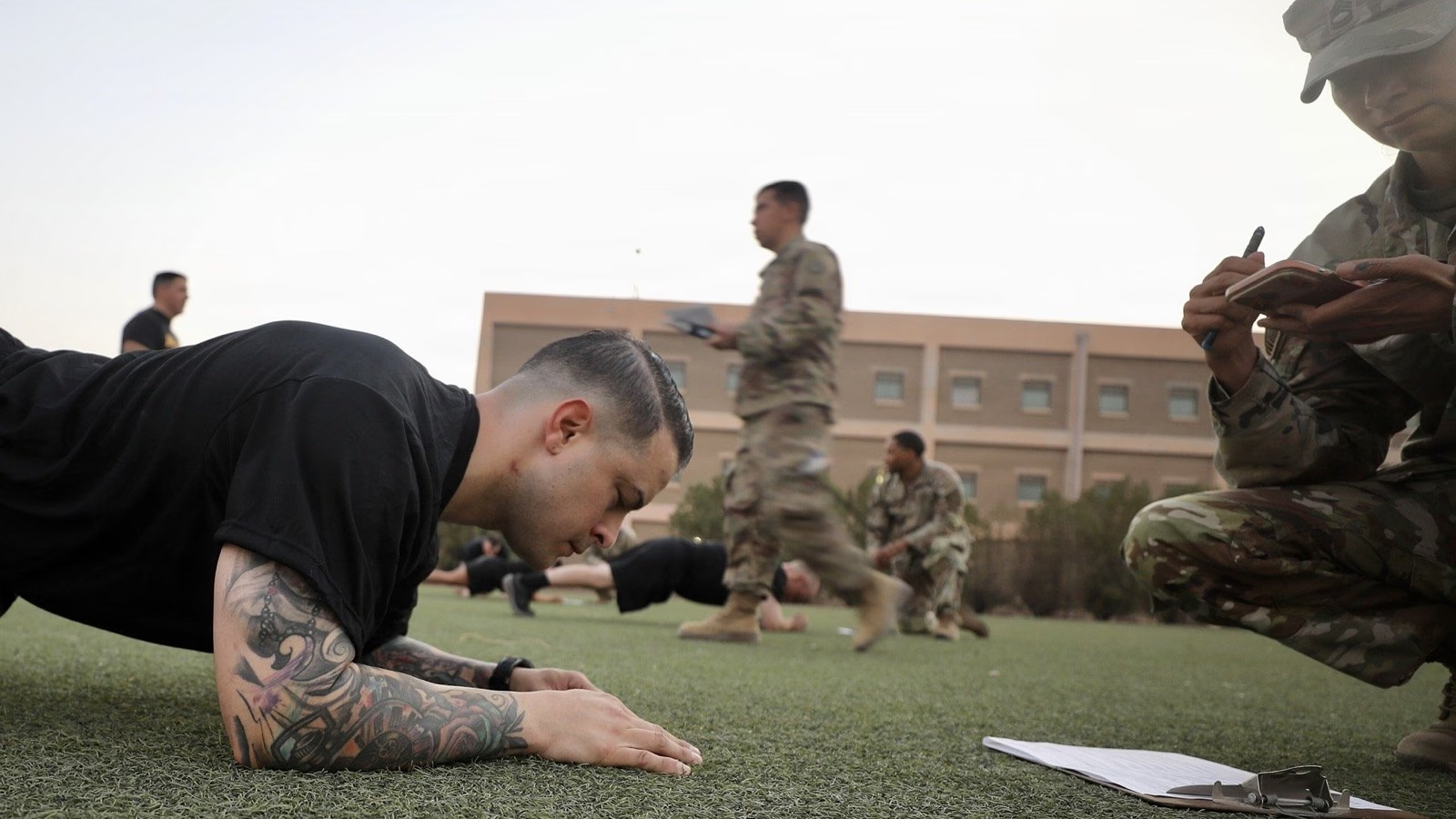
| 2. Hand-release push-up | As many as you can in 2 minutes, lifting your hands off the ground at the bottom of each rep | Flat ground |
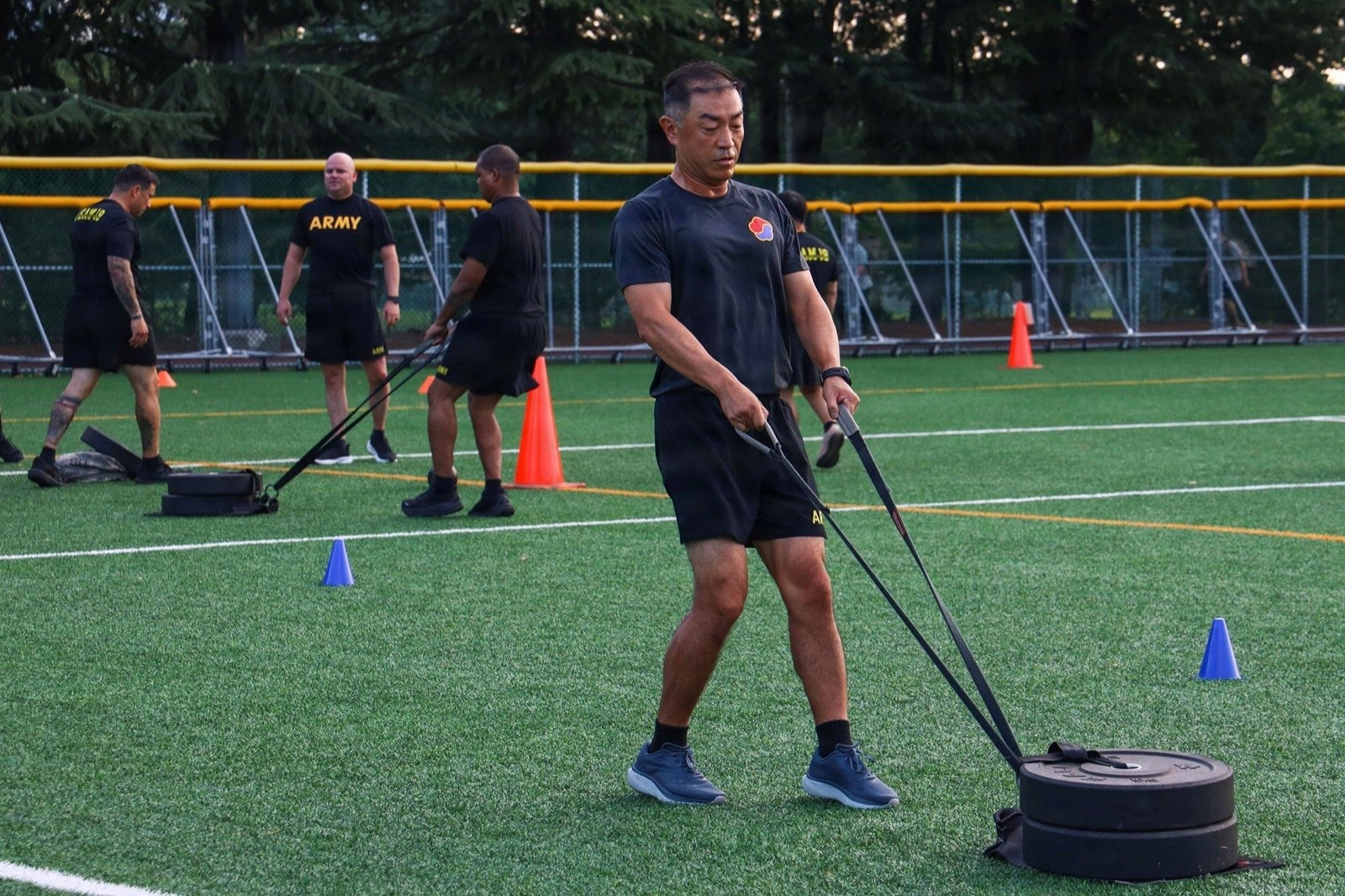
| 3. Sprint-drag-carry | Five 50 m shuttles: sprint, sled drag, lateral shuffle, kettlebell carry, sprint | 90 lb sled, two 40 lb kettlebells |
| 4. Plank | Hold a straight-line plank as long as you can | Flat ground |
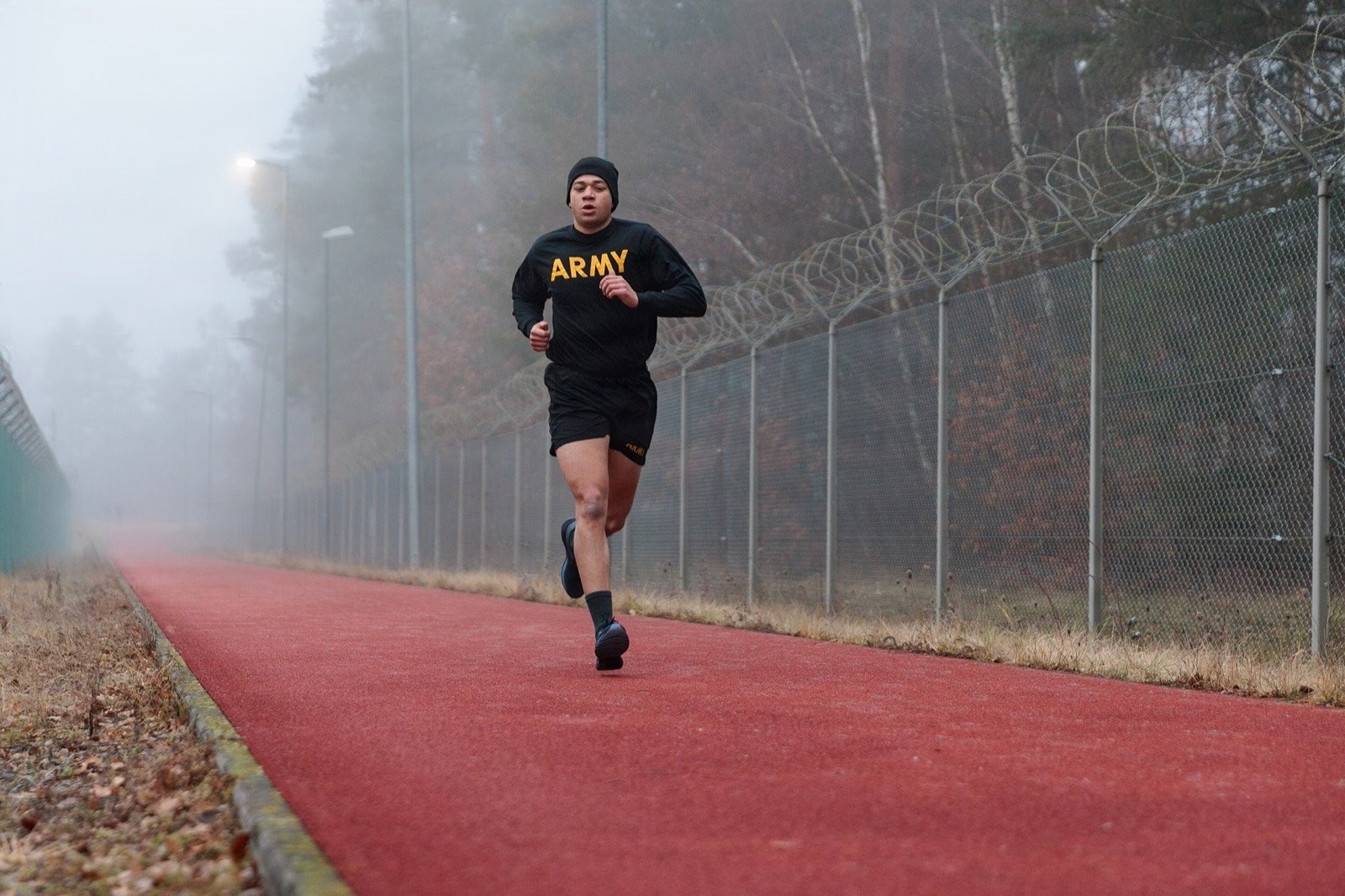
| 5. Two-mile run | 3.2 km for time on a flat, measured course | Track, road or path |
The standing power throw from the old ACFT is gone. In the plank, you get one verbal warning to fix your position. Touch the ground with your knees, lift a hand or foot, or sag out of a straight line, and the clock stops (US Army).
AFT standards: what you need to pass
These are the men’s minimum and maximum scores for each event. Combat specialties use the same column for everyone, so if you want a combat job, these are your numbers whatever your sex.
| Event | 17-21 | 22-26 | 27-31 | 32-36 | 37-41 |
|---|---|---|---|---|---|
| Deadlift (lb) | 150 | 150 | 150 | 140 | 140 |
| Hand-release push-ups | 15 | 14 | 14 | 13 | 12 |
| Sprint-drag-carry | 2:28 | 2:31 | 2:32 | 2:36 | 2:41 |
| Plank | 1:30 | 1:25 | 1:20 | 1:15 | 1:10 |
| Two-mile run | 19:57 | 19:45 | 19:45 | 20:44 | 20:44 |
| Event | 17-21 | 22-26 | 27-31 | 32-36 | 37-41 |
|---|---|---|---|---|---|
| Deadlift (lb) | 340 | 350 | 350 | 350 | 350 |
| Hand-release push-ups | 58 | 61 | 62 | 60 | 59 |
| Sprint-drag-carry | 1:29 | 1:30 | 1:30 | 1:33 | 1:36 |
| Plank | 3:40 | 3:35 | 3:30 | 3:25 | 3:20 |
| Two-mile run | 13:22 | 13:25 | 13:25 | 13:42 | 13:42 |
Our read: 60 in every event only adds up to 300, so if you’re aiming for a combat job you need to average 70.
Not in these tables? We’ve printed the men’s and combat columns for ages 17 to 41. If you’re over 41, or a woman in a non-combat job, find your numbers in the official AFT score tables (PDF).
For the run, the pass time at 17-21 works out to about 6:12 per kilometre. A perfect 100 needs about 4:09 per kilometre for 3.2 km.
The Combat Field Test
Soldiers in 24 designated combat specialties also have a second test. That’s a different list from the 21 on the 350-point standard. The Combat Field Test is done in combat uniform and boots, with all seven events back to back. It’s pass or fail, the same for every age and sex, and it has to be finished in 30 minutes or less (US Army):
- 1-mile run
- 30 dead-stop push-ups
- 100 m sprint
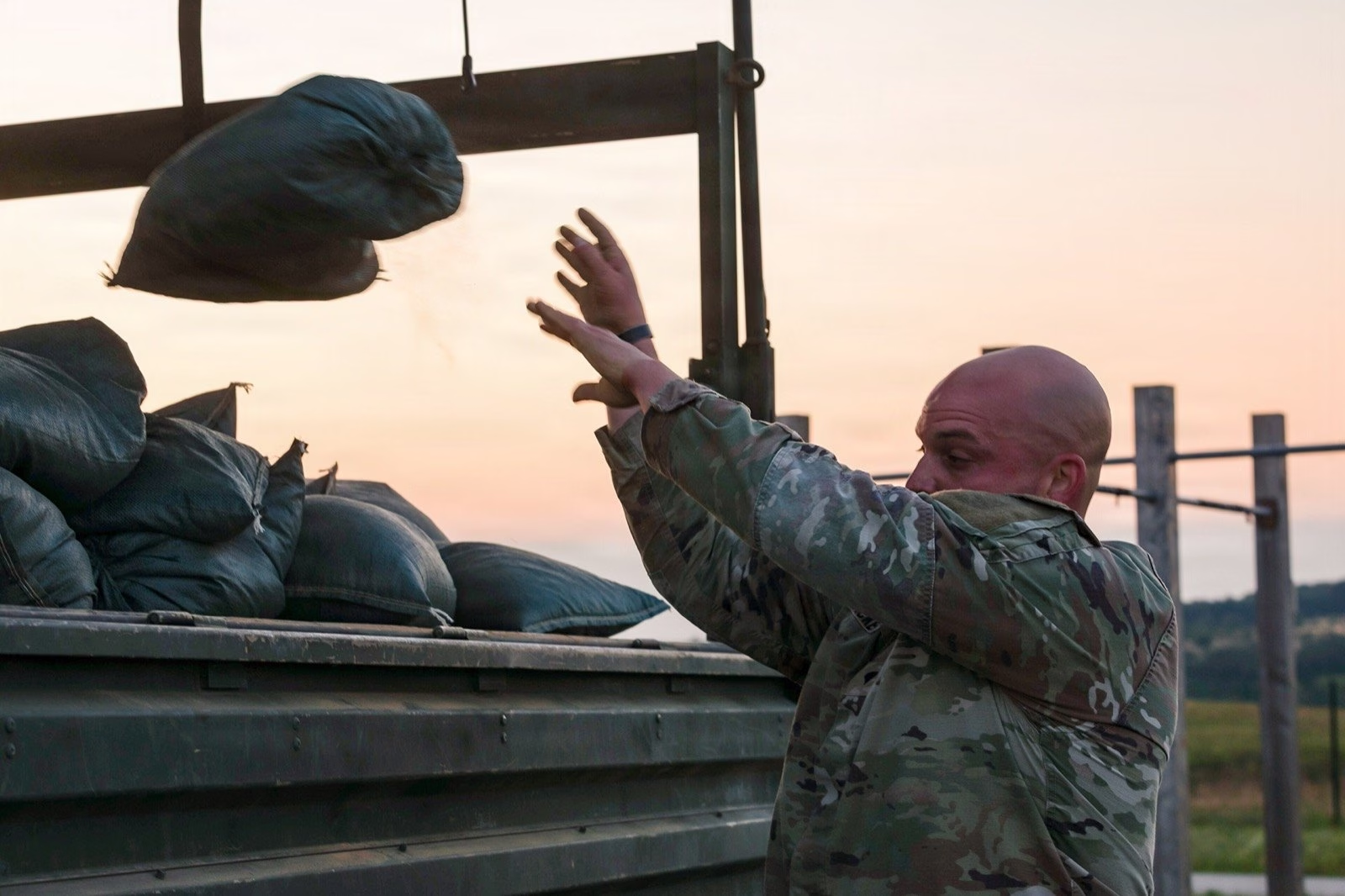
- 16 lifts of a 40 lb sandbag onto a 65-inch platform
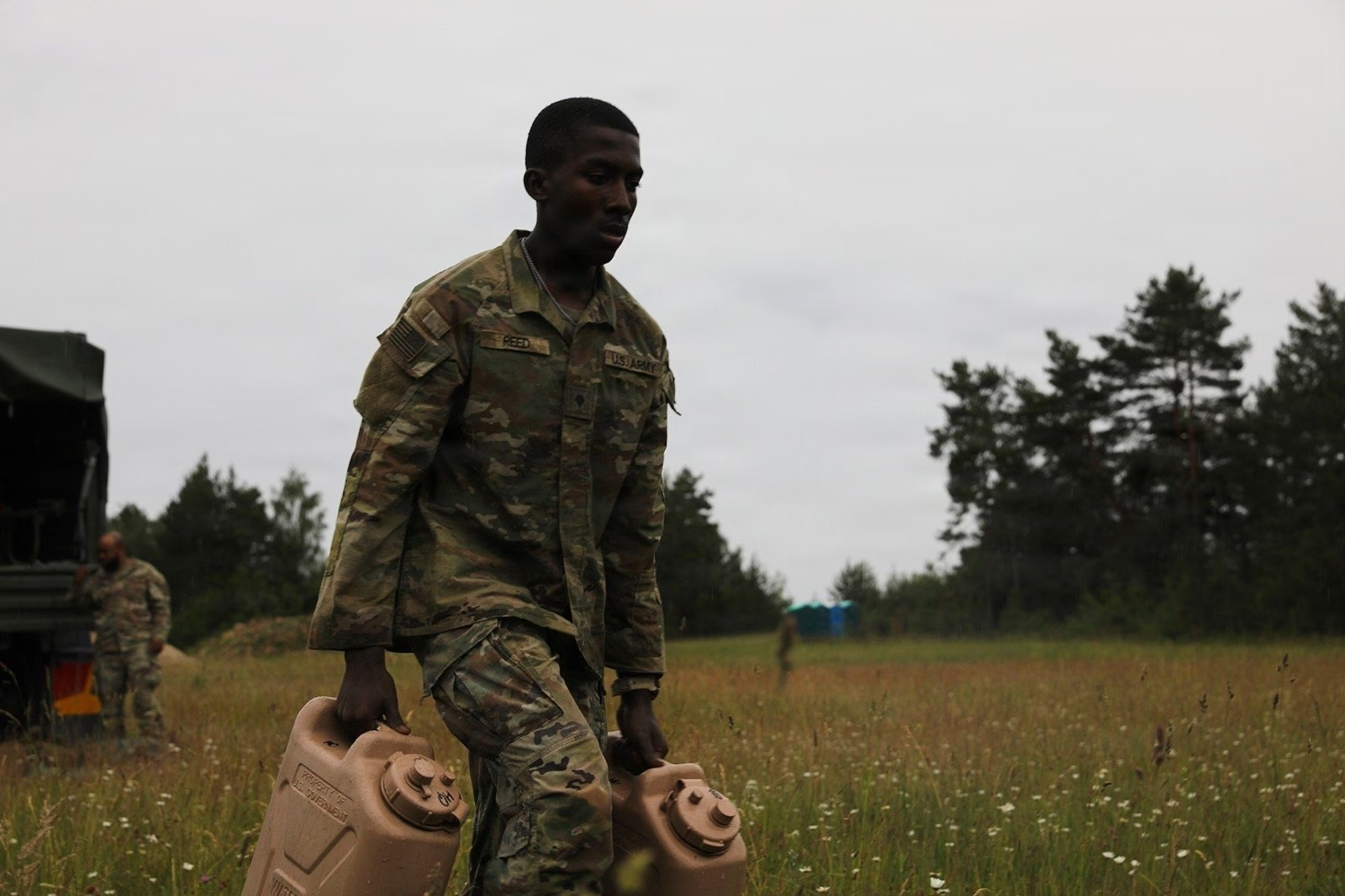
- 50 m carry of two 40 lb water cans
- 50 m movement drill: 25 m high crawl, then 25 m of 3-5 second rushes
- 1-mile run to finish
Regular Army, Active Guard Reserve, and Reserve soldiers on active-duty orders of 365 days or more take one AFT and one CFT a year. Other Reserve soldiers in those jobs take one test a year, alternating between the two. Diagnostic testing started on 17 April 2026, and the CFT counts for record from 17 April 2027 (US Army).
Our read: this is a work test, not a gym test. A mile, then lifting and carrying, then another mile, all in boots. If you train only for the AFT events, this is where it shows.
The Australian Army fitness test
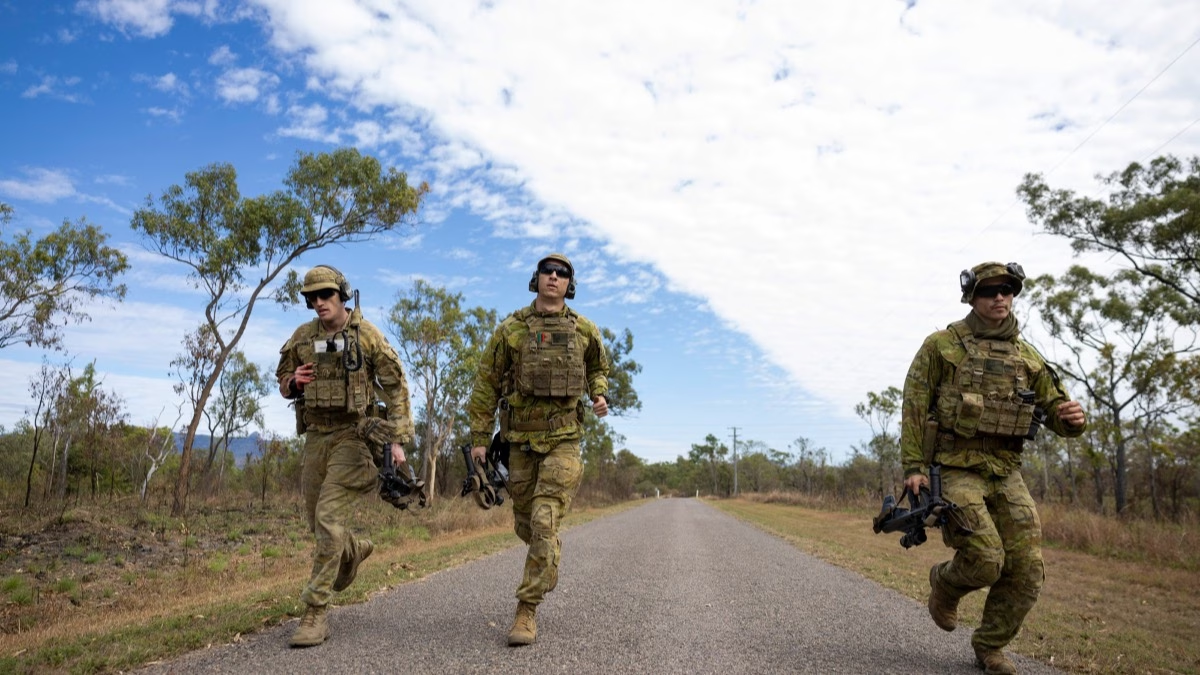
In Australia, every Army role and every age has to pass the Pre-entry Fitness Assessment (PFA), which you may be asked to sit twelve weeks before you join. It’s push-ups, sit-ups with your feet held, and the 20 m shuttle run, better known as the beep test. ADF Careers recommends a body mass index (BMI) between 18.5 and 32.9. Outside that range you may be eligible for a medical waiver, but entry isn’t guaranteed (ADF Careers).
| Army role (men) | Push-ups | Sit-ups | Beep test |
|---|---|---|---|
| General entry combat, and officer entry | 15 | 45 | 7.5 |
| General entry combat support, specialist service officer | 8 | 20 | 6.1 |
| Graduate and undergraduate officer entry | 8 | 20 | 6.1 |
| Special Forces (plus 6 pull-ups) | 40 | 60 | 10.1 |
| Navy Diver, for comparison | 30 | 25 | 10.1 |
Our read: the entry bar is low on purpose. Fifteen push-ups and level 7.5 is what gets you through the gate, not what gets you through recruit training at Kapooka. Turn up well above the minimum. The Army also runs a seven-week pre-conditioning program at Kapooka for recruits who need it.
How to train for the army fitness test
This is our read on a sensible eight-week build for the AFT.
| Day | Session |
|---|---|
| Mon | Strength: deadlifts, building to heavy sets of 3, then push-up sets |
| Tue | Run intervals: 6 x 400 m faster than goal 2-mile pace, 90 s rest |
| Wed | Sprint-drag-carry practice: shuttle sprints, sled or towel drags, side shuffles, heavy carries |
| Thu | Easy 30-40 min run, then 3-4 plank holds |
| Fri | Strength: deadlifts or squats, hand-release push-up practice |
| Sat | Long easy run, or a ruck if you’re going for a combat job |
| Sun | Rest |
Event by event
- Deadlift: practise on a hex or trap bar if you can, because that’s what you’ll test on. Most young men can reach 150 lb quickly. The points are in getting to 250 and beyond
- Hand-release push-ups: the hand release kills momentum, so they’re harder than normal push-ups. Practise the exact movement, and don’t sprint the first 30 seconds
- Sprint-drag-carry: no sled? Drag a weight plate on a towel, and carry dumbbells or full water jugs. Practise turning at the line
- Plank: build holds up to three minutes, and add dead hangs for grip on the carry
- Two-mile run: one interval session, one easy run and one long run a week. The Norwegian 4×4 is a good alternative to Tuesday’s 400s
Training for the Australian PFA instead
Use the same week with three swaps, so every session trains something you’ll be tested on:
- Monday and Friday: drop the deadlifts. Do push-up sets and sit-up sets with your feet held, the way the PFA counts them
- Wednesday: replace sprint-drag-carry practice with 20 m shuttle-run practice. Run the beep test itself every two or three weeks
- Tuesday: keep the intervals. Shorter, faster reps help the later beep-test levels
Starting from scratch? Do our free 28-day military calisthenics plan first. Over 40? Read military calisthenics for men over 40. Check your numbers against our push-up standards and pull-up standards.
MFO’s publisher Todd Cole is an ex-Navy clearance diver who passed SAS selection. His advice for anyone enlisting: act as if you’re already in boot camp. Run early, stop for push-ups along the way, favour bodyweight work over heavy gym sessions, and carry a loaded pack up hills. Read his full take in our military calisthenics workout.
Army fitness test FAQ
What is the minimum score to pass the Army Fitness Test?
60 points in each of the five events and 300 in total. Soldiers in the 21 combat specialties need 350, still with at least 60 in every event.
How many push-ups do you need for the Army?
In the US, a man aged 17-21 needs 15 hand-release push-ups in 2 minutes to score 60 points. In Australia, men going for combat roles need 15 push-ups on the PFA, and Special Forces applicants need 40.
What is the 2-mile run time for the Army?
19:57 is the pass time for men aged 17-21, and 13:22 scores the maximum 100 points.
Is the AFT harder than the ACFT?
It has one less event, since the standing power throw is gone. For combat jobs it’s harder: they now need 350 points on one sex-neutral standard, plus the new Combat Field Test.
Do you have to pass the AFT before you join the US Army?
No. The AFT starts at Basic Training. Arriving fit makes Basic Training much easier, though.
What fitness test do you need to join the Australian Army?
The Pre-entry Fitness Assessment: push-ups, sit-ups with feet held, and the beep test. For combat roles, men need 15 push-ups, 45 sit-ups and level 7.5.
Sources: US Army, Army Fitness Test; US Army, 21 April 2025; US Army AFT score tables, effective 1 June 2025; ADF Careers, fitness requirements; GoArmy, fitness requirements. Checked 14 November 2026. Standards change, so check with your recruiter before you test.