Physical: 100 asks one question: what does the most complete body look like? Netflix built a franchise on it. A hundred athletes, a plaster cast of every torso, and a winner chosen by challenges rather than judges.
Television asked the same question 50 years earlier. In 1973, ABC put champions from different sports into events outside their own to find the best all-round athlete. In the first event of the first show, former world heavyweight boxing champion Joe Frazier dived into a swimming race and nearly drowned. He couldn’t swim.
If you’ve finished Physical: 100 and want more, these are the shows it came from, in the order they arrived. Each one added a piece of what Netflix sells today.
Shows like Physical 100, at a glance
| Show | First aired | What it tests |
|---|---|---|
| The Superstars | 1973, ABC (US) | Champions from different sports, in events outside their own |
| World’s Strongest Man | 1977, CBS (US) | Pure strength, with odd objects |
| Takeshi’s Castle | 1986, TBS (Japan) | Nerve, balance and luck on a slapstick assault course |
| American Gladiators | 1989, US syndication | Amateurs against professional muscle |
| Eco-Challenge | 1995, MTV (US) | Days of non-stop expedition racing |
| Survivor | 1997, SVT (Sweden) | Endurance and challenges, then a vote |
| SASUKE (Ninja Warrior) | 1997, TBS (Japan) | Grip, agility and technique over brute force |
| SAS: Who Dares Wins | 2015, Channel 4 (UK) | A shortened special forces selection course |
| Physical: 100 | 2023, Netflix (Korea) | Who has the most complete body |
1973: The Superstars, the original ultimate-athlete contest
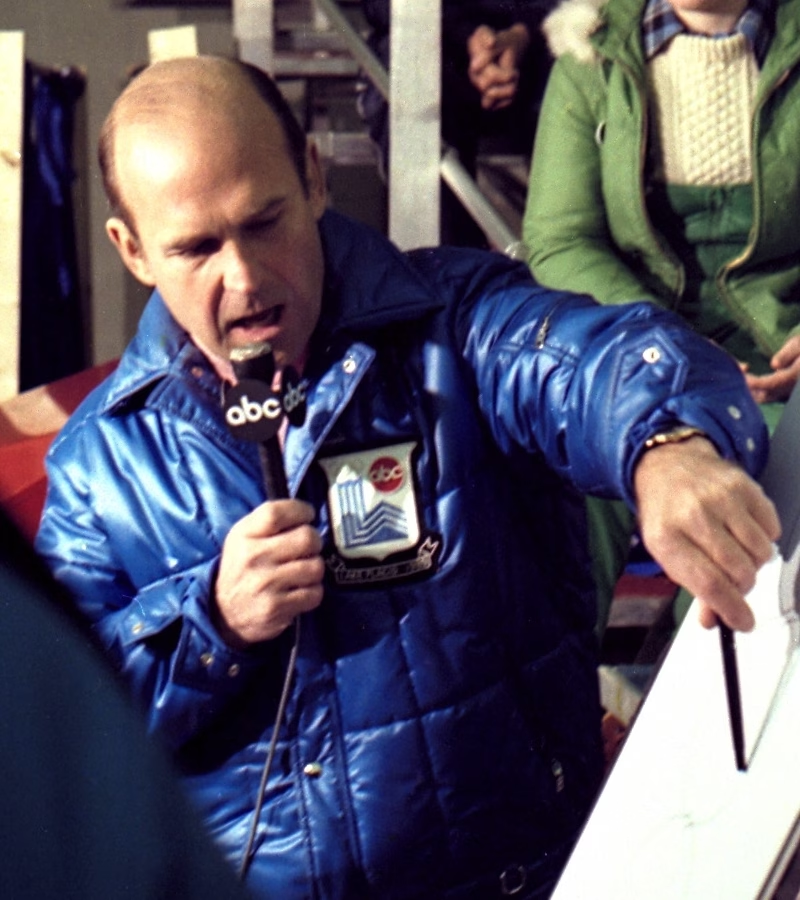
The idea came from Dick Button, the two-time Olympic figure-skating champion turned ABC commentator. ABC bought it as a two-hour special for the winter of 1973 (Wikipedia; Englewood Review). The rules were simple: stars from different sports competed in a series of events, but nobody could compete in their own sport. The contest rewarded the all-rounder.
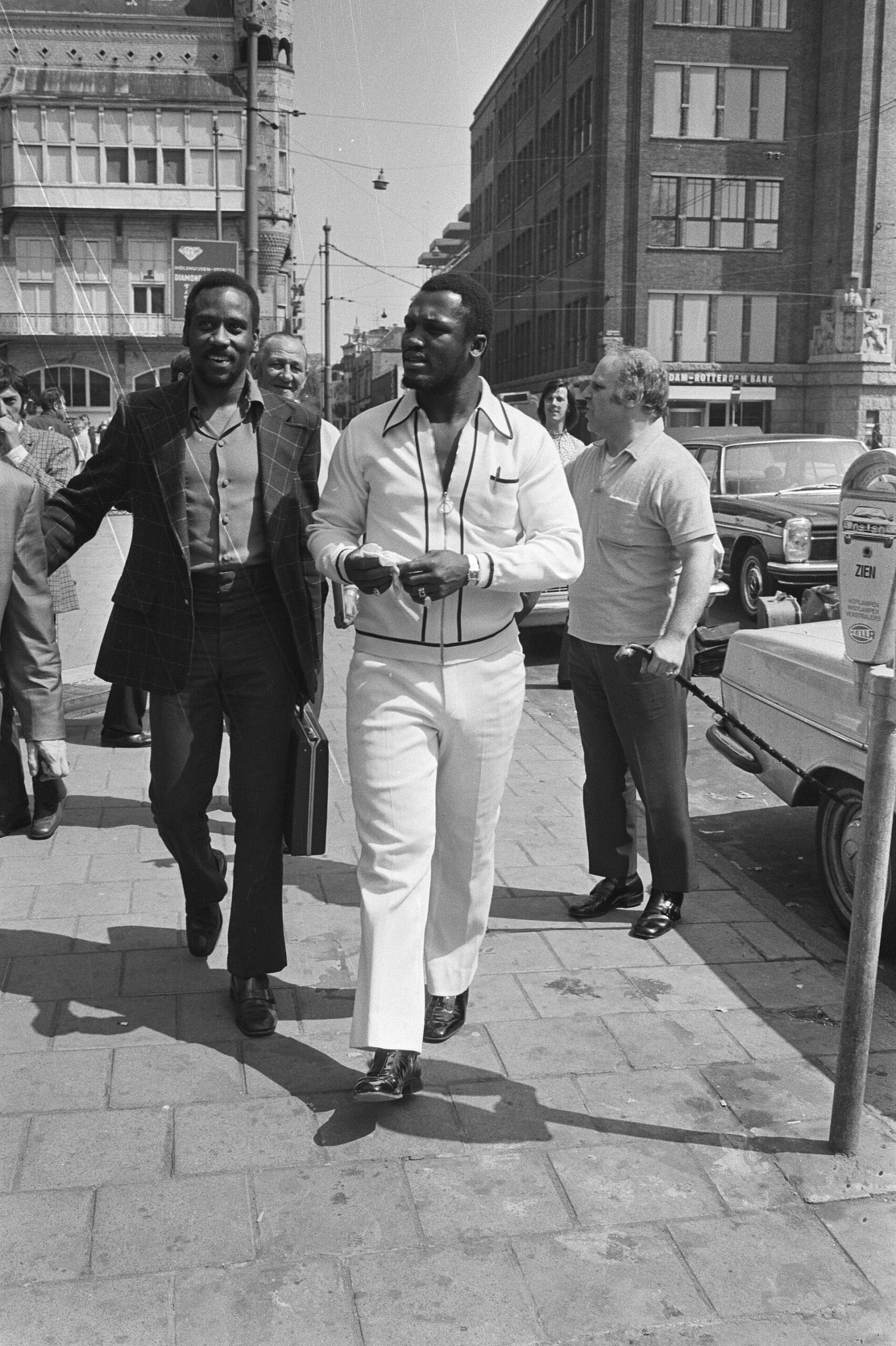
Frazier’s swim is the moment everyone remembers. He went into the pool in a relay heat, got into trouble, and was pulled out. Only then did he admit he couldn’t swim. Asked why he’d tried, he said: “How was I to know I couldn’t unless I tried it?” (Wikipedia; St. Louis American).
The winner wasn’t a boxer or a footballer. It was pole vaulter Bob Seagren, an all-round track athlete (Wikipedia; Englewood Review). Fifty years later, Physical: 100 keeps arriving at the same answer.
1977: World’s Strongest Man
Four years later, CBS narrowed the question to strength. The first World’s Strongest Man was staged for television at Universal Studios in California, and American weightlifter Bruce Wilhelm won it (Wikipedia; Sports History Network). It has run ever since, and still decides who gets called the strongest man on earth. Our guide to the strongest man in the world explains why the answer depends on how you measure it, and Mitchell Hooper shows what the sport looks like now.
1986: Takeshi’s Castle
Japan made it funny. Fūun! Takeshi-jō, hosted by comedian and director Takeshi Kitano, ran on TBS from 1986. Hundreds of contestants charged at a castle through a series of obstacles, and most ended up in the water (Wikipedia; MyDramaList). Fitness helped, but nerve, balance and luck mattered more, and the dubbed versions sold the format around the world.

The show was filmed at TBS’s Midoriyama studio in Yokohama. Remember the name: the network’s next big obstacle show was built on the same site (Sasukepedia).
1989: American Gladiators, and Brisbane’s Gladiators
American Gladiators gave ordinary contenders a straight fight with professional muscle. It went into US syndication in September 1989 (Wikipedia; Cord Cutters News), and the format spread fast. LWT made a British version for ITV that started on 10 October 1992 (Wikipedia).
Australia got its own in 1995. Seven’s Gladiators was taped at the Brisbane Entertainment Centre in Boondall and ran for three series that year, borrowing its events and even its music from the British show. Seven revived it in 2008 (Wikipedia; Gladiators TV). It was the first time a lot of Australians had seen fitness sold as prime-time entertainment.
1995: Eco-Challenge
Mark Burnett took the test outdoors and made it last for days. His Eco-Challenge sent teams on a non-stop expedition race, the first in the Utah desert in 1995, televised on MTV (our interview with Bear Grylls). When Amazon revived it in Fiji in 2019, there were 66 teams from 30 countries. MFO was there: Bear Grylls on what failure taught him.
Burnett’s next show changed television.
1997: Survivor began in Sweden
Survivor is usually remembered as an American show, but it started in Sweden. British producer Charlie Parsons devised the format in 1992, and the first version to air was Expedition Robinson on Swedish public broadcaster SVT, from 13 September 1997 (Wikipedia; Wikipedia). Burnett produced the American version, which premiered on CBS on 31 May 2000.
Survivor mixed endurance and physical challenges with hunger, sleep deprivation and politics. Its lesson for every show that followed: the fittest person doesn’t always win if everyone else votes them off. Physical: 100 brought the alliances back, but let the body decide.
1997: SASUKE, the show that became Ninja Warrior
The same year, TBS launched SASUKE at Midoriyama, the studio where Takeshi’s castle had stood (Wikipedia; Sasukepedia). It took the obstacle course seriously. The stages got harder each round, and grip strength, agility, balance and technique usually beat size.

Sold abroad as Ninja Warrior, it became one of the most copied formats in the world, with national versions in the United States, Britain, Australia, Germany, France and beyond. It also changed gyms: ninja and obstacle training is now a sport of its own.
2015: SAS: Who Dares Wins
Channel 4 turned real military selection into television on 19 October 2015. Former special forces soldiers put recruits through a shortened selection course, and the recruits pass or fail rather than win (Wikipedia). SAS Australia followed on Seven on 19 October 2020 (Wikipedia), and the American version, Special Forces: World’s Toughest Test, is in its fifth season on FOX now.
2023: Physical: 100
Physical: 100 premiered on Netflix on 24 January 2023. MBC producer Jang Ho-gi gathered 100 athletes (bodybuilders, Olympians, fighters, soldiers, firefighters) and had a plaster cast made of every torso. Lose, and you smash your own.
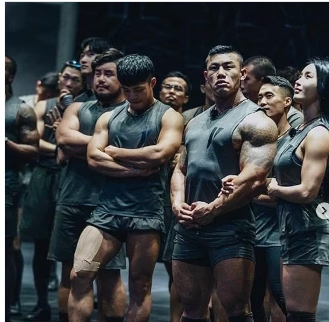
The format wasn’t new. What was new was the scale, the production values and the casting, and it worked. Netflix’s own figures show season 1 reached No. 1 among non-English TV shows worldwide, peaking at 45.4 million hours viewed in the week to 19 February 2023 (Netflix Top 10 data).
It became a franchise: every version, with winners and prize money, from a second Korean season to Physical: Asia, then national remakes. In the week of 14 to 20 September 2026, Physical 100: Mexico drew 2.5 million views and Physical 100: Italy 2.1 million, fourth and sixth on Netflix’s global non-English list (Netflix). Big numbers, but well short of the Korean original. Still to come: the American version and France, with Francis Ngannou.
What Physical 100 took from each of them
- From The Superstars: the question. Who’s the best all-round athlete, when nobody gets to play their own sport?
- From Gladiators and Takeshi’s Castle: the arena, the props and the sense of a game show built around bodies.
- From Survivor: teams, alliances and the drama of who gets picked.
- From Ninja Warrior and SAS: challenges hard enough that size alone doesn’t get you through.
And it keeps reaching the same answer The Superstars did in 1973. The pure strength athletes and the biggest names tend to go early. Both Korean seasons were won by CrossFit athletes and Mexico by an obstacle racer (Italy’s judo champion Emanuele Bruno is the exception): people built for long, ugly efforts, the kind that decide hybrid races like HYROX and CrossFit. If you want to train for that kind of fitness, our HYROX workout is a good place to start. The next format trying to measure it is Xenom.
FAQ
What shows are like Physical 100?
The closest are The Superstars (1973), which pitted champions from different sports against each other, Ninja Warrior (SASUKE), Gladiators, World’s Strongest Man, SAS: Who Dares Wins and its American version, Special Forces. For more of the same format, Netflix has made national versions of Physical 100.
Was Physical 100 the first show of its kind?
No. ABC’s The Superstars asked who the best all-round athlete was in 1973, 50 years before Physical: 100.
What happened to Joe Frazier on The Superstars?
The former world heavyweight champion entered a swimming relay heat without knowing how to swim, nearly drowned and had to be pulled out.
Where was Gladiators Australia filmed?
The original 1995 series was taped at the Brisbane Entertainment Centre in Boondall.
Are Takeshi’s Castle and Ninja Warrior the same show?
No, but they’re related. Both were made by Japan’s TBS at its Midoriyama studio: Takeshi’s Castle from 1986, and SASUKE, sold abroad as Ninja Warrior, from 1997.
Did Survivor start in America?
No. The first version was Sweden’s Expedition Robinson in 1997. The American Survivor started in 2000.
Sources: Wikipedia: Superstars; Englewood Review; St. Louis American; Wikipedia: 1977 World’s Strongest Man; Sports History Network; Wikipedia: Takeshi’s Castle; MyDramaList; Wikipedia: American Gladiators; Cord Cutters News; Wikipedia: Gladiators UK; Wikipedia: Gladiators Australia; Gladiators TV; Wikipedia: Survivor; Wikipedia: SASUKE; Sasukepedia; Wikipedia: SAS: Who Dares Wins; Netflix Top 10. Checked 30 October 2026.