

Are you actually getting stronger, or just turning up? Your one-rep max is the cleanest answer: the heaviest weight you can lift once, with good form, on the squat, bench or deadlift.
- What it is: the most you can lift for one full rep with proper technique (1RM)
- Estimate it: weight x (1 + reps / 30), or use our 1RM calculator
- Most accurate estimate: a set of about five reps, and no more than 10
- Testing it: three to five single attempts, 2 to 4 minutes apart
- How often: our read is every 8 to 12 weeks at most
What is a one-rep max?
Your one-rep max (1RM) is the heaviest load you can lift for a single complete rep with proper technique (HPRC). No half squats, no bouncing the bar off your chest, no spotter doing an upright row for you. It tells you whether your training is working, and most strength plans are written as percentages of it (“3 x 5 at 80%”).
It’s also a reliable test. A 2020 review of 32 studies in Sports Medicine – Open found “good to excellent” test-retest reliability for beginners and experienced lifters alike. If your max goes up by more than a few percent, that’s real strength, not test noise.
Test it or estimate it?
Coaching texts that follow the NSCA protocol suggest estimating from a set of 10 reps or fewer when a true max isn’t appropriate (Human Kinetics), and HPRC points to it if you train alone with no spotter. Our read: estimate most of the time, test for real a few times a year. Test if you compete or have just finished a strength block. If you’re new, still sorting out technique or coming back from injury, estimate.
How to estimate your one-rep max
Lift a weight for as many clean reps as you can, between two and 10, then use one of the two most popular formulas (Journal of Human Kinetics, Wikipedia):
- Epley: 1RM = weight x (1 + reps / 30)
- Brzycki: 1RM = weight x 36 / (37 – reps)
Our free 1RM calculator runs both plus a third formula (Lombardi) and shows the range, which is more honest than a single number. Or read it off the table: for any other weight, multiply. 80kg for six reps is 0.8 x 120 = 96kg on Epley.
| 100kg for | Epley | Brzycki |
|---|---|---|
| 2 reps | 106.5kg | 103kg |
| 3 reps | 110kg | 106kg |
| 4 reps | 113.5kg | 109kg |
| 5 reps | 116.5kg | 112.5kg |
| 6 reps | 120kg | 116kg |
| 7 reps | 123.5kg | 120kg |
| 8 reps | 126.5kg | 124kg |
| 9 reps | 130kg | 128.5kg |
| 10 reps | 133.5kg | 133.5kg |
Keep the reps low. In a 2006 study of 70 men and women in the Journal of Strength and Conditioning Research, the five-rep max predicted the true 1RM best, and the authors advised no more than 10 reps. A set of 15 tells you more about your fitness than your strength.
How to test your one-rep max, step by step
This is the standard NSCA-style protocol, as set out by HPRC. Do it at the start of a session, fresh, one lift per day.
- Warm up: five to 10 minutes of easy cardio and mobility, then the empty bar.
- Light set: a load you can lift 5 to 10 times. Rest one minute.
- Medium set: 3 to 5 reps. Add about 5 to 10% for bench, 10 to 20% for squat and deadlift. Rest two minutes.
- Heavy set: same jump again, 2 to 3 reps. Rest 2 to 4 minutes.
- Attempts: same jump again for one rep. Made it? Rest and add weight. Missed it? Rest and take off 2.5 to 5% (a bit more on squat and deadlift). Aim to land your max within three to five attempts.
Warm-up ladder: squat example
Our worked example for a man who expects to squat about 140kg, loosely based on the protocol above. The early jumps are bigger so the energy goes into the heavy singles.
| Set | Load x reps |
|---|---|
| 1. Empty bar | 20kg x 10, twice |
| 2. Light | 60kg x 5–8, rest 1 min |
| 3. Medium | 85kg x 3–5, rest 2 min |
| 4. Heavy | 105kg x 2–3, rest 3 min |
| 5. Primer single | 120kg x 1, rest 3 min |
| 6. Attempt 1 | 132.5kg x 1, rest 3–4 min |
| 7. Attempt 2 | 140kg x 1, rest 3–4 min |
| 8. Attempt 3 | 145kg if 140 moved well; 130kg if you missed |
Squat, bench and deadlift: what counts as a rep
A max only means something if every rep is done the same way, test after test. These are the standards we’d use, based on how the lifts are judged in powerlifting (more in our powerlifting for beginners guide).
Squat
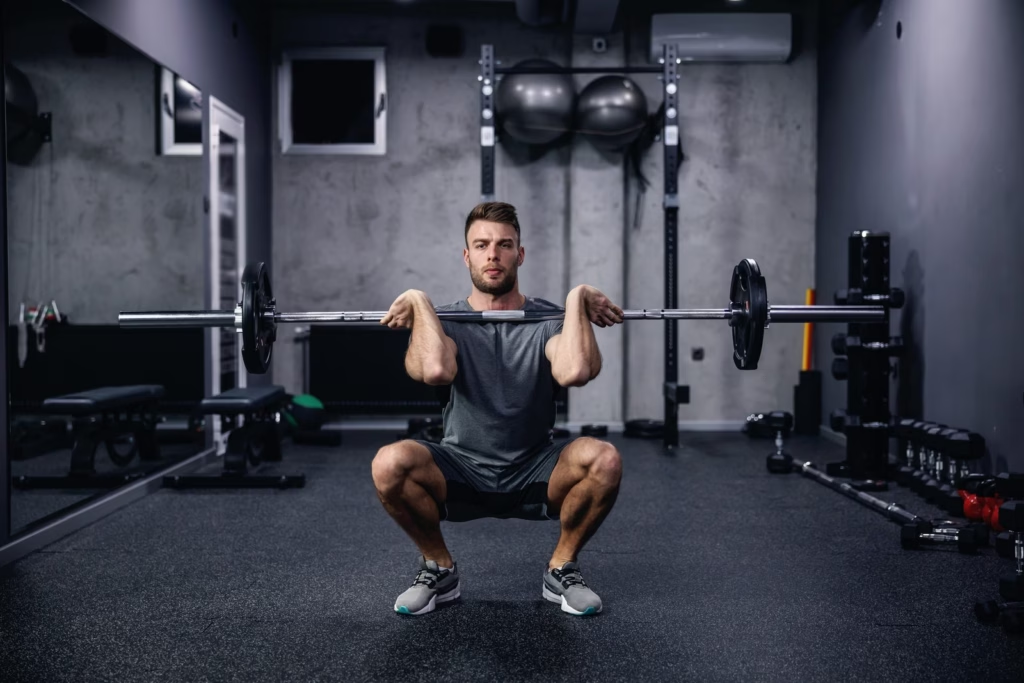
Hip crease below the top of the knee, then stand all the way up. Test inside a power rack with the safety pins set just below the bottom of your squat, so a miss ends with the bar on the pins, not on you. Front squatters, same rules: see our front squat guide.
Bench press
Touch the chest, no bounce, head and backside on the bench, feet on the floor, press to straight arms. Bench is the lift most likely to pin you, so never max alone: use a spotter who keeps their hands off until you ask, or a rack with safeties just below chest height. To push the number up, try our bench press improvement workout.
Deadlift
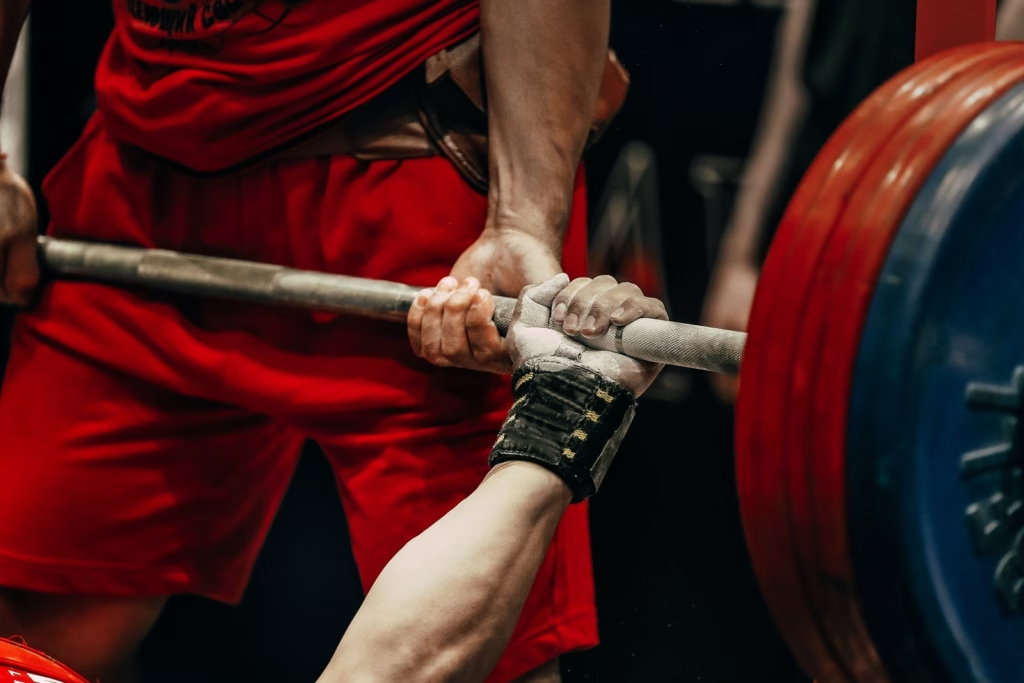
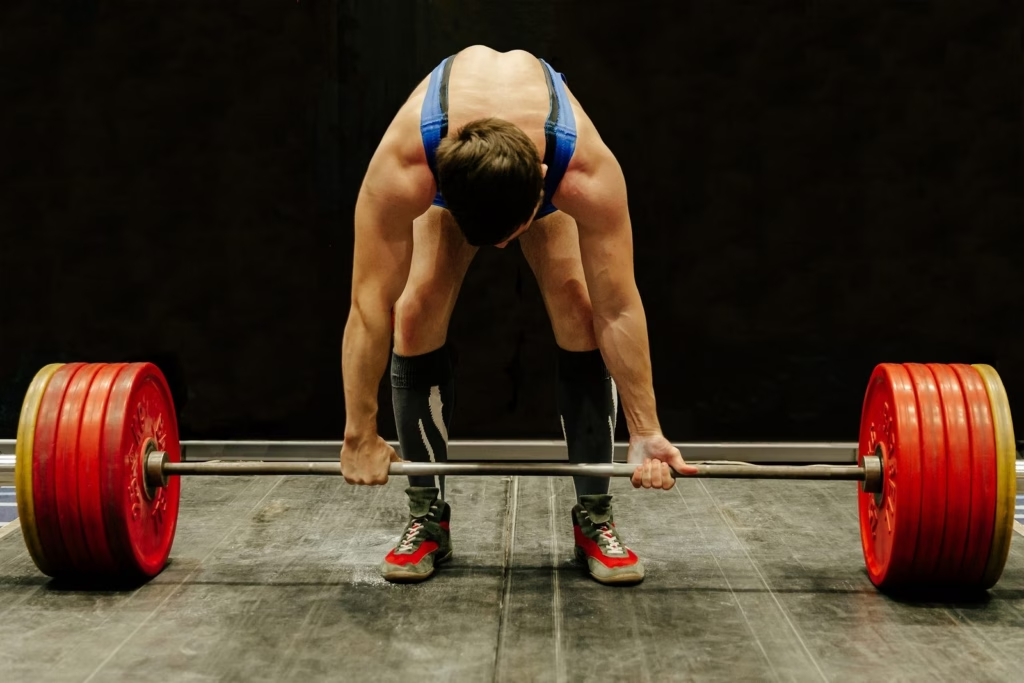
Bar from the floor to standing tall with knees and hips locked, no hitching. Start every pull the same way: bar over mid-foot, grip, pull the slack out, then drive. It needs no spotter, but it punishes a rounded back, so stop the moment form slips.
How often should you test your max?
Our read: not often. A true max takes a few days to recover from, so every 8 to 12 weeks, at the end of a training block, is plenty. In between, track a rep max: if your best set of five keeps creeping up, so is your 1RM.
What’s a good one-rep max for men?
Compare lifts as a multiple of bodyweight. Our strength standards for men put an average trained man at about a bodyweight bench and 1.3 times bodyweight on the squat and deadlift. For the bench in detail, see our average bench press for men guide. At the far end of the scale sits Raúl Flores’s 511kg deadlift world record. Probably not one to chase this block.
Related: 10 strength training tips that work and 25 ways to get bigger.