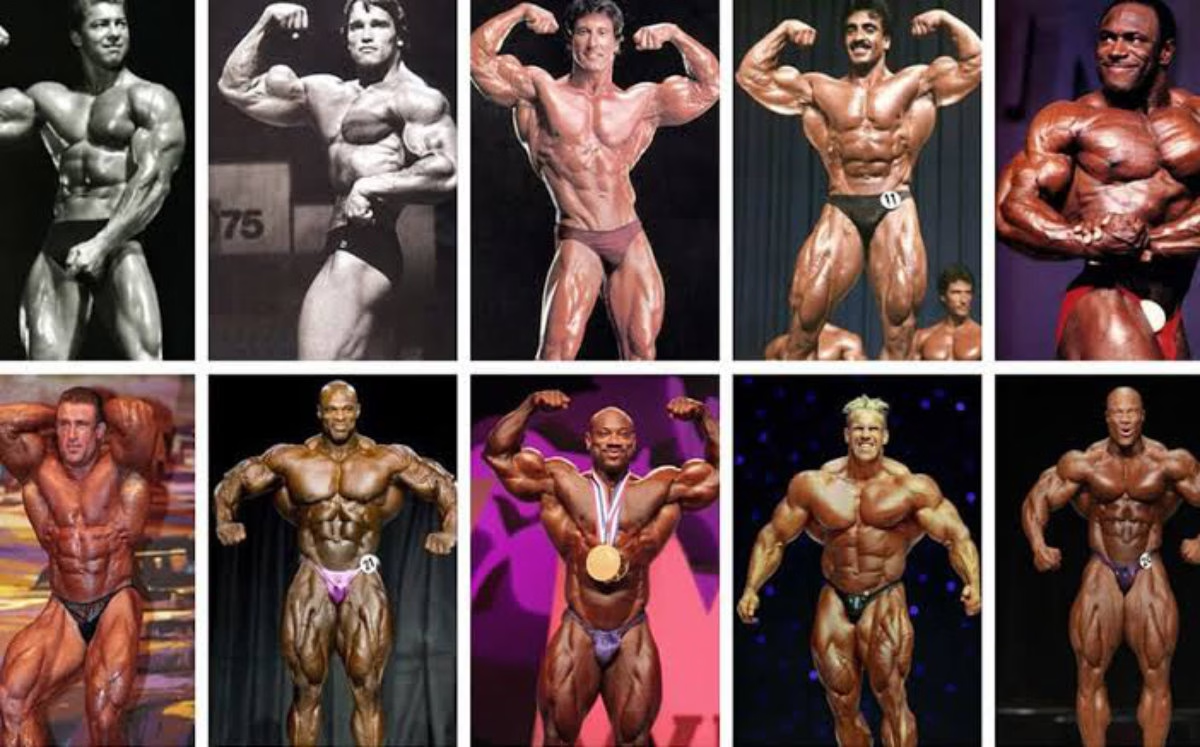

What man doesn’t want bigger muscles? While gym floors are chockas with wannabe muscle men making awkward grunting noises, most of these blokes are unlikely to see any real gains. Why? They lack a plan. Give a man a pair of dumbbells, and he can crank out a few sets of curls, sure. But give a man a pair of dumbbells and a plan, and he can change his entire body. Here’s some solid advice to get you some solid results.
Bulking Season
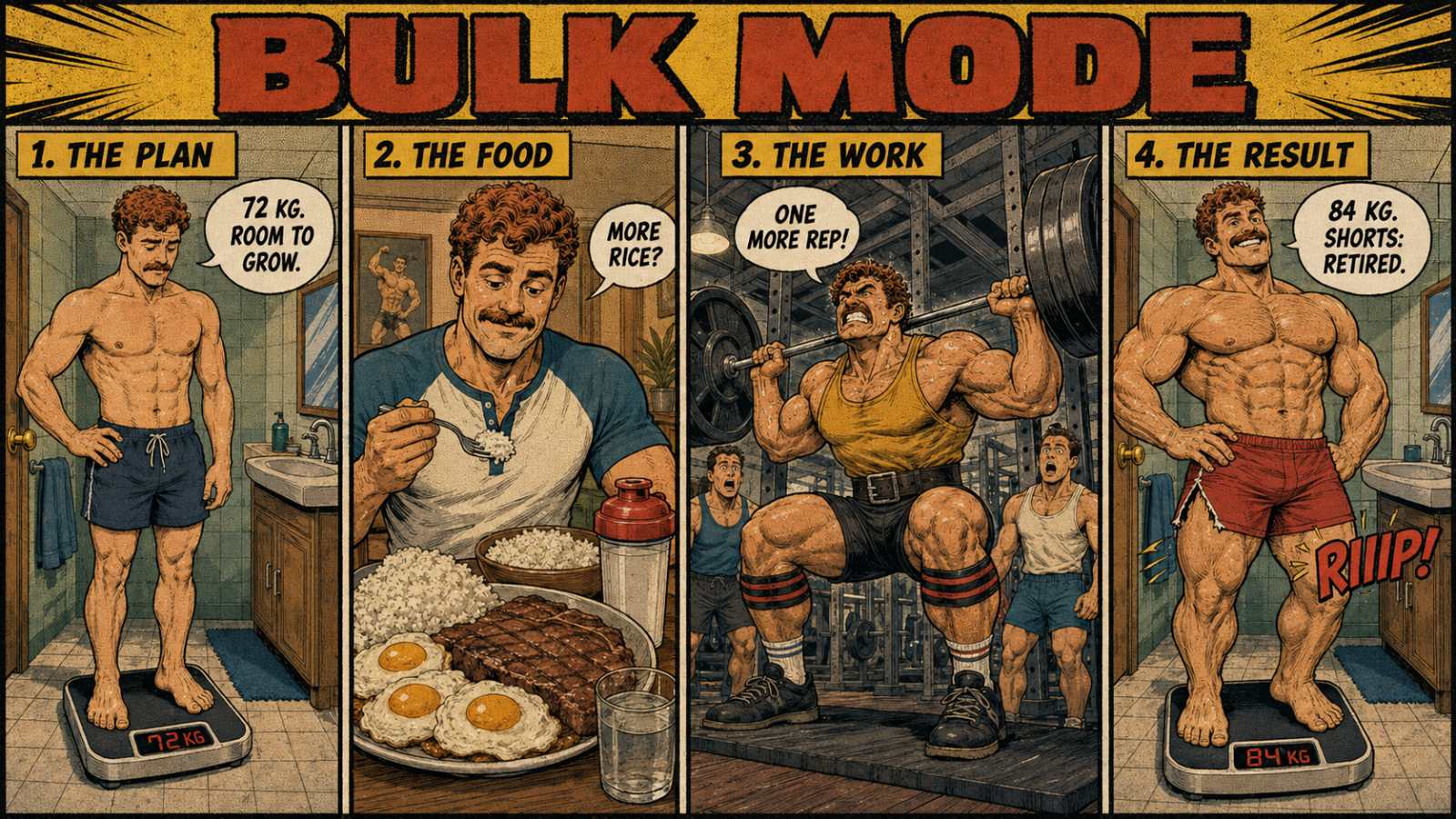
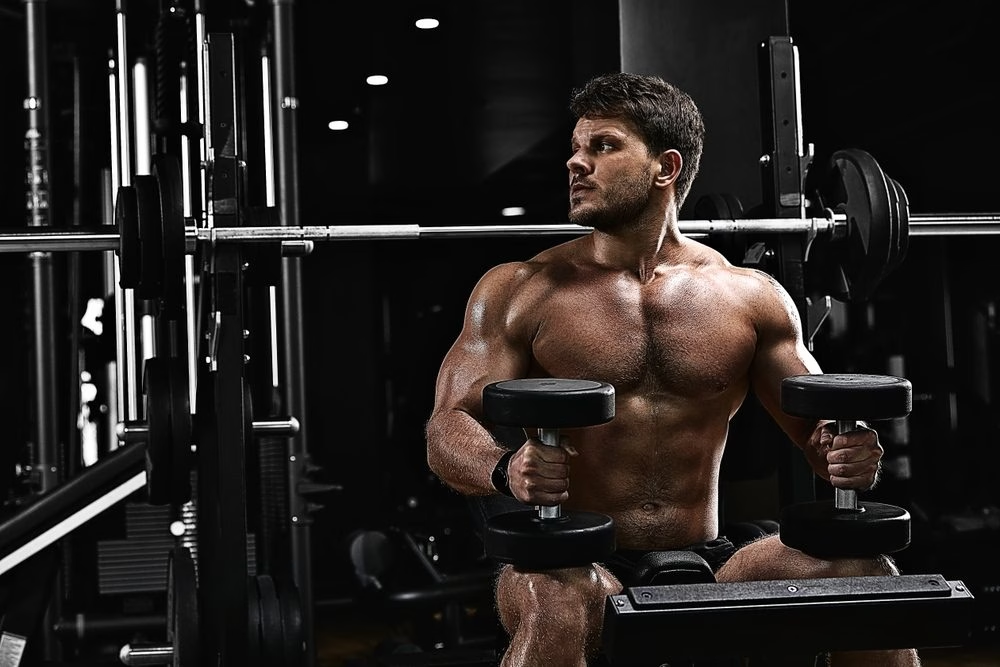
Bulking is a time-honoured ritual for weights-room regulars. As winter draws in and opportunities to take your shirt off recede, thoughts turn to supersizing muscles ahead of cutting some body fat in spring, ready again for summer. Basically, it’s all about eating and lifting big to get big.
Bulking centres on two core principles: consuming enough food to support muscle growth and training hard enough to trigger hypertrophy. It sounds simple, but there are pitfalls at every turn. Eat too little and you make gaining muscle unnecessarily difficult. Eat far too much and you may get bigger, but quite a lot of the new bulk won’t be muscle. The trick is finding the sweet spot.
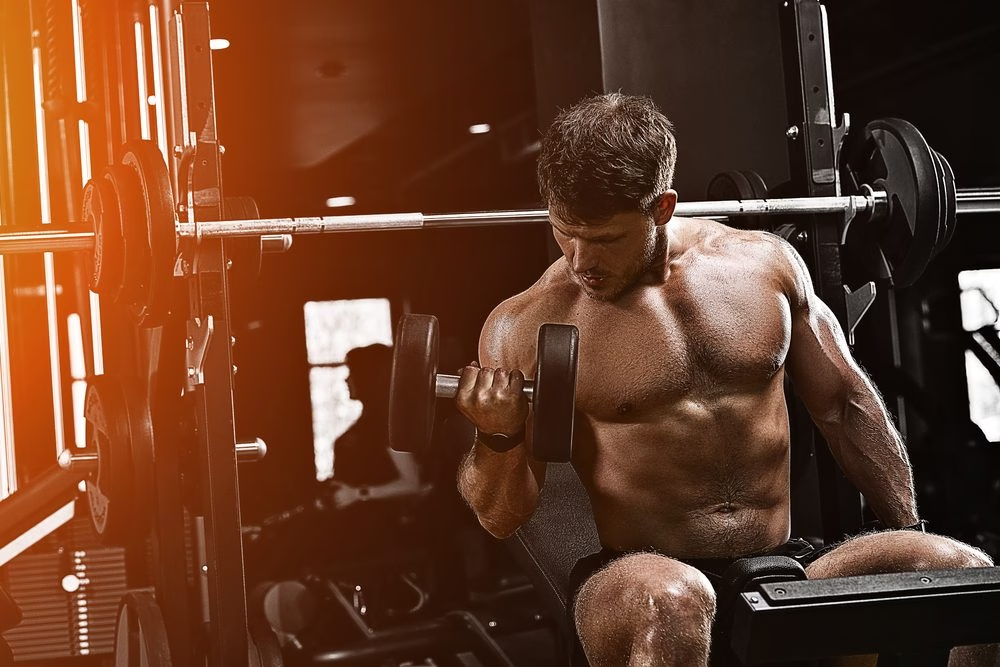
The Biggest Bulking Mistakes
The most common mistake people make is assuming muscle growth will be a quick process.
“It’s glacial,” says former magazine cover model and sports nutritionist Scott Baptie. “The more experienced you are with the gym, the longer it will take.” That remains one of the least exciting and most useful facts about building muscle.
Another typical pitfall is assuming you can accelerate the process with a so-called “dirty bulk”. A pumped-up diet of fast food, monster shakes and nutritionally bankrupt calories will certainly make you heavier. It won’t necessarily make you much more muscular.
The problem is that your body’s capacity to build new muscle isn’t unlimited. Once you’re eating enough to support growth, throwing substantially more calories at the problem increasingly means gaining fat. So, train hard, eat smart and be patient.

Beware the Dirty Bulk
Strongman Emil “Goliath” Hodzovic learned this the hard way. “A few years ago, in a bid to make it as a strongman, I took bulking to the next level. At 1.93 m tall and 120 kg, I needed to eat a ton of food to reach my surplus. I even ended up drinking olive oil and had no qualms using anything from chocolate bars to Yorkshire puddings to hit my goals.
“Over two years, my weight peaked at 142 kg. I gained a load of muscle and strength, but also a hell of a lot of fat.
“Would I do it the same way again? Probably not. I didn’t feel great and the extra weight began to take its toll in the form of injuries.
“Clean is the way to go, with dirty treats thrown in within the macro target. That’s purely for sanity. If you can’t be naughty during a bulk, you’ve got no chance surviving a cleaner cut. But consistency is the most important factor in any diet.”
How Much do You Need to Eat?
As with losing weight, what works for one person won’t necessarily work for another. Your size, activity, training history and genetics all play a part.
Forget whether you’re supposedly an ectomorph, mesomorph or endomorph. Those old body types tell us remarkably little about how many calories you actually need.
Instead, start with your maintenance calories: roughly how much energy you need to maintain your current weight. Then add a modest surplus.
Rather than guess at the surplus, our bulking calculator works out your target calories and protein from your own stats.
For novice and intermediate lifters, somewhere around 10–20% above maintenance is a reasonable starting range. If you’re an experienced lifter who’s already carrying plenty of muscle, there’s even less reason to go charging towards the upper end.
Then watch what actually happens.
A reasonable target for novice and intermediate lifters is to gain roughly 0.25–0.5% of body weight per week. Experienced lifters should generally aim towards the slower end, or slower still.
For an 80 kg bloke, 0.25% is just 200 g a week. That’s not much.
That’s also the point. If your weight isn’t moving over several weeks, add a little food. If it’s rocketing upwards and your waistline is doing most of the growing, you’ve overshot.
How Much Protein?
This bit is easier. For most men who train, somewhere around 1.6–2.0 g of protein per kg of body weight per day is a solid target for building muscle. For an 80 kg man, that’s about 128–160 g a day.
You don’t need to eat it all in one enormous dinner. Spread it across several meals over the day. And don’t get mesmerised by protein at the expense of everything else. You still need enough total food to grow, carbohydrates to fuel hard training, and dietary fat as part of a healthy diet.
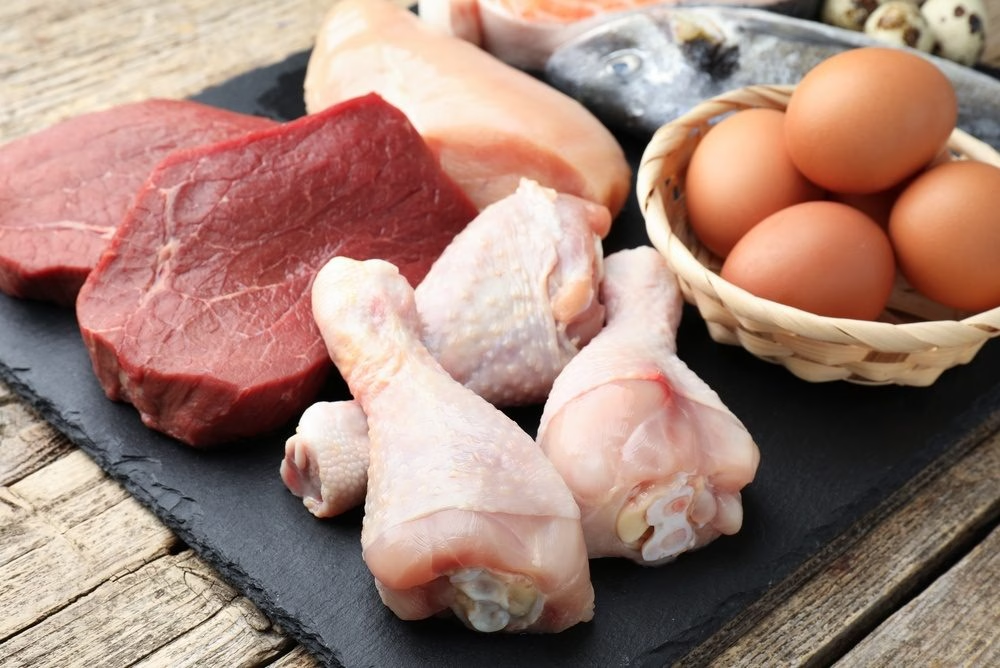
Top Tips for Eating to Bulk up
Before charging stomach-first into a bulking plan, get a rough idea of how much you’re actually eating. You don’t necessarily need to track every gram of food indefinitely. But tracking for a week or two can be illuminating. Humans are spectacularly bad at estimating how much they eat.
Build most of your diet around ordinary, decent food. Get your protein target. Eat enough carbohydrates to train properly. Include healthy fats. Eat fruit and vegetables. Then use more calorie-dense foods if you struggle to get enough energy in.
Milk, yoghurt, nuts, nut butter, olive oil and smoothies can add substantial calories without requiring you to sit down to another mountain of chicken and rice.
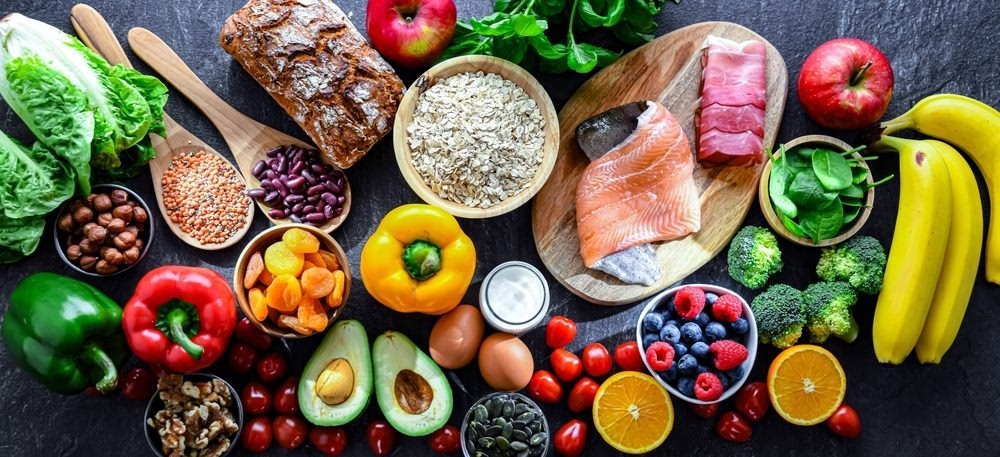
The Best Supplements for Bulking Up
Walk into a supplement shop and you could be forgiven for thinking building muscle requires a chemistry degree. It doesn’t.
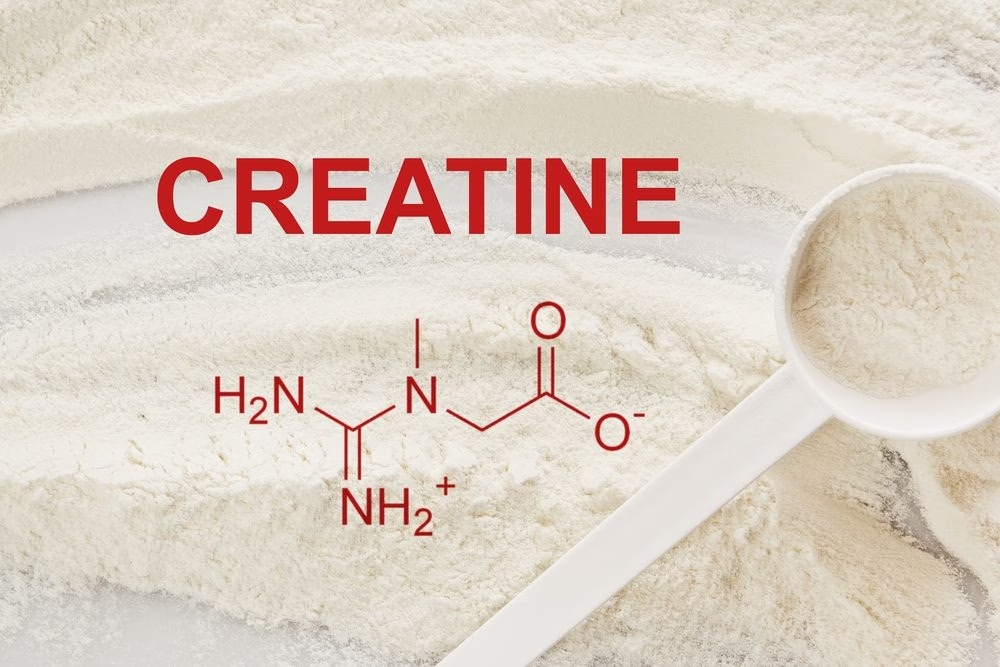
1. Creatine
Creatine monohydrate remains the standout.
It’s cheap, extensively researched and can improve strength and high-intensity exercise performance while helping resistance training produce greater gains in lean mass. You don’t need the fancy version.
Around 3–5 g every day will do it.
2. Protein Powder
Protein powder doesn’t build more muscle than protein from food.
It’s simply convenient. If you need 150 g of protein a day and you’re getting 120 g from food, a shake solves a very boring problem very easily.

3. Caffeine
Caffeine can improve exercise performance, which can help you get more out of training. But don’t confuse a useful training aid with a muscle-building substance. And if your pre-workout at 7 pm means you’re staring at the ceiling at midnight, you’ve probably lost the trade, so use it if it works for you.

And the Rest?
Vitamin D is important if you’re deficient, but it isn’t a bulking supplement. Beta-alanine can help with certain kinds of high-intensity exercise, but it’s not a muscle builder.
And probiotics have plenty of interesting research behind them, but they don’t belong on a shortlist of supplements for getting huge.
Spend your money on food.
Gym Tips to Bulk Up
Eating gives your body the raw materials to grow. Training gives it a reason to use them. And the good news is that hypertrophy training doesn’t have to be terribly clever.
You don’t need a magic rep range, exotic exercise or elaborate training system. You need to train your muscles hard enough, often enough and with enough total work to make them adapt.
As a general guide, around 10 or more hard sets per muscle group per week is a useful target for maximising hypertrophy, although individual needs vary. Those sets don’t all have to happen on one heroic Monday-night chest session. Spreading the work across the week generally makes far more sense.
Do You Have to Train to Failure?
No. You need to train hard, but you don’t have to finish every set pinned underneath something heavy. Most of your working sets can finish close to failure, with perhaps another one to three decent reps left in you. Going all the way to failure occasionally is fine. Doing it constantly isn’t necessary for muscle growth and can make recovery unnecessarily difficult.
What is Progressive Overload?
As you adapt, the training needs to progress. That doesn’t mean adding another 5 kg to the bar every Tuesday until you’re squatting a family hatchback.
You can progress by adding weight, doing more reps with the same weight, adding useful sets or simply performing the exercise better and through a full range of motion. Over weeks and months, something should be improving.
If your program hasn’t changed and your performance hasn’t changed, there’s not much reason for your body to change either.
The Best Exercises for Bulking up
There is no compulsory list. Squats, deadlifts, presses, rows and chin-ups remain excellent exercises because they train plenty of muscle and are easy to progressively overload. But muscles don’t know whether you’re holding a sacred barbell. Dumbbells, machines, cables and isolation exercises can all build muscle.
Choose movements that train the muscles you want to grow, that you can perform well and that don’t make your joints hate you.
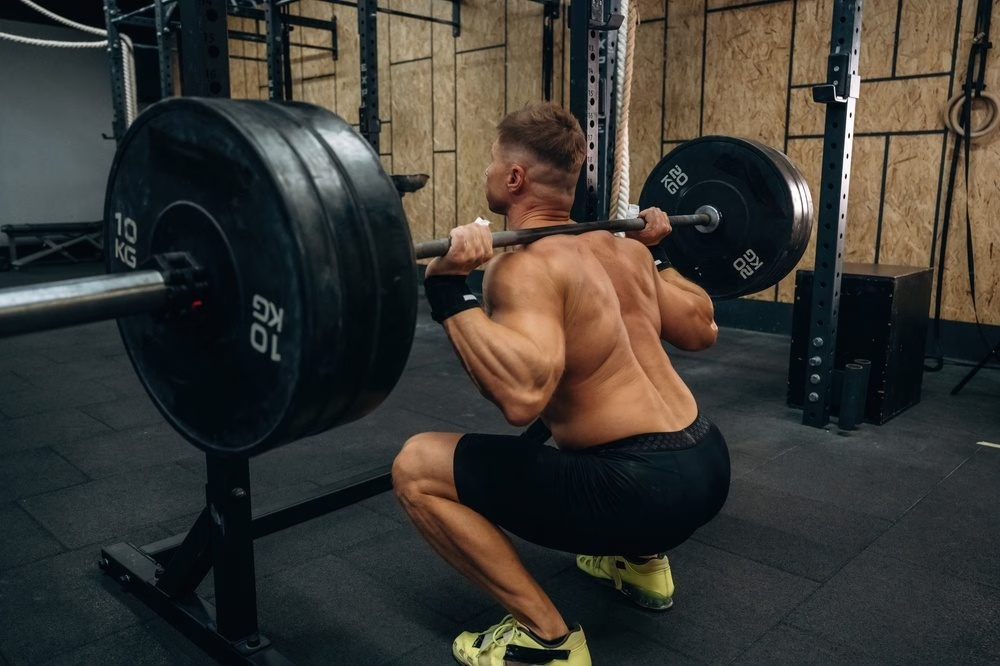
Squat
Targets: quads, glutes, adductors
Barbell squats are excellent, but goblet squats, hack squats, leg presses and other variations can also hammer the legs.
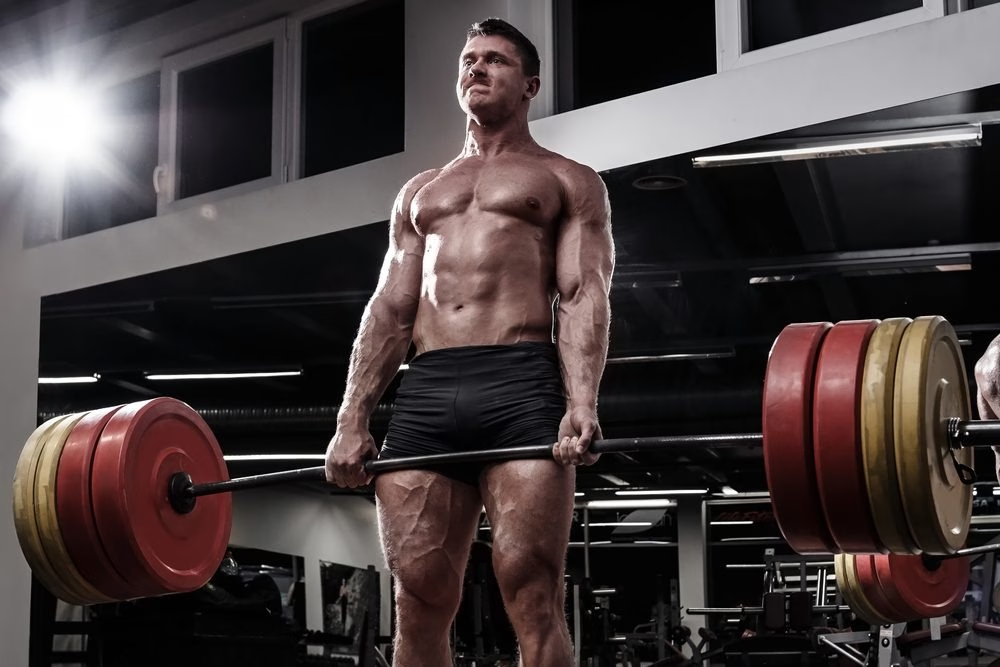
Deadlift
Targets: glutes, hamstrings, back
A tremendous strength exercise, although conventional deadlifts aren’t mandatory for hypertrophy. Romanian deadlifts and other hip-hinge variations may be easier to recover from while still giving the hamstrings and glutes plenty of work.
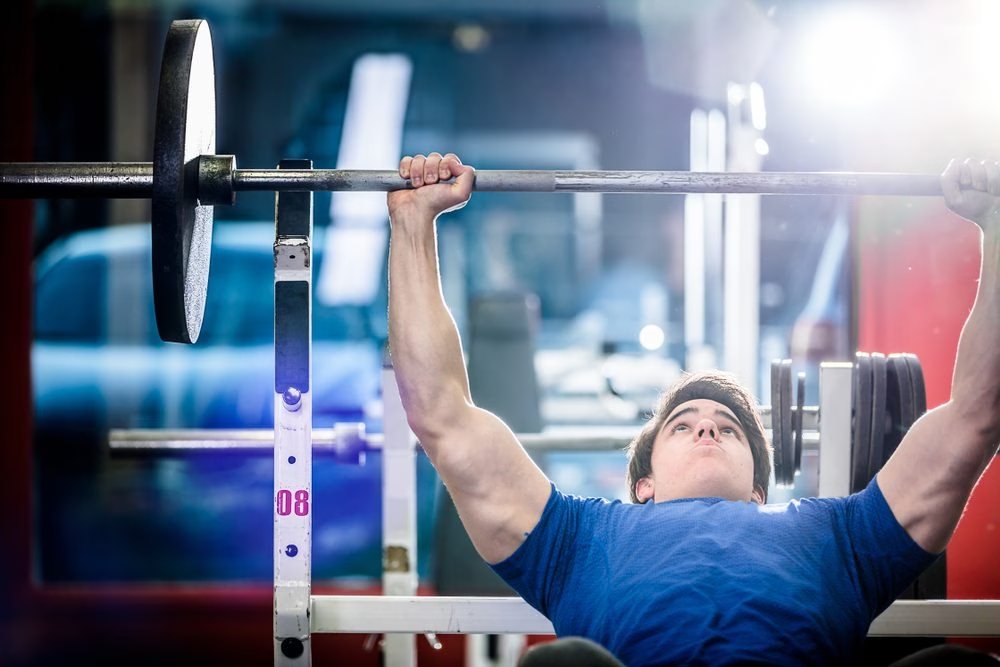
Incline bench press
Targets: chest, shoulders, triceps
Use a barbell, dumbbells or a machine. Control the weight, use a comfortable range of motion and forget about impressing the bloke on the next bench.
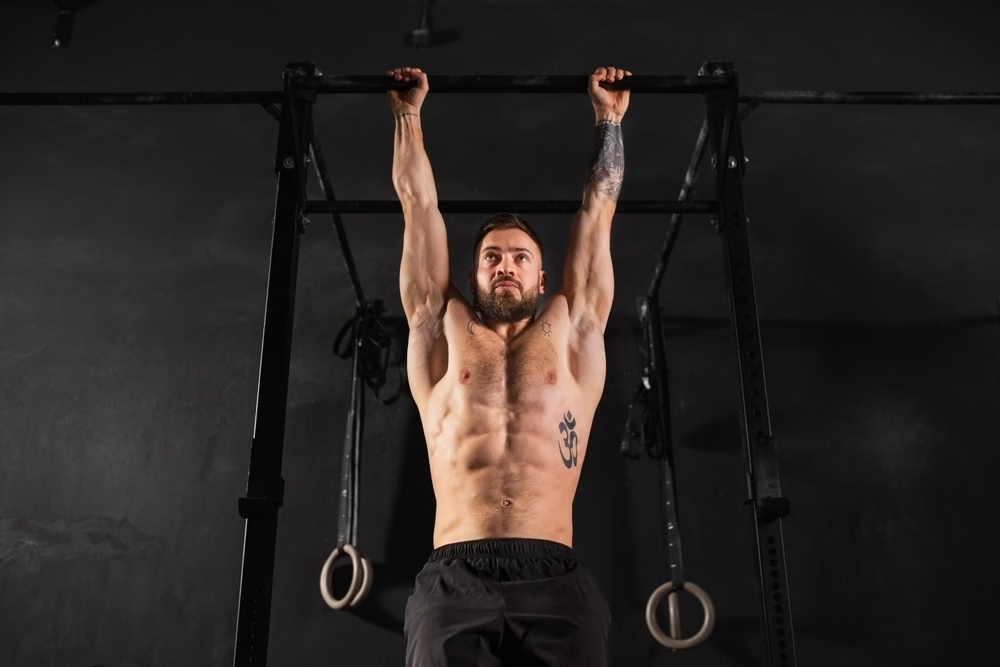
Chin-up
Targets: upper back, lats, biceps
Use assistance if you need it. Add weight when bodyweight becomes too easy. Simple.
How do you know if it’s working?
Don’t judge a bulk by what happened on the scales this morning. Watch the trend. Your body weight should be slowly increasing. Your performance in the gym should generally be improving. Your measurements and photographs should gradually show more muscle.
And your waist shouldn’t be winning the race. If all four are moving in roughly the right direction, keep going. The most important part of bulking hasn’t changed much at all.Eat enough. Get your protein. Train hard. Recover properly. Repeat.Just don’t confuse getting heavier with getting bigger.
There’s a substantial difference.
Related: The Rock’s Workout and Six-Pack Science: Define the Abs.