
Testosterone is the main androgen or male sex hormone. Androgens control the development and maintenance of male characteristics. Produced in the testes, it’s responsible for the development of the penis and testicles, the appearance of facial and pubic hair, and the deepening of the voice during puberty. Testosterone also controls muscle growth, bone strength, sex drive and sperm production.
The short answer: the things that reliably raise testosterone are unglamorous. Lose excess body fat, lift weights, sleep seven to nine hours, drink less, don’t smoke, and don’t crash-diet on fat or extreme amounts of protein. Most “testosterone booster” supplements have little evidence behind them. If you have symptoms of low testosterone, see your GP for a morning blood test before trying to fix it yourself.

How much do I Need?
The “normal” range of testosterone in the bloodstream is very wide and can vary significantly from one man to the next. Men’s testosterone levels are at their highest when they’re in their 20s. They start to decline at age 30 and steadily drop by 1 to 2 percent a year after age 40, but testosterone deficiency can occur at any age.
How do I know if my Testosterone levels are low?
Symptoms include a diminished sex drive, difficulty developing and maintaining erections, small testicles, increased breast size, reduced muscle mass and body hair, irritability, fatigue and brittle bones.
“Testosterone deficiency is the most common hormonal disorder in men — it affects about one in 200 men,” says endocrinologist Dr Carolyn Allan, a medical adviser to Andrology Australia (now Healthy Male). “But if men have always had low testosterone levels, they often don’t identify that there’s a problem because they’ve got nothing to compare it with.”
If you have one or more of the symptoms mentioned above, talk to your GP about getting tested. They’ll measure the testosterone in your blood, preferably early in the morning when levels are at their highest. Healthy Male has a clear guide to low testosterone if you want to read up first.
If I have low Testosterone, what can I do about it?
“There are several options for replacement of hormone levels,” says Allan. “There are tablets, patches, gels, injections that last either several weeks or several months, and implants that are inserted under the skin.”
All forms of T-replacement therapy require a prescription from your doctor, who will help you choose the best delivery method for your needs. “Implants and long-lasting injections last for several months, so you don’t have to think about them too often,” explains Allan. “Products such as gels, patches, creams and a new product that will be applied to the underarm are used every day and give very steady levels, although the levels aren’t as high as injections or implants. Tablets aren’t absorbed terribly well, but if you’re only looking for a small increase in levels, it might be appropriate to consider them.”

What if I have too much?
If you think your road rage or short temper at work is due to excess testosterone, you’re probably wrong, as it’s uncommon to produce too much of it naturally. “It’s practically impossible to say that a man will make too much testosterone to the point that it’s a problem,” says Allan.
However, men who have more testosterone than most might reap some health benefits. Researchers at Pennsylvania State University in the US analysed the health records of military men. They found that those with testosterone levels slightly above average tended to have lower blood pressure and a reduced risk of heart disease. On the other hand, they were more likely to engage in risky behaviours, suffer injuries, drink excessively, smoke and have had a sexually transmitted infection.
For most men, losing excess body fat is the biggest natural testosterone lever there is.
What’s the deal with steroids?
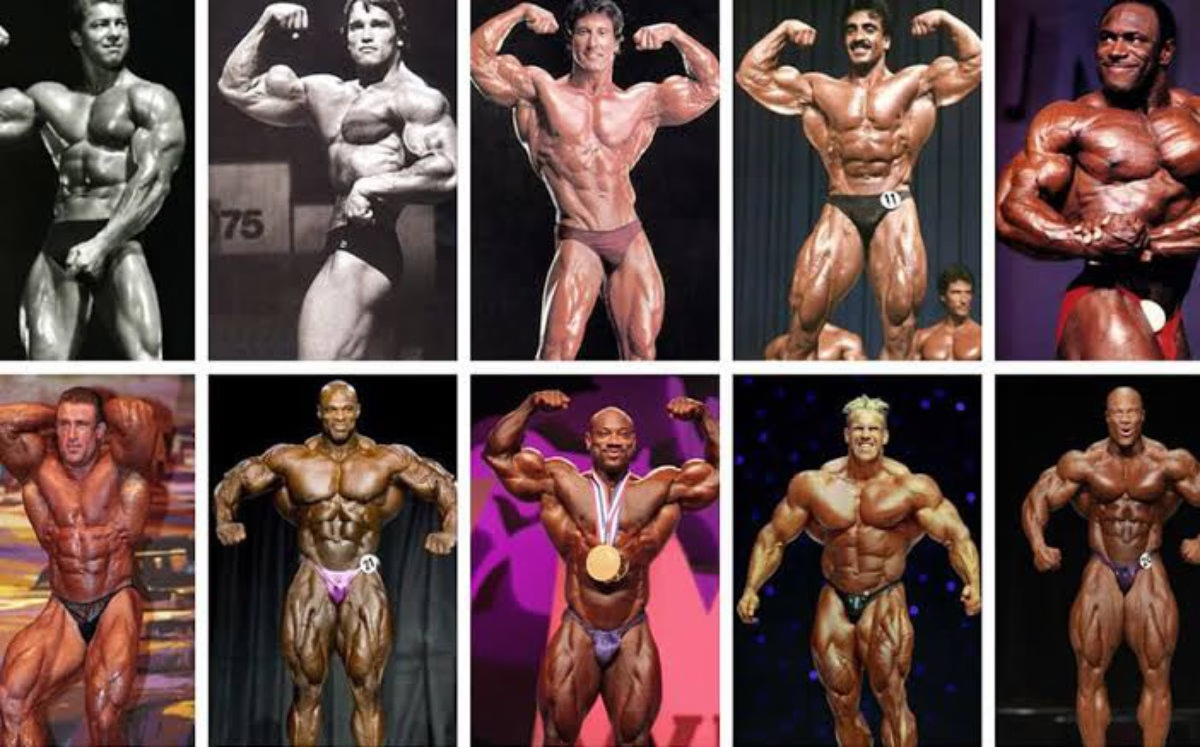
Many bodybuilders gain muscle by taking anabolic steroids, which mimic the effects of testosterone. Anabolic processes lead to tissue growth and increases in muscle mass. However, taking steroids can decrease natural T levels. “If men take extra testosterone [in the form of steroids], they turn off their body’s own ability to produce testosterone and to make sperm,” says Allan.
The bad news doesn’t stop there. Steroids have a range of negative side effects, such as shrinking of the testicles, impotence, prostate enlargement, high blood pressure and cholesterol, increased risk of heart and liver disease, baldness, acne, insomnia, and psychological effects such as aggression, violence and depression — not exactly an attractive option. Plus, steroids are illegal without a prescription in Australia because of all these side effects.

How to boost testosterone naturally: 10 ways that work
There’s no single trick. Most of what works does so by removing the things that suppress testosterone: excess fat, poor sleep, heavy drinking, smoking and chronic stress. Expect modest gains rather than a transformation, and if your levels are low because of a medical problem, lifestyle changes alone may not fix it.
1. Lift weights, but don’t overtrain
Resistance training, especially big compound lifts such as squats, deadlifts and presses, gives you a short-lived rise in testosterone after each session. The bigger long-term payoff comes from the muscle you build and the fat you lose. More isn’t better, though: researchers at the University of North Carolina found that men who overtrained without enough recovery had 40 per cent less testosterone. Leave at least a day between hard sessions for the same muscle groups. No gym? Our free 28-day military calisthenics plan needs no equipment.
2. Don’t overdo the protein
Protein isn’t the enemy of testosterone. A review of the evidence found that only very high-protein diets, above about 3.4 g per kilogram of body weight a day, lowered testosterone. Ordinary high-protein intakes don’t, including the 1.6–2.2 g/kg most lifters aim for (roughly 135–190 g a day for an 85 kg man). Our high protein foods list makes that easy to hit.
3. Look after your general health
Several lifestyle factors can affect your T levels, but making a few changes to your habits can boost them back up. “The latest research we conducted looked at testosterone levels in older men who had remained very healthy, and they didn’t appear to have a significant decline in their testosterone,” says Allan. “Unlike women, who all go through menopause, not all men will have a drop in testosterone as they age if they stay healthy.”
4. Lose excess body fat
Excess body fat increases your levels of oestrogen, which in turn can diminish your levels of testosterone. In fact, a 180cm bloke who carries around an extra 15kg can fast-track his T decline by 10 years. “Avoiding obesity is the single most important factor is optimising your testosterone levels,” says Allan.
5. Cut back on alcohol
Two major studies conducted at Harvard Medical School in the late ’70s concluded that alcohol — particularly binge drinking — decreases T production. Australia’s alcohol guidelines recommend no more than 10 standard drinks a week and no more than four on any one day.
6. Get seven to nine hours’ sleep
In a 2011 University of Chicago study published in JAMA, healthy young men who slept five hours a night for a week saw their daytime testosterone fall by 10–15%. Aim for seven to nine hours a night; our guide to falling asleep fast can help.
7. Quit smoking
As if you needed another reason to kick the habit, smoking also wreaks havoc with your man-hormones. “Smoking significantly decreases your testosterone levels,” says Allan. And that includes weed.
8. Check your medications
Some medicines can suppress testosterone, including long-term opioid painkillers and corticosteroids. If you take regular medication and have symptoms of low testosterone, ask your GP whether it could be a factor. Don’t stop a prescribed medicine on your own.
9. Manage stress
Chronic stress associated with work or financial pressures can lower testosterone significantly, so try to keep your anxiety levels in check. Regular exercise, a healthy diet and getting adequate sleep are all key factors in stress reduction.
10. Don’t go low-fat
A 2021 meta-analysis of diet studies found that men on low-fat diets had lower testosterone than men eating more fat. You don’t need to load up on butter: get your fats from fish, nuts, olive oil, avocado and eggs.
Do testosterone booster supplements work?
Mostly not. When researchers analysed 50 “testosterone booster” supplements found through a Google search, 90% claimed to boost testosterone, but only 24.8% had published data showing their ingredients raised it, and 10.1% had data showing they lowered it. Many contained huge doses of B vitamins and zinc, which only help if you’re actually deficient. Before you buy, read our guide to the supplements you actually need.
When to see a doctor
If you have symptoms of low testosterone, such as a low sex drive, erection problems, fatigue or losing muscle despite training, see your GP. Testosterone replacement is prescription-only in Australia and isn’t a lifestyle upgrade; read our piece on the rise of testosterone maxxing before trusting an online clinic. And for the bigger picture on whether men’s testosterone really is falling, see is the testosterone decline really over?
Testosterone FAQ
What’s the fastest way to boost testosterone naturally?
Fix whatever is suppressing it. For most men that means sleep first (a week of short nights measurably lowers testosterone), then cutting heavy drinking, then losing excess body fat. There’s no supplement or single food that works faster.
What foods boost testosterone?
No single food raises testosterone on its own. What matters is the overall diet: enough total energy, not going low-fat, and enough zinc and vitamin D if you’re deficient. Fish, eggs, nuts, olive oil, lean red meat and leafy greens all fit.
Does lifting weights increase testosterone?
Yes, briefly. Heavy compound lifts cause a short-term rise after a session. The longer-term benefit comes from building muscle and losing fat, both of which support healthy testosterone levels.
Does testosterone drop with age?
Testosterone tends to fall slowly from middle age, by around 1–2% a year after 40, but men who stay lean and healthy often see little decline. Weight gain and illness drive more of the drop than age alone.