
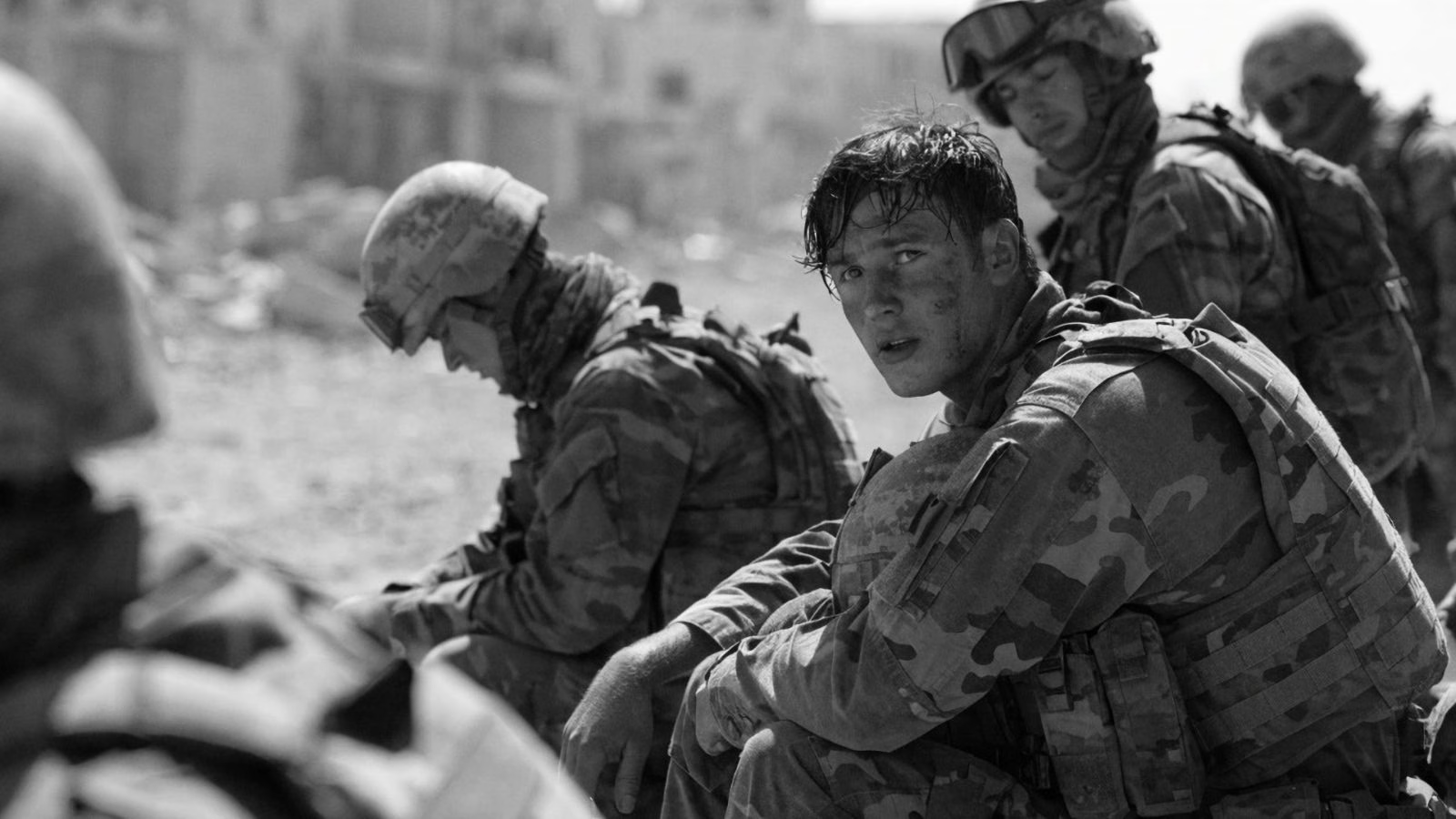
The US Department of War announced mandatory testosterone screening for troops over 30. In barely 24 hours, the detailed plan behind it quietly disappeared from the internet.
On 2 September 2026, the Defense Health Agency posted “Clinical Guidance for Health and Human Performance Optimization”: a testosterone-deficiency screening pathway built into the annual health check for every active-duty and reserve service member 30 and over.

By 3 September, it was gone. A Pentagon official told Reuters the document had been “temporarily rescinded to allow for updates.” A senior adviser to Secretary Pete Hegseth later called it a draft posted by mistake. For a policy built around the word “readiness”, it didn’t survive a full news cycle.
The Plan
Secretary for, um, War, Pete Hegseth announced the program on 15 July 2026, in a video posted under the caption “The High-T Department of War.” His memo authorised mandatory annual testosterone screening for all active-duty and reserve personnel 30 and older, folded into the health assessment troops already sit through. Under-30s could request it voluntarily.
“I’m authorising a new screening program for testosterone deficiency for our service members, ensuring you have the right testosterone levels to operate at your absolute best,” Hegseth said. Treatment, he said, would be optional.
September’s clinical guidance filled in the mechanics: a screening questionnaire, a blood test if the answers concerned, therapy if a deficiency was confirmed. Women were screened too, on different questions covering fatigue and menstrual disruption. Nobody was marched to a phlebotomist on day one. It was a funnel, not a blanket blood draw.
Why the Pentagon Thought it Made Sense
Buried in the memo was the actual justification: “Operator Syndrome represents a unique convergence of health challenges that require proactive clinical intervention.”
Operator Syndrome is a real, specific term, from a 2020 paper by psychiatrist Christopher Frueh and colleagues, built on consultations with more than 50 special-operations personnel between 2015 and 2020. It describes a genuinely brutal cluster of problems in elite operators: traumatic brain injury effects, disrupted sleep, chronic pain, endocrine dysfunction, depression, hypervigilance, relationship strain. The researchers framed it as the physiological cost of sustained extreme stress, what they called allostatic load, built up over a career at the edge of human capacity.
That’s a legitimate reason to look hard at hormonal health in the small population of men who do that job. Chronic stress, sleep deprivation and low energy availability genuinely can suppress testosterone.
The Leap
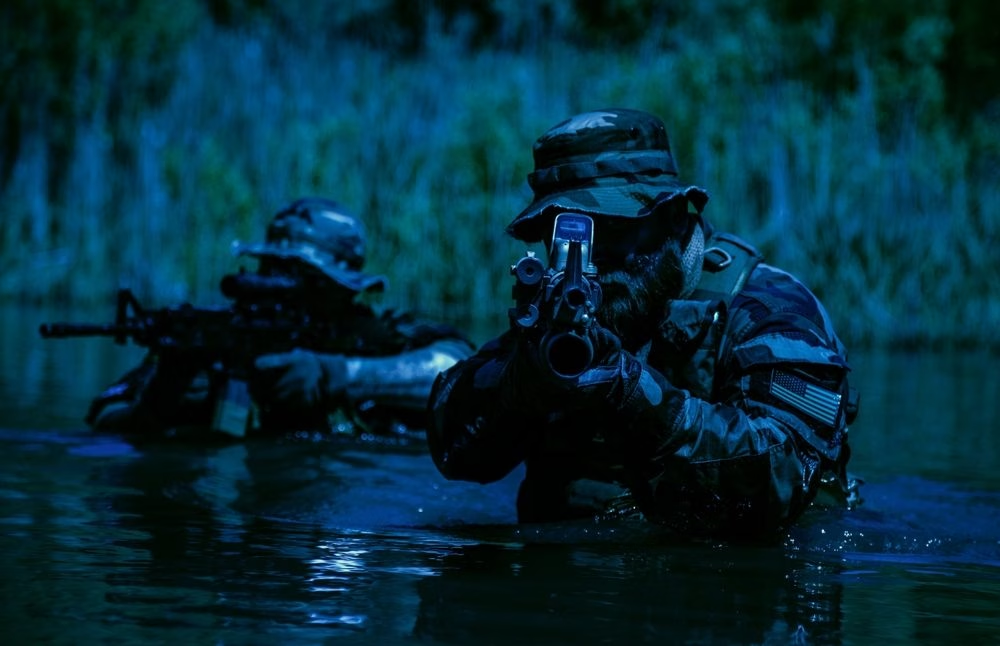
Where this falls apart is scale. Operator Syndrome describes a few dozen men in the most extreme corner of military life. The policy applied to every man over 30 in the entire force, overwhelmingly people who’ve never done a special-operations deployment.
A cluster of stress-related hormonal disruption in an elite subgroup isn’t evidence that a logistics sergeant needs annual testosterone screening. It’s reasoning that starts with a real, narrow problem and quietly expands the target until “readiness” becomes a euphemism for every man’s blood chemistry.
The medical establishment noticed. The Endocrine Society published its own statement on 16 July, a day after Hegseth’s announcement, finding “insufficient evidence to support” population-level screening in asymptomatic men, and warning against language that “blurs the line between treatable disease and normal ageing.” Neither the Endocrine Society nor the American Urological Association recommends routine screening of the general male population. That’s the standing clinical position, restated for an audience that apparently needed reminding.
What Low Testosterone Actually Means
A low number on a blood test is not a diagnosis. The AUA’s guideline sets a commonly used threshold, around 300 ng/dL, roughly 10.4 nmol/L, but that only means something alongside actual symptoms, and it needs confirming with a second, properly timed morning test before anyone calls it hypogonadism. One number, drawn at the wrong time, tested once, proves nothing alone. It could reflect real disease. It could just as easily reflect obesity, poor sleep, undiagnosed diabetes or a rough few months, all of which can suppress testosterone without any disorder of the testes or pituitary at all.
None of this makes testosterone replacement therapy a scam. For men properly diagnosed with hypogonadism, it’s a legitimate, monitored treatment. For men whose low reading traces back to being overweight, the Endocrine Society’s position is that weight loss, not testosterone, is the first-line fix once other causes are ruled out. TRT also needs monitoring: it can suppress natural sperm production, and doctors watch prostate health, red blood cell counts and sleep apnoea through treatment.
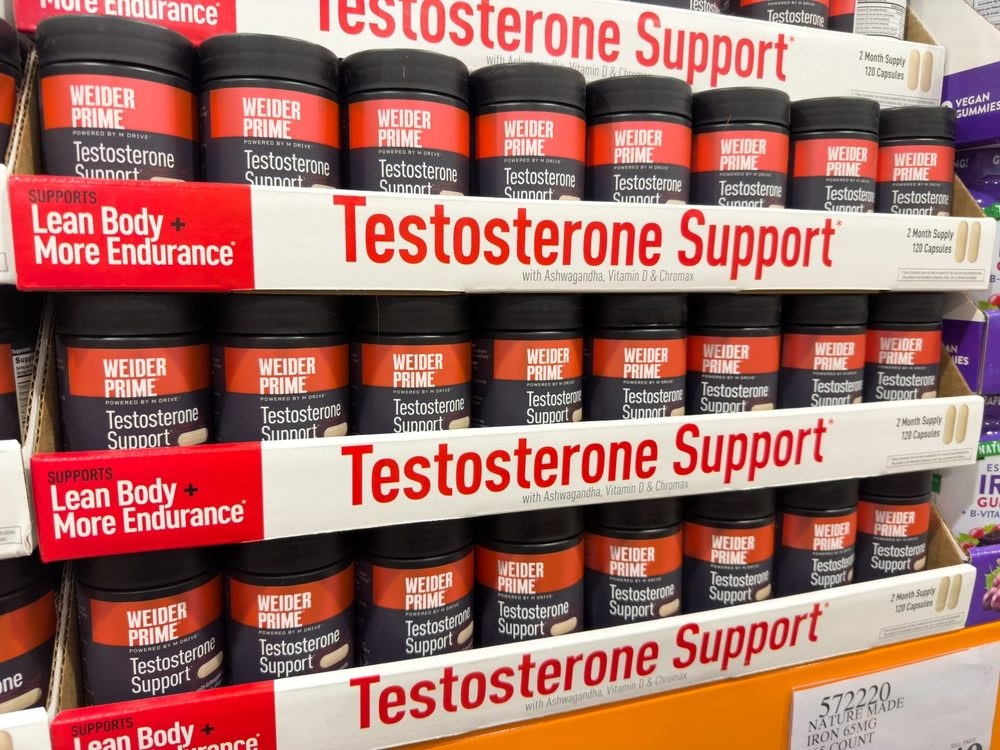
That distinction, medically indicated therapy for a properly diagnosed problem, is worlds away from what’s actually driving demand: online “optimisation” clinics selling men a diagnosis before they’ve established one.
Worth noting: the Pentagon’s announcement landed the same year the FDA proposed loosening testosterone product labelling, dropping a 2015-era warning about age-related low testosterone. That’s a response to newer trial data, not a green light for population screening.
What it means for Australian men
None of this is Australian military policy. But the underlying anxiety travels well beyond one country’s armed forces.
If you’re noticing low libido, erection changes or unexplained fatigue, that’s worth a conversation with your GP, not a private test bought online. Healthy Male and Healthdirect both make the same point: testing needs proper timing and needs repeating before anyone acts on it. A single number, especially from a test bought without a referral, tells you almost nothing on its own. And if you’re curious whether the broader lifestyle factors that affect testosterone apply to you, or whether what you’re eating is quietly working against you, that’s a far more useful place to start than a mail-order blood kit.