Bourbon is America’s whiskey: a spirit made mostly from corn, aged in new charred oak barrels, and bound by a short, strict set of US rules. Those rules are why a bourbon tastes sweeter and rounder than most Scotch, and why a whiskey made in Kentucky can be bourbon while one made the same way in Tasmania can’t.
Here’s what makes bourbon bourbon, how it compares with whiskey, Scotch and rye, how it’s made, and how to drink it, from neat to the three cocktails worth learning. If you’re new to brown spirits in general, start with our Whisky 101: a man’s guide to the good stuff.
- What it is: an American whiskey made from a grain mix that is at least 51% corn
- Where: it must be made in the United States. Most comes from Kentucky, but any state can make it
- Barrels: aged in new, charred oak containers, which give the vanilla and caramel flavours
- No additives: no colouring or flavouring; only water to bring it down to bottling strength
- Straight bourbon: aged at least two years
- Bourbon vs whiskey: all bourbon is whiskey; most whiskey isn’t bourbon
- Standard drinks: a 30 ml nip at 40% is about one standard drink in Australia
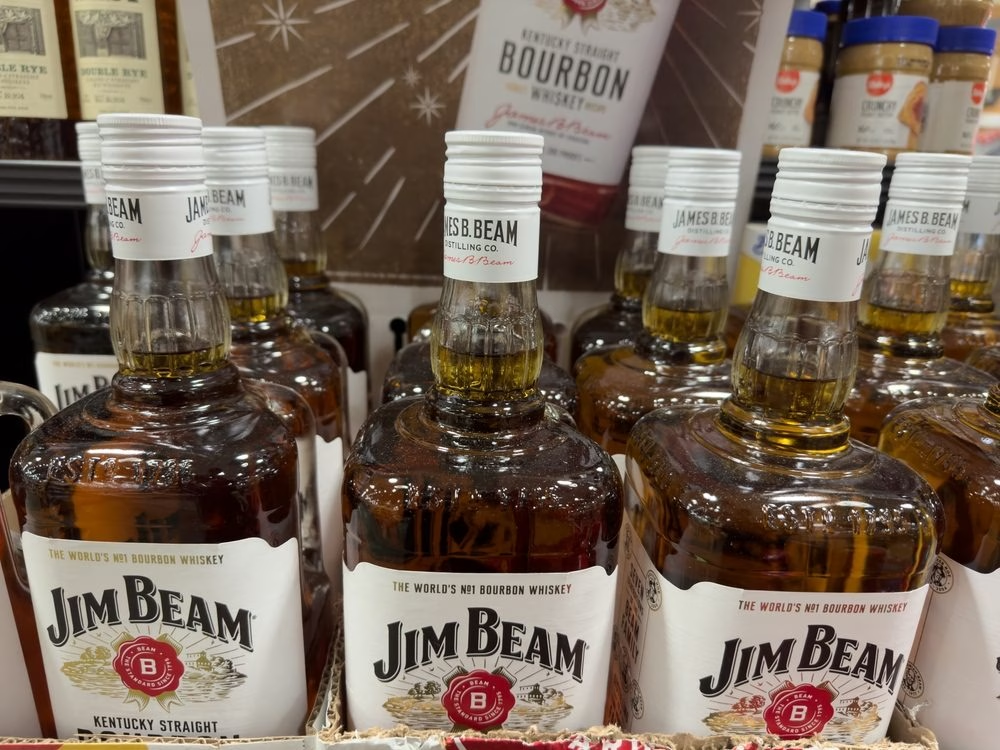
What is bourbon?
Bourbon is a style of whiskey defined in US federal law (27 CFR § 5.143). To be sold as bourbon, a whiskey has to meet all of these rules (US Code of Federal Regulations; New Riff Distilling):
- Made in the USA. It has to be distilled and aged in the United States.
- At least 51% corn. The rest of the grain recipe, called the mash bill, is usually rye or wheat plus malted barley.
- Distilled to no more than 160 proof (80% alcohol by volume), so plenty of grain flavour survives the still.
- Into the barrel at no more than 125 proof (62.5% ABV).
- Aged in new, charred oak containers. A barrel can be used for bourbon only once. The law doesn’t name the type of oak, but most distillers use white oak.
- Bottled at no less than 80 proof (40% ABV).
- Nothing added except water. No colouring, no flavouring.
Notice what’s missing: there’s no minimum age for plain bourbon. In practice almost everything you’ll see on an Australian shelf says “straight” on the label, which brings in an age rule.
What “straight bourbon” means
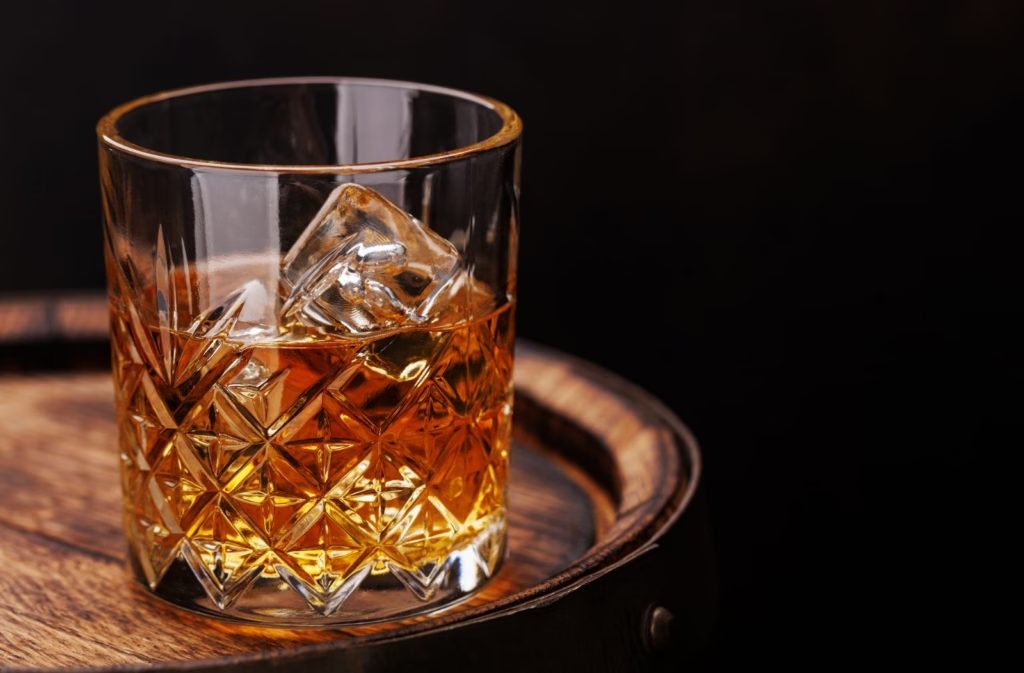
Straight bourbon must spend at least two years in new charred oak, with no colouring, flavouring or blending with other spirits (27 CFR § 5.143; New Riff). If it’s younger than four years, the label must carry an age statement (27 CFR § 5.74). So a bottle of straight bourbon with no age on it is at least four years old. “Kentucky straight bourbon” simply tells you which state made it.
Why bourbon can only be American
In 1964 the US Congress declared bourbon a “distinctive product of the United States”, and current US rules still list it that way: the name can’t be used on whiskey that wasn’t distilled and aged in the US (Wikipedia; 27 CFR § 5.143). It works the same way Scotch has to come from Scotland. Bourbon can be made in any US state, but Kentucky makes most of it (Kentucky Distillers’ Association; Wikipedia). You’ll often see a figure of 95% quoted; that number is disputed, so we’ve left it out.
Bourbon vs whiskey vs Scotch vs rye
Whiskey (or whisky; Americans and the Irish mostly use the “e”, Scots don’t) is the umbrella term for a spirit distilled from fermented grain and aged in wood. Bourbon, Scotch and rye are tighter, legally defined styles under that umbrella. So asking “bourbon vs whiskey” is a bit like asking “Cabernet vs wine”: every bourbon is a whiskey, but most whiskey could never be bourbon.
| Style | Made in | Main grain | Barrels and age |
|---|---|---|---|
| Bourbon | USA | At least 51% corn | New charred oak; no minimum (2 years for “straight”) |
| Rye (American) | USA | At least 51% rye | New charred oak; 2 years for “straight” |
| Scotch | Scotland | Malted barley, or other cereals for grain whisky | Oak casks, often reused; at least 3 years in Scotland |
| Whiskey in general | Anywhere | Any grain | Wooden casks; rules set by each country |
A few points behind the table:
- Rye follows the same rules as bourbon, but with rye as the main grain, at least 51% (27 CFR § 5.143; Wikipedia). It drinks spicier and drier.
- Scotch must be distilled and matured in Scotland, for at least three years, in oak casks of no more than 700 litres, and bottled at 40% or more. Unlike bourbon it may contain plain caramel colouring (Scotch Whisky Regulations 2009; Wikipedia). Scotch is mostly matured in casks that have held something else first, many of them ex-bourbon barrels (Wikipedia): bourbon makers can only use theirs once.
- Australian whisky isn’t bourbon under the US definition, however it’s made, because the name is reserved for whiskey made in the US.
How bourbon is made
The steps are the same as any whiskey; the rules above shape each one (Rabbit Hole Distillery; New Riff):
- Mash. Ground corn, plus rye or wheat and malted barley, is cooked in water to release the starches; the barley’s enzymes turn them into sugar.
- Ferment. Yeast turns the sugar into a beer-like wash. Many distillers use the sour mash method: a portion of an earlier fermented batch is added to start the next one, which keeps each batch consistent. A sweet mash starts from scratch every time.
- Distil. The wash is distilled, staying at or under 80% ABV, so the spirit keeps the character of the grain.
- Barrel. The clear spirit goes into new oak barrels that have been charred inside, at no more than 62.5% ABV.
- Age. As the barrel warms and cools through the seasons, the spirit soaks into the charred wood and back out, picking up colour, vanilla and caramel flavours.
- Bottle. Water brings it down to bottling strength, 40% ABV or higher.
Gee David, a Buffalo Trace brand ambassador, told Men’s Fitness in 2019 that the flavour comes from that combination of corn and charred white oak: the wood releases natural sugars, and the char and caramelisation add vanilla, toffee and caramel. With longer ageing, he said, you get spice notes such as clove and cinnamon, and “a bit of smoke and leather”.
Rye-heavy or wheated?
After corn, the next grain in the mash bill shapes the taste. Most bourbons use rye. A “wheated” bourbon swaps the rye for wheat; Maker’s Mark is the best-known example (Maker’s Mark; Wikipedia).
Rye gives you a bit more spice and a dry characteristic – it’s a bit more ballsy. The wheated is a bit softer and more subtle.
Gee David, Buffalo Trace brand ambassador, Australian Men’s Fitness, December 2019
How to drink bourbon
Neat, or with a drop of water
Pour a nip or two into a short glass and taste it on its own first. Then add a few drops of water and taste again. Gee David’s 2019 tip still holds: a drop of water slowly dilutes the spirit and opens up its aromas and flavours. It’s especially useful with stronger bottlings at 50% ABV or more.
On ice
A single large ice cube melts more slowly than a handful of small ones, so the drink chills without going watery too fast. Bourbon’s sweetness stands up to cold better than many lighter whiskies.
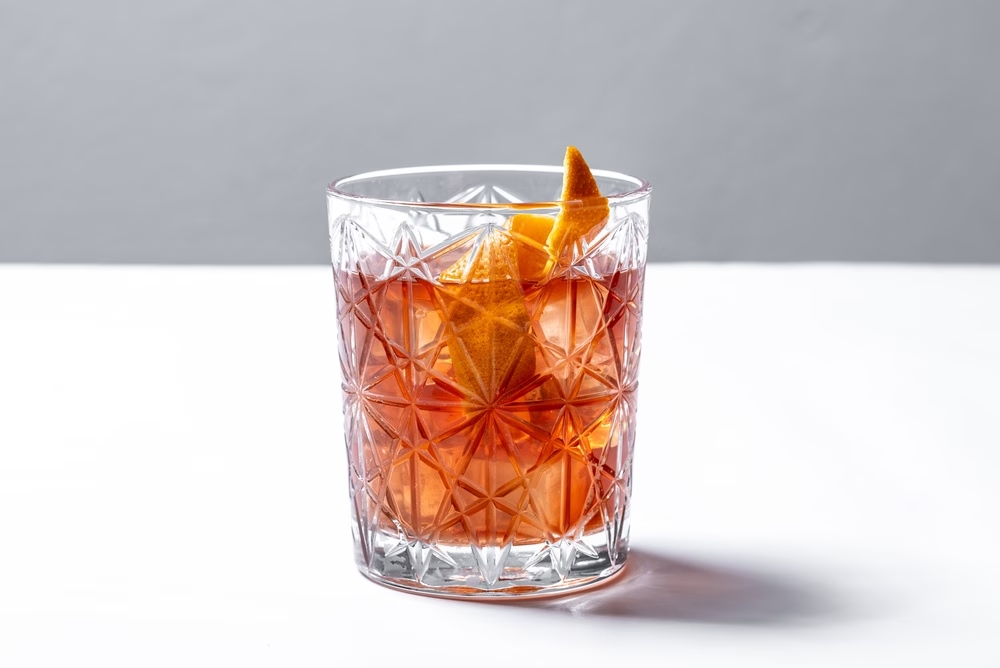
Old Fashioned
The classic bourbon cocktail, and the one to learn first. The International Bartenders Association recipe (IBA):
- 45 ml bourbon (or rye)
- 1 sugar cube, soaked with a few dashes of Angostura bitters and a few drops of water
- Muddle the sugar until it dissolves, fill the glass with ice, add the bourbon and stir
Manhattan
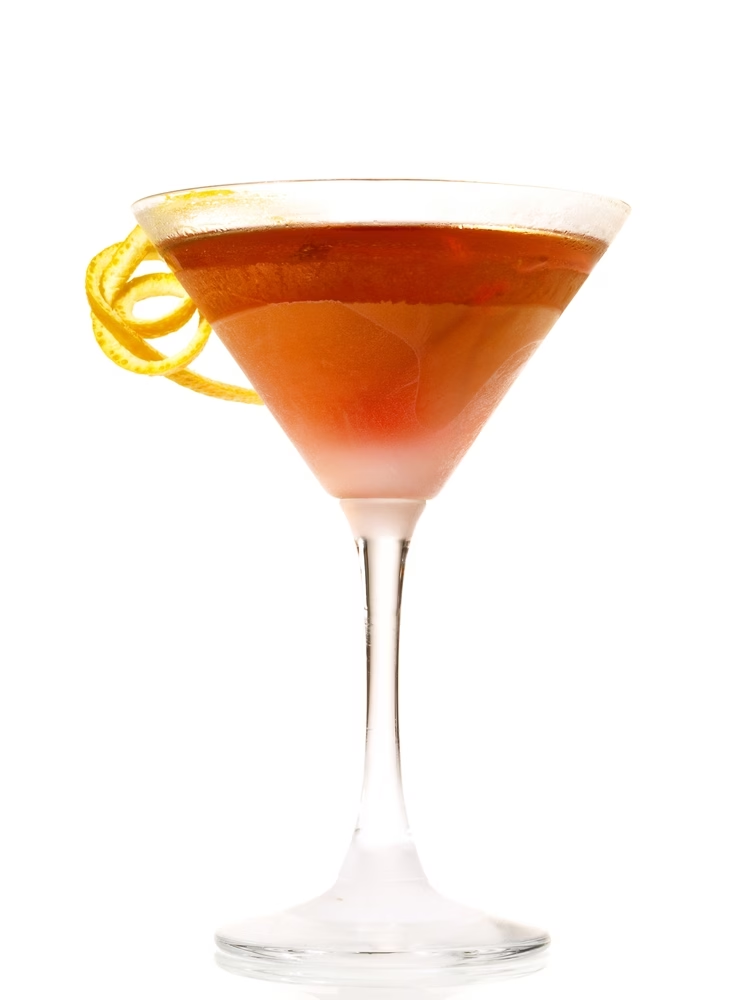
Stronger and drier, served without ice. The IBA spec uses rye; bourbon makes it a little rounder and sweeter (IBA):
- 50 ml rye or bourbon
- 20 ml sweet red vermouth
- 1 dash Angostura bitters
- Stir with ice in a mixing glass, strain into a chilled cocktail glass, garnish with a cocktail cherry
Whiskey Sour
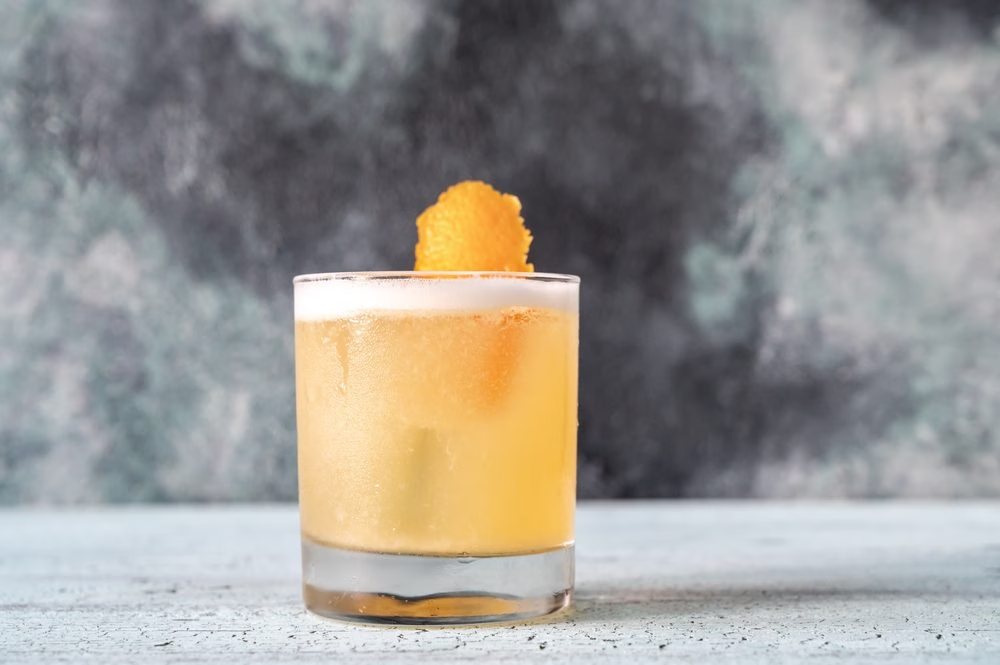
The easiest way into bourbon if you don’t like it neat (IBA):
- 45 ml bourbon
- 25 ml fresh lemon juice
- 20 ml sugar syrup
- A few drops of egg white (optional, for a foamy top)
- Shake hard with ice and strain into a glass, over fresh ice if you like it on the rocks
Bourbon and cola is the other way most Australians meet bourbon, in a glass or a can. It’s fine, but the cola drowns most of what makes a good bourbon worth paying for, and it adds sugar.
Bourbons to try in Australia
These four well-known Kentucky straight bourbons are stocked by the big Australian bottle shops (checked on BWS, 28 October 2026). We haven’t listed prices: they move often, and specials are common, so check your local store.
- Buffalo Trace — a good everyday bourbon to start with, neat or in an Old Fashioned.
- Maker’s Mark — the classic wheated bourbon: softer, as Gee David put it, with the red wax seal.
- Wild Turkey 101 — bottled at 101 proof (50.5% ABV), stronger than most, and good in cocktails where you want the bourbon to come through.
- Woodford Reserve — worth sipping neat or with a drop of water.
Jack Daniel’s, the bottle many people think of first, is sold as Tennessee whiskey rather than bourbon.
Bourbon, standard drinks and training
A 30 ml nip of 40% spirit is about one standard drink, and an Australian standard drink holds 10 g of pure alcohol (Australian Government standard drinks guide; NHMRC). A 700 ml bottle at 40% holds about 22.
Alcohol carries about 29 kJ per gram (7 Calories), so each standard drink is at least 290 kJ, roughly 70 Calories, before you add any mixer (Diabetes Australia; NHS). A double bourbon and cola, or a Whiskey Sour with its sugar syrup, adds more on top.
The Australian guidelines say healthy adults should drink no more than 10 standard drinks a week and no more than 4 on any one day; the less you drink, the lower the risk (Australian Government Department of Health; NHMRC). In bourbon terms, that’s a long way short of a bottle a week.
For training, the honest summary is that a drink or two won’t undo a good session, but a big night after one will cost you. In one small study of trained men, drinking about 12 standard drinks after a hard workout cut muscle protein synthesis by about 24% compared with protein alone, even when they also had protein (Parr et al., PLoS One, 2014; Bond University). Alcohol also helps you fall asleep but disrupts the second half of the night and reduces REM sleep, so you wake less rested (Ebrahim et al., 2013; Sleep Foundation). More on that in our guide to how to fall asleep fast.
Our read: if you’re going to drink, drinking less but better suits bourbon. One good pour, sipped slowly, beats four bourbon and colas for flavour, for your sleep and for tomorrow’s session. If you’re thinking about stopping altogether, read what really happens when you give up the booze, or see Sydney’s sober sauna social scene.
Bourbon FAQ
Is bourbon sweeter than Scotch?
Usually, yes. Bourbon has no added sugar, but the corn-heavy mash and the new charred oak barrels give it vanilla, caramel and toffee flavours that read as sweet. Scotch is mostly aged in reused casks, which give less of those flavours.
Why is bourbon American only?
US law reserves the name for whiskey distilled and aged in the United States, and Congress declared bourbon a “distinctive product of the United States” in 1964. A whiskey made the same way anywhere else can’t be called bourbon.
Does bourbon have to come from Kentucky?
No. It can be made in any US state. Most of it comes from Kentucky.
How many calories in a bourbon?
A 30 ml nip of 40% bourbon is about one Australian standard drink: roughly 290 kJ, or about 70 Calories, all from the alcohol. Mixers add more.
How many standard drinks in a bottle of bourbon?
A 700 ml bottle at 40% ABV is about 22 standard drinks. Stronger bottlings, such as 50% bourbons, hold more.
What’s the difference between bourbon and rye?
The main grain. Bourbon is at least 51% corn and rye whiskey is at least 51% rye; otherwise the US rules are the same. Rye tastes spicier and drier; bourbon rounder and sweeter.
Sources: 27 CFR § 5.143, US Code of Federal Regulations; 27 CFR § 5.74; New Riff Distilling, What makes bourbon, bourbon?; Rabbit Hole Distillery, Learn about bourbon; Kentucky Distillers’ Association; Wikipedia, Bourbon whiskey; Wikipedia, Rye whiskey; Scotch Whisky Regulations 2009, regulation 3; Wikipedia, Scotch whisky; Maker’s Mark; Wikipedia, Maker’s Mark; Australian Government, standard drinks guide; Australian Government, how much alcohol is safe to drink?; NHMRC, Australian alcohol guidelines; Diabetes Australia; NHS, calories in alcohol; Parr et al., PLoS One, 2014; Bond University research listing; Ebrahim et al., Alcoholism: Clinical and Experimental Research, 2013; Sleep Foundation; International Bartenders Association recipes (Old Fashioned, Manhattan, Whiskey Sour); Gee David, “Monster mash”, Australian Men’s Fitness, December 2019. Checked 28 October 2026.