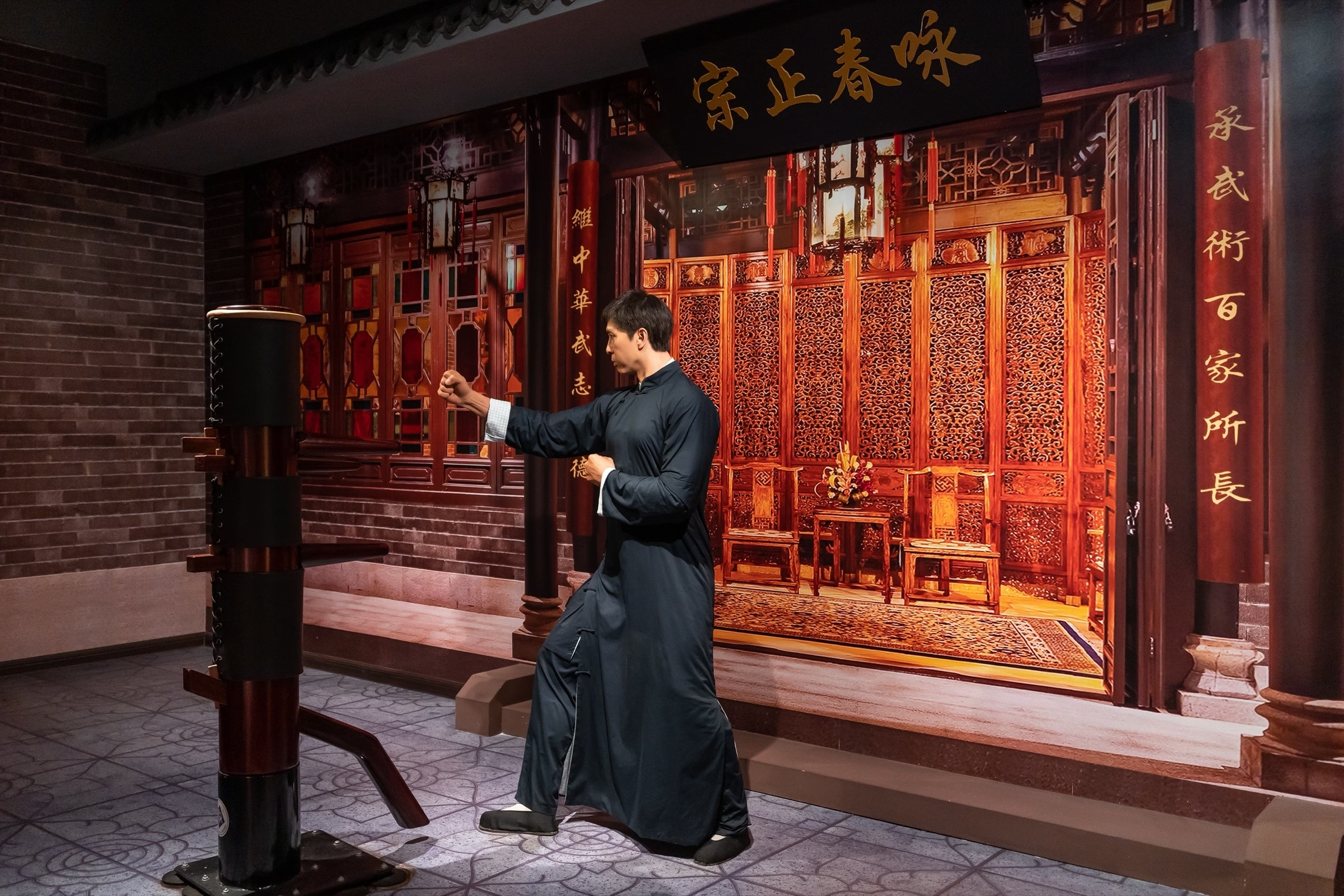

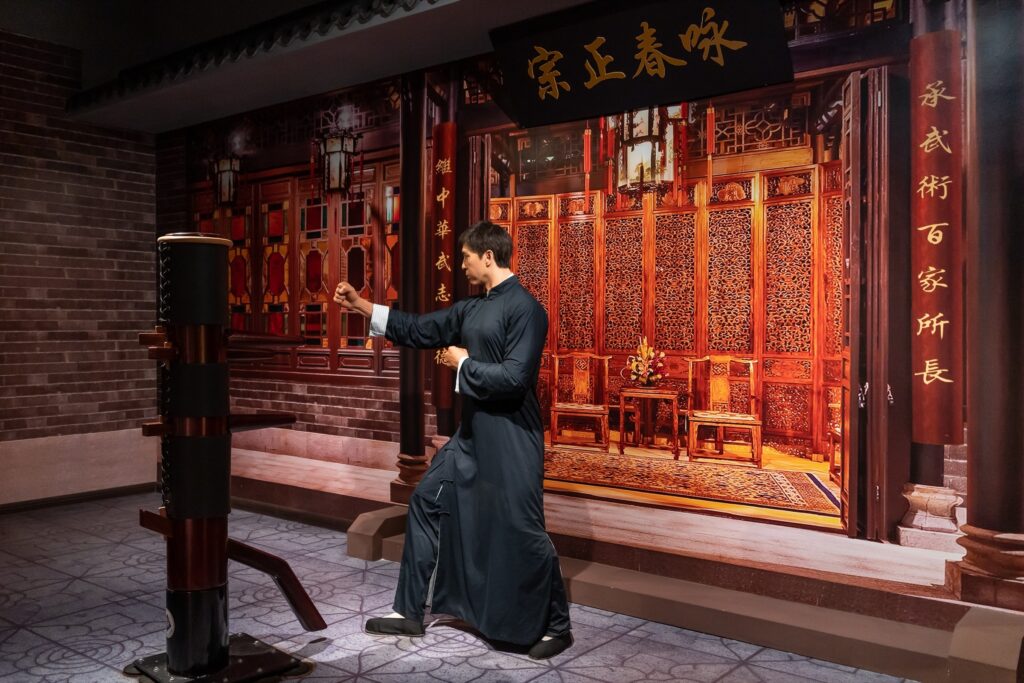
Wing Chun is a southern Chinese kung fu system built for fighting at arm’s length. You guard the line down the middle of your body, block and hit at the same time, fire short straight punches in a chain, and train your reflexes by sticking to a partner’s arms. Three empty-hand forms and a wooden dummy carry the whole system.
It’s the style Bruce Lee learned as a teenager, and the one Robert Downey Jr has trained in with the same teacher for more than 20 years. Here’s what’s real in its history, what a class does for your body, a 20-minute session you can do in the lounge room, and what happens when Wing Chun meets an MMA fighter.
- Origin: southern China. No reliable records before the mid-1800s
- Made famous by: Ip Man (1893 to 1972), who began teaching in Hong Kong in 1950
- Best-known students: Bruce Lee, from age 13. Robert Downey Jr, since 2003
- Core kit: three empty-hand forms, chi sau (sticky hands), the wooden dummy
- Range: close. Short straight punches thrown in chains
How Wing Chun works
Downey summed it up better than most instructors. “Wing Chun is all about guarding your center line,” he told Men’s Journal in 2010. “Don’t fight force with force; use two hands at the same time.” That’s the system in a sentence: protect the centreline, and let one hand deflect while the other hits.
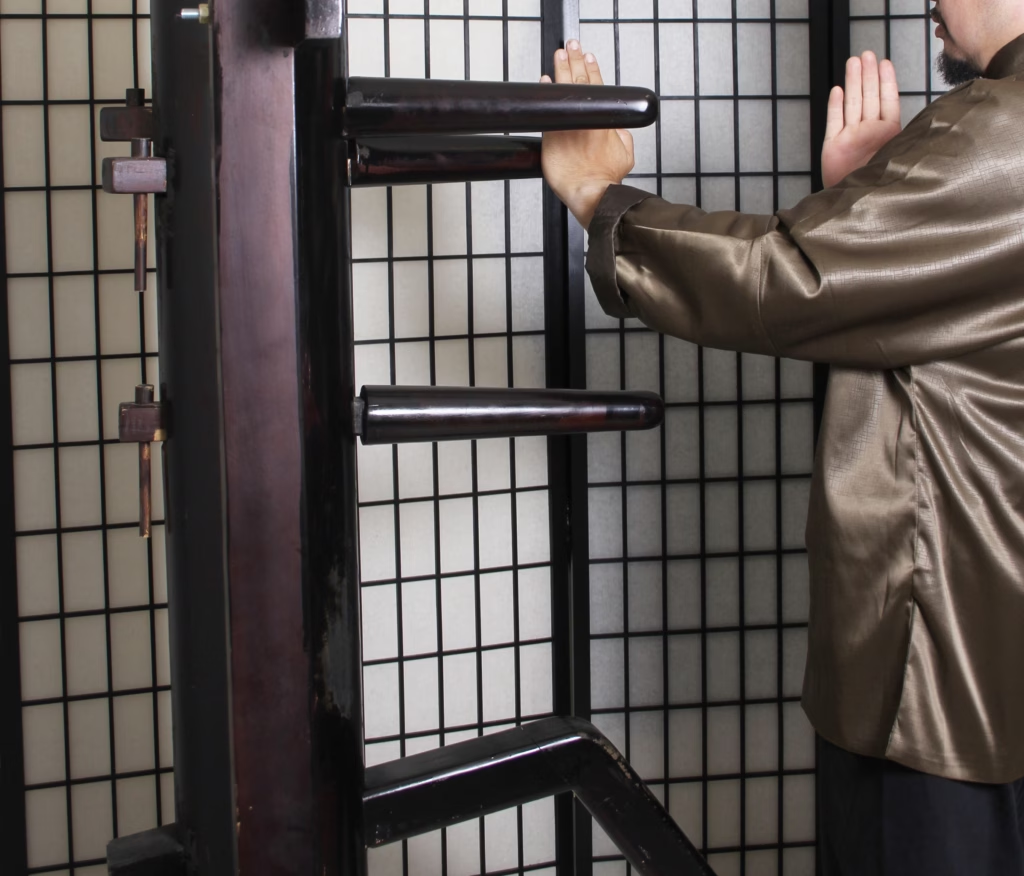
The punch is short and straight, thrown from right in front of you, and Wing Chun stacks them into rapid chains rather than loading up one big shot (CGTN). Everything is built on three empty-hand forms: Siu Nim Tau (“little idea”), Chum Kiu (“seeking arm”) and Biu Jee (“shooting fingers”), plus the wooden dummy, or muk yan jong, and in most branches a pole and a pair of knives (Kung Fu Tea).
The signature drill is chi sau, or sticky hands: two people keep their forearms in contact and roll, feeling for gaps and pressure rather than watching for them. Ip Man put fresh emphasis on it when he started teaching publicly (Kung Fu Tea), and Hong Kong researchers describe it as interactive, dance-like partner work (Fong et al., Trials, 2023).
Where Wing Chun came from: legend vs record
Ask most schools and you’ll hear the story: a Buddhist nun, Ng Mui, escapes the burning of the Shaolin Temple and teaches a young woman named Yim Wing Chun, who passes the art to her husband. Eric Oram’s own school tells it that way (Sifu Eric Oram), and so does the Melbourne academy of his teacher, William Cheung (Cheung’s Martial Arts).
Historians aren’t convinced. Benjamin Judkins, co-author of The Creation of Wing Chun, calls the opening acts of that story “clearly fictional” and says there is no reliable documentation of the art or its practitioners before the mid-19th century. The paper trail starts with Leung Jan, a medical practitioner in Foshan, and his student Chan Wah-shun, who taught a young Ip Man (Kung Fu Tea).
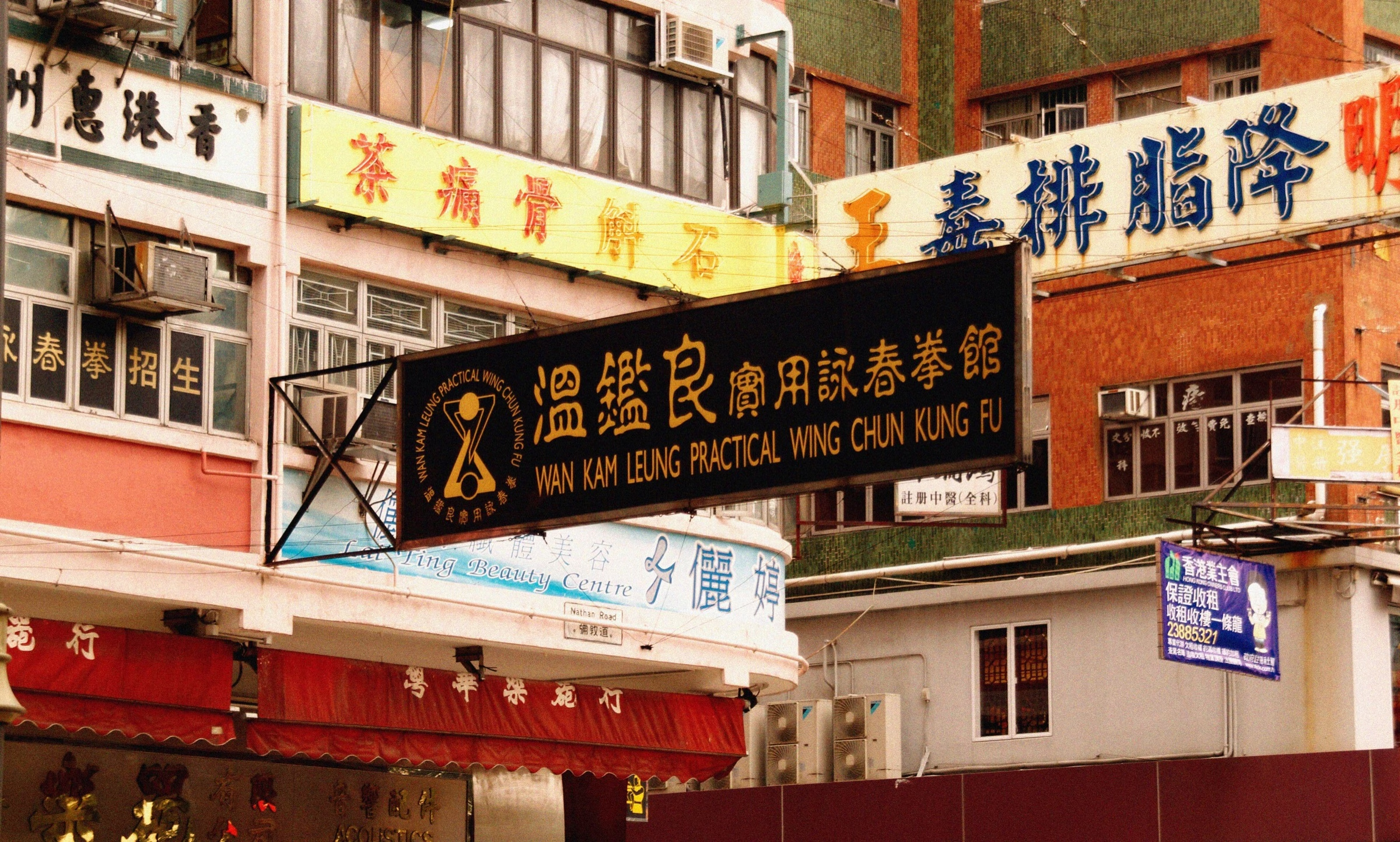
Ip Man was born in Foshan in 1893, fled to Hong Kong after the Communist victory in 1949 and started teaching there in 1950, with his first class made up of restaurant workers (The Telegraph; Sifu Eric Oram). His most famous student walked in at 13. Bruce Lee trained with him for about five years before leaving for the US at 18 (Bruce Lee Family Company), and the Bruce Lee Foundation dates his start to 1953 (Google Arts & Culture). Lee later built his own approach, Jeet Kune Do, but Wing Chun was the base, and his fame is what took it worldwide (Kung Fu Tea).
Robert Downey Jr and Wing Chun
Downey has trained under Eric Oram, a Los Angeles Wing Chun teacher, since 2003. A 2010 Men’s Journal profile called Wing Chun “Downey’s religion since 2003”, around the time he got clean (Men’s Journal). In December 2015, when California’s governor pardoned Downey for his old drug convictions, Oram told TMZ he had met the actor 12 years earlier and wrote a letter backing the pardon (TMZ).

It almost didn’t happen. Oram said insurers wouldn’t bond Downey for films when he first turned up, and he threatened to drop him if he skipped a lesson (VICE). Downey stuck it out, training three to five days a week by 2010. “This is all about focus,” he said. “Wing Chun teaches you what to concentrate on, whether you’re here or out in the world dealing with problems” (Men’s Journal). On Oprah he put it more simply: “It improves your focus” (Oprah.com).
It shows on screen. Oram lists himself as fight choreographer on both Guy Ritchie Sherlock Holmes films, Iron Man 3 and The Avengers (Sifu Eric Oram), and Downey worked his Wing Chun into the action on the Holmes and Iron Man films (VICE). TMZ put their collaborations at 17 films by 2015. The local link: Oram is a senior student of William Cheung (Sifu Eric Oram), Bruce Lee’s childhood friend and fellow Ip Man student, whose headquarters is in Brunswick, Melbourne (Cheung’s Martial Arts).
What a Wing Chun class does for your body
Expect sore shoulders and burning thighs before anything else. Chain punching is high-rep work for the shoulders and triceps, the low stance loads your quads and adductors for minutes at a time, and chi sau trains reaction and coordination with a resisting partner. Downey’s 2010 session ran breathing, stretching, a reaction-ball drill with push-ups for every drop, hand-to-hand drills, then rounds on the dummy (Men’s Journal).
The research is thin and mostly on older adults. A Hong Kong trial of 33 adults in their late 60s and early 70s found three months of Wing Chun didn’t improve balance or cut falls (Ma et al., Perceptual and Motor Skills, 2019). A similar trial of sticky-hands training lifted knee flexor strength but not joint sense (Fong et al., Trials, 2023). Our read: treat Wing Chun as skill and coordination work, and keep lifting and running alongside it. It won’t replace a conditioning plan.
A 20-minute Wing Chun session at home
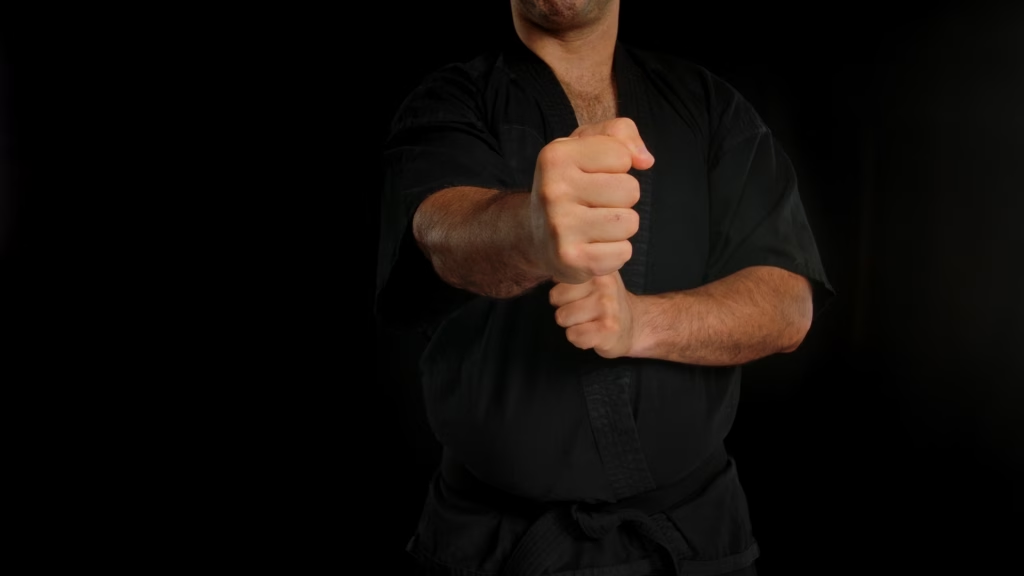
No dummy needed. Stand with feet a bit wider than hips, toes and knees turned slightly in, hips tucked under, elbows pointing down, fists stacked on your centreline.
| Drill | Dose |
|---|---|
| 1. Footwork warm-up Small shuffles forward and back, stance kept | 3 min |
| 2. Stance hold Hands up guarding the centreline | 3 x 60 sec |
| 3. Slow chain punches Elbows down, each fist rolls over the other | 3 x 30 sec |
| 4. Fast chain punches Relaxed shoulders, breathe out | 5 x 20 sec on, 40 off |
| 5. Step and punch Shuffle in on each burst of three | 3 x 60 sec |
| 6. Push-ups Fists or palms, slow down | 3 x 10 |
Want more bag work? Our boxing workout for beginners pairs well with this.
Does Wing Chun work in a real fight?
The most famous test went badly. On 18 March 2018 in Chengde, China, MMA fighter and coach Xu Xiaodong took on Ding Hao, who claimed descent from Ip Man’s line. Ding’s fast punches did little, Xu put him on the floor six times, and the referee still called it a draw (Mothership; Protothema). Martial arts writer Graham Barlow’s verdict: Ding “clearly lacks realistic sparring experience” and his grappling was “non-existent” (The Tai Chi Notebook).
Our read: that fight says more about training than about style. Short straight punches, a tight guard and hand-fighting from the clinch all turn up in MMA. What Wing Chun schools often lack is the live resistance every combat sport depends on, plus any answer to a takedown. The fighters who make it to the UFC’s weight classes come from sports where you test yourself against someone trying to beat you, the way Kayla Harrison built her MMA game on Olympic judo. Bruce Lee, the most famous Wing Chun student of all, kept the base and moved on.
How to start Wing Chun in Australia
We don’t recommend individual schools. Our read: these five checks sort the good ones from the rest.
- Watch a class first. Look for chi sau and drilling with real pressure, not just forms in the air.
- Ask about sparring. Some contact, even light, with gloves on. If the answer is “too deadly to spar”, walk on.
- Ask about lineage. A good teacher can tell you plainly who taught them and how long they trained.
- Read the contract. Take the free trial, and be wary of long lock-in memberships before you know you’ll stay.
- Train something with takedowns too. A night of wrestling, judo or BJJ a week covers Wing Chun’s biggest gap.
If striking with a harder edge appeals more, see our pick of Muay Thai camps in Thailand.
Wing Chun FAQ
Is Ving Tsun the same as Wing Chun?
Yes. Ving Tsun, Wing Tsun and Wing Chun are different romanisations of the same Cantonese name, and researchers use them interchangeably (Fong et al.). The spelling often tells you which lineage a school follows.
How long does it take to get good at Wing Chun?
Years. Downey, training three to five days a week, was still sitting for his brown-belt grading after about seven (Men’s Journal). Grading systems vary between schools.
Do I need a wooden dummy?
Not to start. Many schools hold the dummy back until you know the empty-hand forms, and a partner for chi sau matters far more early on.
Sources: Men’s Journal (Stephen Rodrick, 2010); TMZ; VICE; Sifu Eric Oram; Benjamin Judkins, Kung Fu Tea; Bruce Lee Family Company; Bruce Lee Foundation via Google Arts & Culture; The Telegraph; CGTN; Mothership; Protothema; The Tai Chi Notebook; Ma et al. 2019; Fong et al. 2023.