

Phil Gore had already run 152 laps and more than a thousand kilometres. His previous lap had taken 58 minutes and one second, the slowest of the entire week, leaving him less than two minutes before the next one started. He went out anyway. Around 25 minutes into lap 153, his legs stopped answering him properly. He collapsed and had to be helped back to the support vehicle. That is the moment Project 168 actually ended, with a body refusing an instruction.
The Rules
A backyard ultra is a strange kind of race. Every runner starts a new 6.71 km loop at the top of each hour and must finish inside that hour. Whatever time is left over is the runner’s to use however they want: eating, sleeping, changing shoes, seeing a physio. Miss the cutoff, or fail to start the next lap, and you’re out. The winner is whoever is still moving when everyone else has stopped.
Gore, a Western Australian firefighter, father of four and the reigning Big Dog’s Backyard Ultra world champion, has won 14 of the 16 backyard ultras he’s entered. In June 2025 he set the format’s official world record: 119 laps, 796 km, at Dead Cow Gully in Queensland. He won that race the way every backyard ultra is won, by outlasting the second-last runner standing.
Project 168 threw that structure out. There was no field to outlast. Gore set out to run a lap every hour for 168 hours straight, a full week, alone, whether or not there was anyone left to beat.
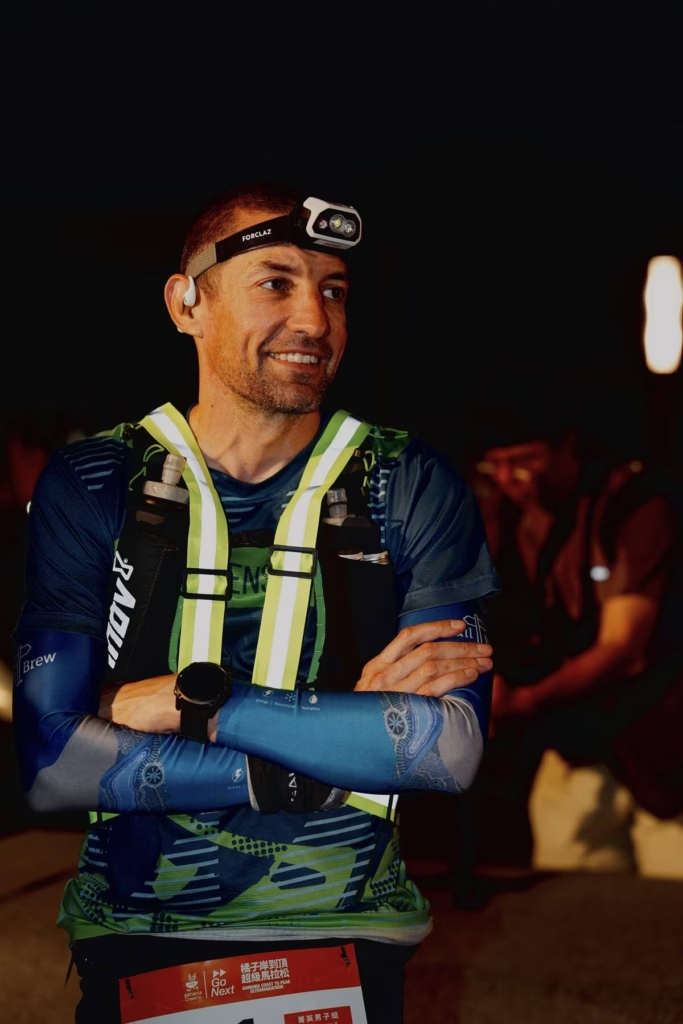
Why Remove the Finish Line
Gore has said he wanted the effort to “become a mark other athletes chase” even without official recognition, and has compared the ambition to Roger Bannister’s four-minute mile: not a sanctioned record, but a target that changes what people believe is possible. Backyard ultras normally end the moment a winner is decided, often with the champion still capable of more. Project 168 was Gore’s attempt to find out what happens when nobody calls the race early. The hour becomes the only opponent, arriving whether you’re ready or not.
Fuel, Not Diet Advice
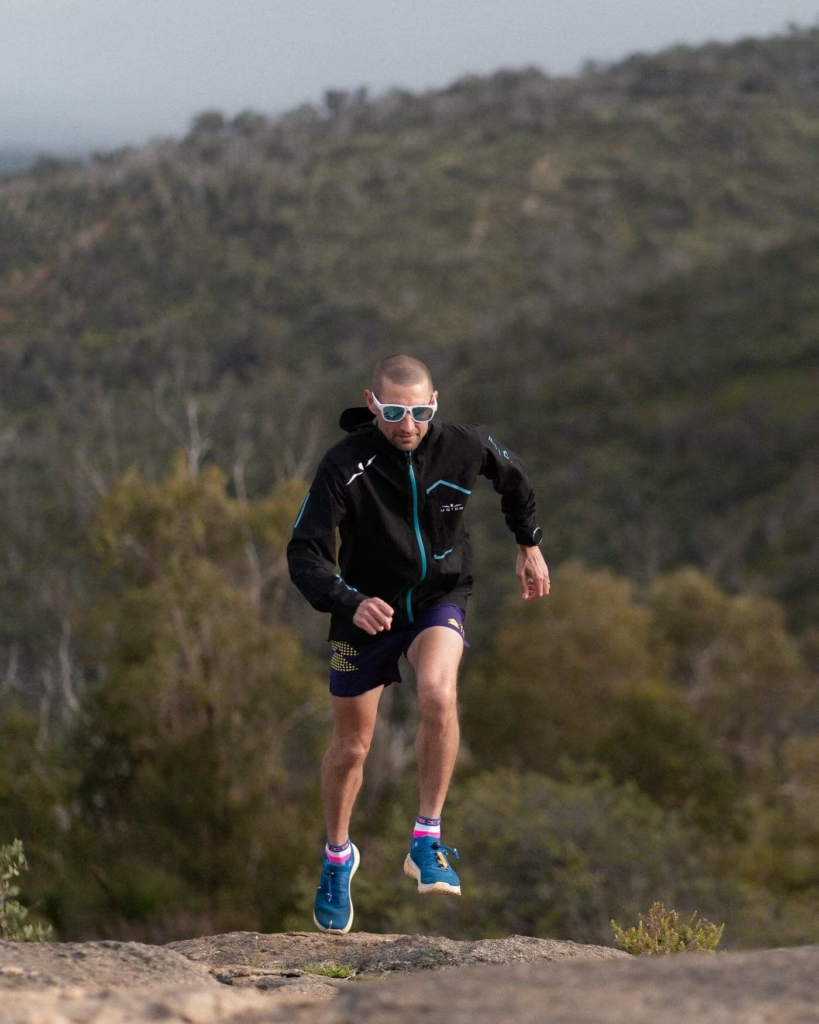
Across the week Gore ate whatever kept him moving: meat pies, Coco Pops with chocolate milk, Nerds and jelly lollies, microwave curry and rice, at one point a McDonald’s cheeseburger. This wasn’t a nutrition philosophy. Ultra-endurance fuelling is about getting usable, tolerable energy into a body that’s stopped wanting food, fast enough between laps to matter. None of it is a training recommendation for a Tuesday gym session.
The sleep problem
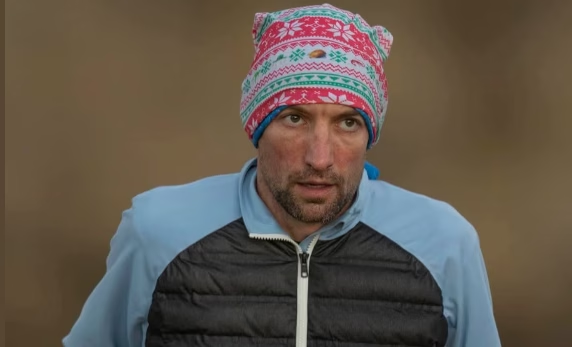
Between laps, Gore reportedly slept in blocks of roughly 15 minutes, though the exact window varied depending on how long each lap took and what else needed doing. The relevant issue isn’t the total hours missed. It’s the repeated interruption: waking, dressing and running again every time the body starts to properly shut down. Fragmented sleep like that degrades judgement and reaction time well before it touches raw physical output, which is part of why an elite athlete can keep running while visibly deteriorating. Sleep inertia, the grogginess and impaired coordination that follows being woken mid-cycle, only compounds with each repetition. Repeated across six days, it’s a plausible explanation for slowing pace and growing confusion long before the legs themselves gave out.

What actually stopped him
Nobody diagnosed Gore’s collapse on-site, and MFO isn’t diagnosing it here. But hourly running for six days plausibly stresses the same systems in most people: muscles and tendons that never get real recovery, feet under continuous impact, energy stores running on fumes, and a nervous system managing coordination on almost no proper sleep. Research on sleep and injury risk in runners backs this up: his slower lap times and eventual collapse are consistent with several of those systems compounding, not one single failure.
What it actually was
Project 168 wasn’t an official backyard-ultra world record. Under the format’s own rules, a record requires other runners left in the competition, and Gore was alone. What he set was an unofficial solo benchmark: 152 laps, 1,019.92 km, roughly six days and eight hours on the move, 33 laps beyond his own official record. Along the way he raised $285,791.23 for Telethon.
The point
Nobody should copy the sleep deprivation. That’s not the lesson here. What Gore actually demonstrated is that endurance isn’t just muscle: it’s pacing, fuelling, sleep, decision-making under fatigue, and knowing the difference between pushing further and pushing somewhere dangerous. If you’re building toward your own first long event, the transition into ultra-distance running is worth doing properly, not by imitating this. He didn’t lose a race. He went looking for his limit, on purpose, and eventually found it.