
Turn your palms in, and suddenly your ordinary bicep curl is a different exercise entirely. The hammer curl looks like a minor variation. It isn’t — it shifts the work to a muscle most lifters never train directly, and it’s the difference between arms that look big from the front and arms that look big from every angle.
What is a hammer curl?
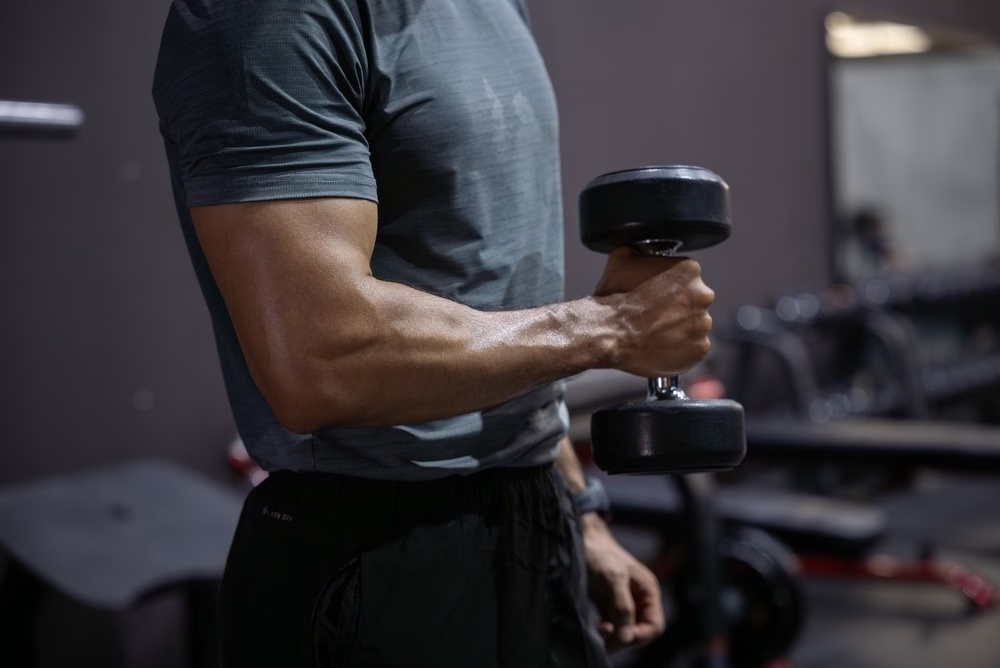
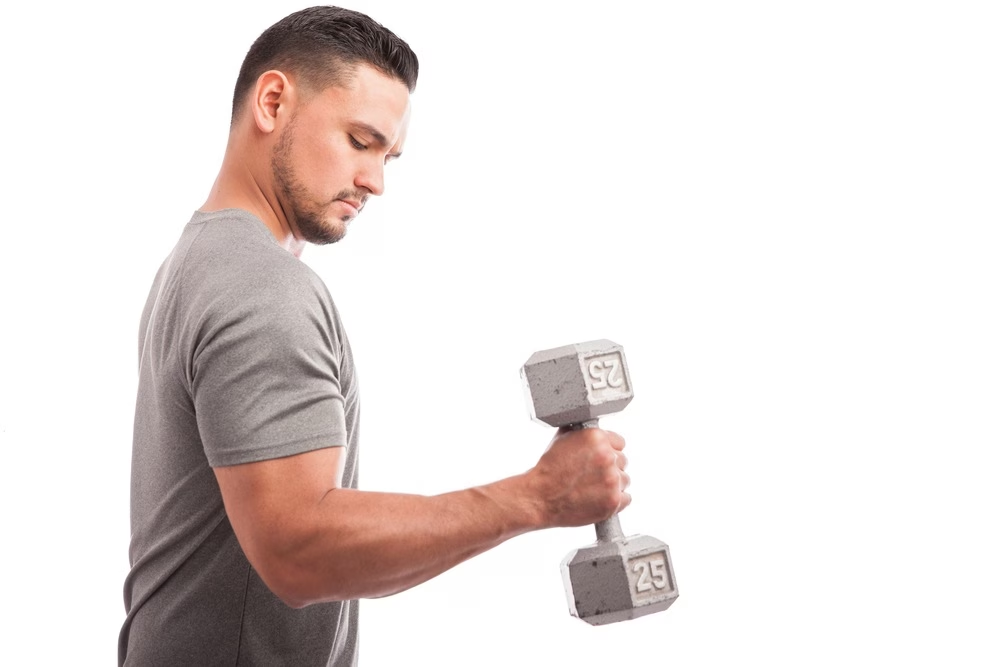
A hammer curl is a bicep curl variation performed with a neutral grip — palms facing each other, like you’re holding a hammer, rather than facing up as in a standard curl. That single change in wrist position shifts a meaningful share of the work away from the biceps and onto the brachialis and brachioradialis, two muscles that don’t get much attention from regular curling but have an outsized effect on how thick your arm looks.
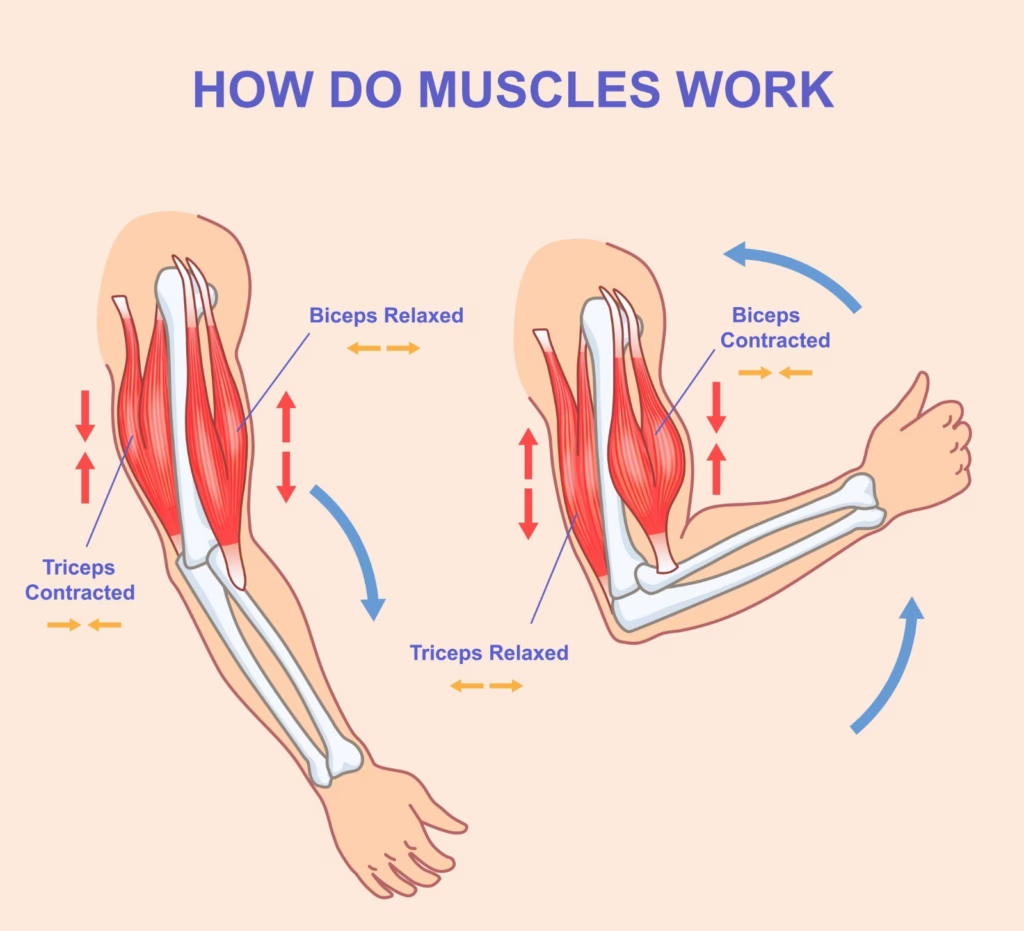
Muscles worked
The standard bicep curl is dominated by the biceps brachii — the muscle most people picture when they think “bicep.” The hammer curl still trains the biceps, but the neutral grip recruits the brachialis, a muscle that sits underneath the biceps and physically pushes it up when developed, and the brachioradialis, the main muscle of the forearm. Train hammer curls consistently and you’ll notice it first in your forearms and the thickness of your upper arm from the side — not just the peak you see from the front.
How to do a hammer curl
- Stand holding a dumbbell in each hand, arms fully extended, palms facing your body (neutral grip).
- Keep your elbows pinned to your sides — they shouldn’t drift forward or back during the movement.
- Curl both dumbbells up toward your shoulders, keeping your wrists locked in the neutral position throughout.
- Squeeze briefly at the top, then lower with control back to the starting position.
- Don’t let momentum take over — if you’re swinging your torso to move the weight, it’s too heavy.
Hammer curls can be done with both arms together or alternating one at a time — alternating lets you focus a little harder on each rep.
Common mistakes
- Letting the elbows swing forward. This turns the movement into a front raise with extra steps and takes tension off the arm entirely. Keep your upper arm still.
- Using momentum to cheat the weight up. A hammer curl should be slow and controlled, not a full-body heave. If you need to swing to get it moving, drop the weight.
- Only doing the top half of the range. Full extension at the bottom is where the muscle actually stretches under load — partial reps cheat you out of most of the benefit.
- Going too heavy, too soon. The brachialis and brachioradialis aren’t used to carrying this kind of load if you’ve only ever done standard curls. Build up gradually.
Hammer curl variations
- Alternating hammer curl — curl one arm at a time instead of both together, allowing slightly more focus per rep.
- Cross-body hammer curl — curl the dumbbell up and across toward the opposite shoulder instead of straight up, shifting emphasis further onto the brachialis.
- Cable hammer curl — using a rope attachment on a cable machine keeps constant tension on the muscle throughout the entire range, unlike a dumbbell where tension eases off near the top.
- Seated hammer curl — removes any temptation to use your legs or torso to help the weight up, forcing strict form.
Hammer curl vs bicep curl
Neither replaces the other — they work well together rather than as competitors. A standard curl is the better choice for maximum biceps peak development. A hammer curl builds the brachialis and forearm size that a standard curl mostly skips. If your arm training has only ever been curls with palms facing up, hammer curls are the easiest single addition that changes how your arms actually look, not just how strong they feel.

Where it fits in your training
Hammer curls slot in naturally at the end of an arm or pull day, after your heavier compound pulling work is done. They pair well with other arm exercises built for genuine size and exhaustion, and if you’re building an arm routine from scratch, the basics of building bigger biceps are worth reading alongside this. Two to three sets of 10–12 reps per arm is a solid starting point — enough volume to matter without turning your forearms into jelly before the rest of your session.