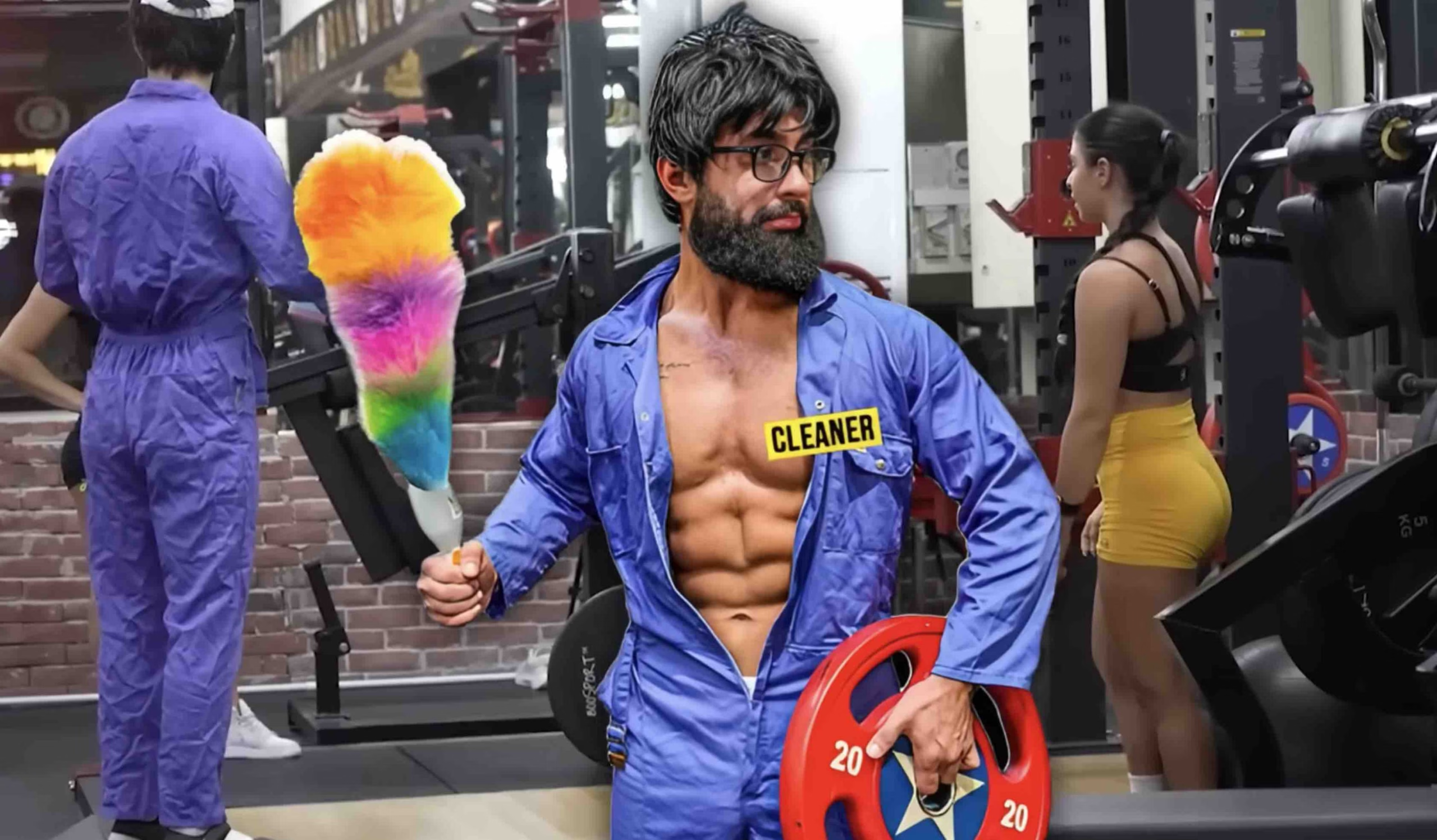

Anatoly does not look like the strongest man in the room. He walks into gyms dressed like a cleaner, grabs a barbell, and then casually lifts weights that make competitive lifters stop mid-set. Naturally, people ask the same question: how is Anatoly so strong when he does not look that big?
Vladimir “Anatoly” Shmondenko, a 25-year-old Ukrainian powerlifter, has pranked massive units in gyms, shocking them with his insane strength. Disguised as a janitor, he would astonish gym-goers by effortlessly lifting weights that left seasoned lifters struggling.
One viral video features him deadlifting 639 lbs (290 kg)—over triple his body weight—while large, heavily muscled onlookers watched in utter disbelief. He will do a one-handed snatch on a weight two very strong female athletes have been deadlifting, or ask for instructions on a pull up, looking like a total noob, only to slowly build up to a perfect L-sit or effortless muscle ups. It makes for good entertainment.
The reactions are priceless and mesermising, raking the young Ukraninan a sizeble social media income, gifting him and enviable car collection and wealth.
His Weight, Height and Lever Advantages
Standing at 5’11” (180cm) and weighing 171 lbs (78 kg), Anatoly doesn’t fit the typical image of a powerlifter. Raised in the small village of Krishtopovka, Ukraine, he constructed his first gym using Soviet tractor parts, wood, and bricks. His passion was fuelled by American bodybuilding videos, which became accessible in his remote village with the advent of the internet in 2016. While peers mocked his rigorous diet—seven daily meals of cottage cheese and eggs—Anatoly remained steadfast in his vision of bodybuilding success.
How Is Anatoly So Strong?
Anatoly’s ability to outlift men twice his size isn’t a genetic anomaly—it’s a masterclass in biomechanics, leverage, and strategic strength training. Unlike traditional bodybuilders who focus on hypertrophy (muscle growth for aesthetic purposes), Anatoly’s training is geared toward raw power output, movement efficiency, and neuromuscular activation.
Anatoly’s Training Style
One of the key reasons Anatoly is able to generate such incredible force is his understanding of leverage. Instead of relying purely on brute strength, he positions his body in ways that maximise mechanical advantage.
- Deadlift: He adopts a precise hip hinge position, ensuring his centre of mass stays over the bar to reduce unnecessary energy expenditure. This allows him to pull massive weights without wasted movement. He demonstrates this in his prank videos, explaining his “victims” mistakes.
Combined with his well-balanced muscular physique, his meticulous attention to biomechanics allows Anatoly to lift more weight with less body mass, making every rep as efficient as possible.
Rising Through the Ranks
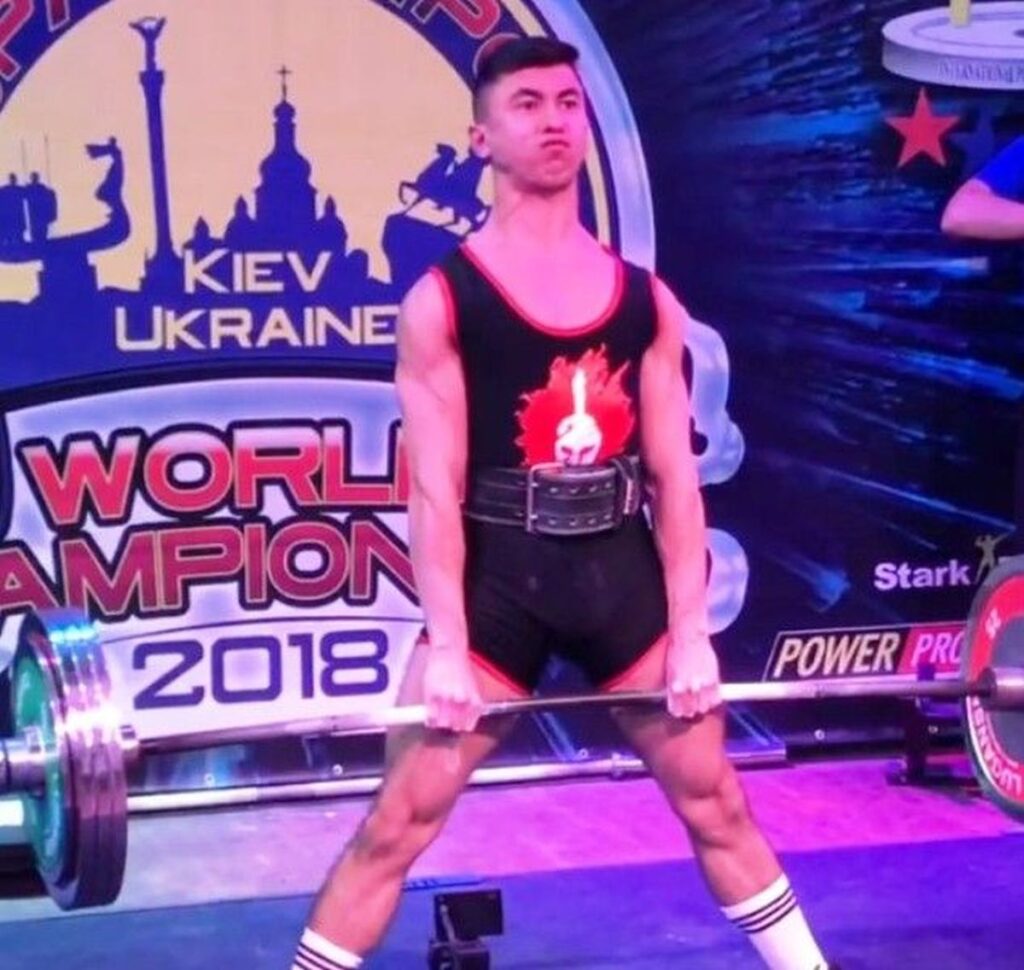
Anatoly’s dedication bore fruit in 2018 when he secured third place at the GPA World Championships in Ukraine, competing in the fiercely contested Teen 18-19 category. This achievement marked the beginning of his ascent in the powerlifting world. Young Shmondenko ate seven meals a day, with his diet mainly consisting of eggs and cottage cheese. His schoolmates laughed at him for carrying his food in a plastic container to school.
In 2022, amid the turmoil in Ukraine, Anatoly relocated to Dubai. Embracing his new environment, he expanded his audience by creating prank videos that showcased his strength in unexpected settings.
A Growing Legacy
Today, Anatoly boasts over 7.5 million YouTube subscribers and an estimated net worth between $3-6 million. His journey from a makeshift gym in rural Ukraine to international fame serves as a testament to determination and the belief that true strength transcends appearance.
👉 If you enjoy watching smaller lifters shock bigger gym regulars, you might also like our breakdown of Ivan Yaroslavtsev’s strength.”
FAQs
By open-class standards, yes. At 180 cm and around 78 kg, Vladimir “Anatoly” Shmondenko competes in lighter weight categories, not the 100 kg-plus divisions most people associate with elite powerlifting monsters.
But that comparison is misleading. Powerlifting is weight-class based. In the 74–83 kg classes, a 290 kg deadlift is elite-level strength. He is not “small” in a competitive sense. He is light relative to the huge recreational lifters he pranks in commercial gyms.
Anatoly is reported to weigh about 78 kg at a height of 180 cm. That puts him in the mid-to-upper 70 kg range, depending on whether he is cutting or walking around off-season.
For context, he has pulled 290 kg in viral clips. That is over 3.7 times bodyweight. In strength terms, that ratio is what turns heads, not how big his arms look in a hoodie.
He trains like a powerlifter, not a bodybuilder. That means heavy compound lifts, low-to-moderate rep ranges, and a focus on neural efficiency rather than chasing a pump.
Because size and strength are related, but not identical.
Bigger muscles have more potential to produce force. But force production depends on several other variables:
Neuromuscular efficiency. How effectively your nervous system recruits muscle fibres.
Technique. Bar path, bracing, hip position, timing.
Leverages. Limb length, torso proportions, and joint angles can massively influence mechanical advantage.
Specificity. Training for maximal strength versus training for aesthetics.
Why Anatoly’s pranks work psychologically
Anatoly’s videos don’t go viral because of the lifts alone. Plenty of strong guys lift heavy weights every day and nobody shares it. What makes his content explode is expectation bias.
Humans are wired to judge capability based on appearance. We make snap decisions in seconds. Skinny bloke, cleaner uniform, quiet demeanour. The brain files him under “not a threat, not impressive, move on.”
Then he touches the bar.
When that expectation is shattered, the brain gets hit with a spike of surprise and dopamine. It’s the same neurological response that makes magic tricks satisfying or plot twists memorable. Your brain hates being wrong, but it loves the moment it realises it was.
That emotional jolt is what makes people laugh, rewind, and send the clip to someone else with “watch this.”
There’s also an element of social relief. Viewers enjoy seeing judgement exposed without cruelty. No one gets humiliated. The moment stays playful, which makes the reveal feel clever rather than aggressive.
In a world where most content is predictable within three seconds, Anatoly’s videos force the brain to stay engaged until the payoff. That’s why people don’t just watch them. They finish them.
And that’s why the internet keeps sharing them.