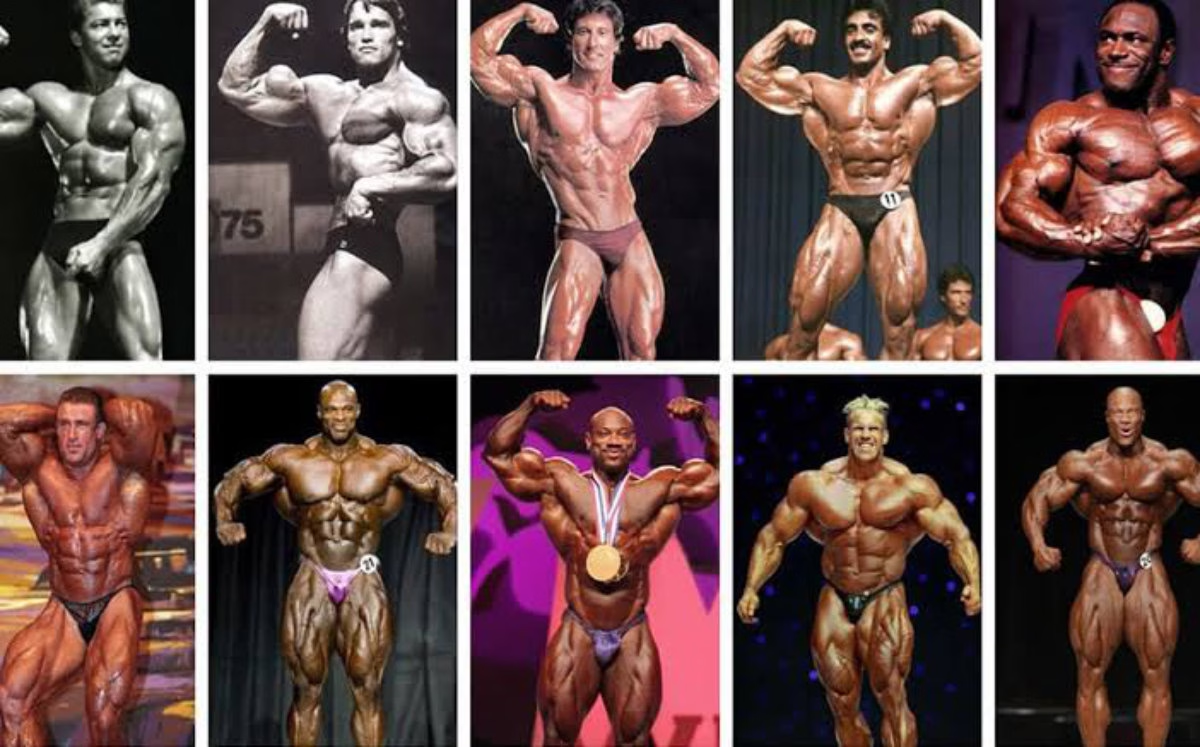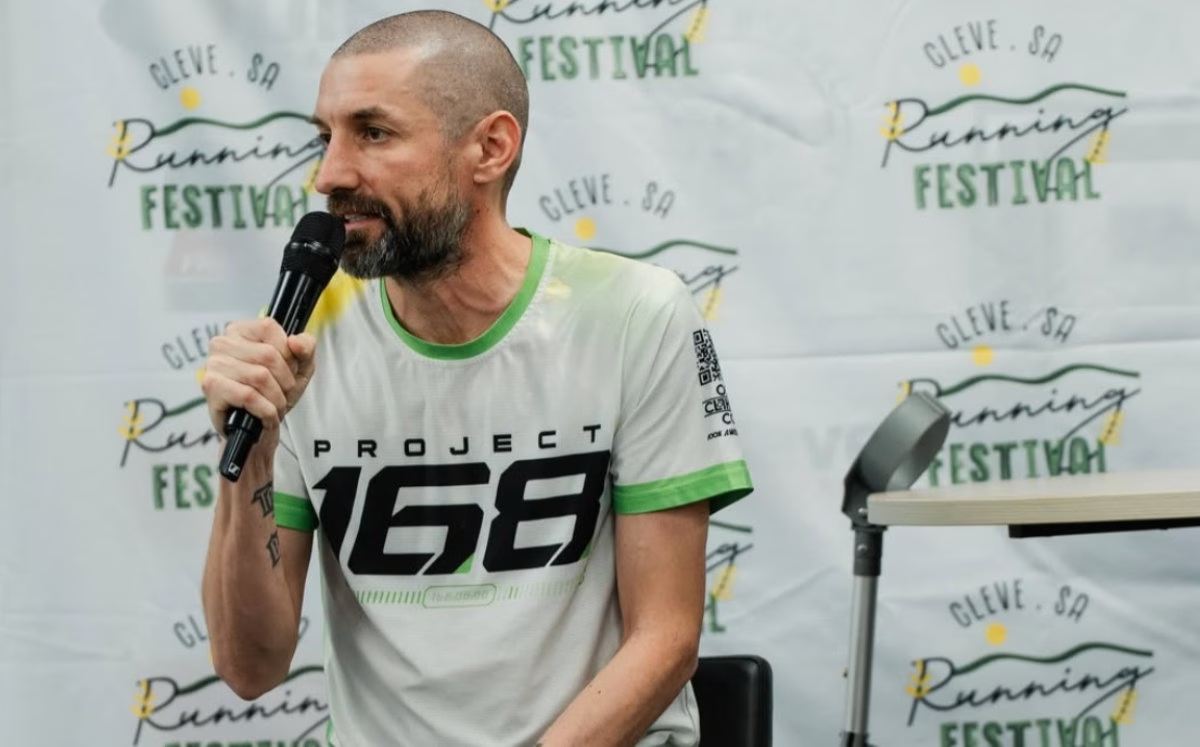

Peter Steinberger already had more than €100 million in the bank. He didn’t need to build anything ever again. So he partied, as you would. Then he got seriously jacked. Cycled ridiculous distances. Partied some more. Again, as you would.
And then, almost for the hell of it, he built 43 digital products that did nothing significant — before number 44 started bending the multi-billion dollar AI world in his direction. Billionaires called him personally. His scrappy little open-source program had billion-dollar companies scrambling for lawyers, for phones and for their cheque book. Now the roughly 40-year-old Austrian has been acqui-hired for an undisclosed sum that probably has a B in front of it.
Some blokes win once. This guy keeps finding new games to win.So whether you’re trying to hit a personal best in the gym, restart a stalled career, or simply stop quitting on yourself, Peter’s short but interesting history is worth your full attention.

The First Win
Steinberger is an Austrian iOS developer who in 2010 started bootstrapping a piece of software called PSPDFKit — a PDF engine that quietly became the invisible backbone inside apps like Dropbox and hundreds of others you’ve used without realising it. After 13 years and growing a team to around 70 people, he sold it for more than €100 million. By any measure most of us use to keep score — money, success, freedom — the game was over. At around mid thirtes, he could have coasted on that for the rest of his life. But didn’t feel like he’d won at all.
What Do You Do When You Can Do Anything?
After the sale, Steinberger has spoken openly about what followed. He partied hard. He did therapy. He did ayahuasca. He moved countries. For nearly three years he drifted, searching for something he couldn’t name. What he eventually found wasn’t a new business idea. It was a barbell. He started training seriously — lifting, cycling, rebuilding his body with the same discipline he’d once poured into code.
That’s a lesson that applies to all of us, not just nine-figure founders. When your mind is noisy and your sense of purpose feels hollow, the gym has a way of cutting through it. Physical progress is real, measurable and honest. You can’t fake a stronger squat. You can’t bluff your way through a hard training block.
Forty-Three Failures By 2025, the spark came back.
He started building again — this time experimenting with artificial intelligence. Small tools. Weekend projects. Personal experiments. Things that didn’t work, things that almost worked and things that definitely didn’t work. Forty-three of them. His GitHub makes for interesting viewing.
Most of us quit after one or two false starts. We try something, it doesn’t land, and we tell ourselves the timing wasn’t right or the market was too crowded. Steinberger — a man who could have been sunbathing on a yacht with beautiful women — kept shipping like a madman, project after project, learning and failing and learning again, often working 16 hours a day, according to his twitter. That kind of persistence is rare. It’s even rarer when you’re comfortable. Pressure forces most people to keep going. Steinberger kept going without it.

The Forty-Fourth Project
In late 2025 he hacked together a personal AI agent — something that could run locally on your own machine, connect to WhatsApp and Telegram, and actually do things: check your email, book flights, manage your files. Not just chat. It can act.
After a trademark complaint from Anthropic forced a name change from its original title, it became OpenClaw. He released it as open source, meaning the code was public for anyone to inspect, use and improve. Community-driven, not corporate-controlled — and Steinberger insisted it stay that way. The response was staggering. Over 100,000 GitHub stars. Two million visitors in a single week. Tech media lost its collective mind.

When OpenAI Calls By February 2026, Sam Altman announced publicly that Peter Steinberger was joining OpenAI to lead the next generation of personal AI agents. Mark Zuckerberg had reportedly been in his DMs. OpenClaw would live on as an open-source foundation. This is what’s known as an acqui-hire — when a company buys a startup primarily for the founder’s brain, their velocity, their way of thinking. They’re not buying code. They’re buying the person who could build 43 failures and still show up for number forty-four. The number on the cheque hasn’t been disclosed. It doesn’t need to be.
What This Actually Means for You
You don’t need to build an AI agent. You probably don’t have €100 million in the bank, and you’re almost certainly not being circled by Sam Altman. But the principles underneath Steinberger’s story are yours to use right now. Don’t retire mentally after your first big win — whether that’s a promotion, a personal best or finally getting your training consistent. The first summit isn’t the mountain. Train your body like you train your craft.
Steinberger used the gym as a reset tool, a discipline engine and a rebuilding ground when everything else felt abstract. That’s not soft. It’s strategy. Stop quitting at rep three. Whether it’s sets in the gym or attempts at something new, the people who win aren’t always the most talented. They’re the ones still showing up when everyone else has gone home.
FAQs
Peter Steinberger is an Austrian software developer and entrepreneur best known for founding PSPDFKit, which he sold for more than €100 million, and for creating the open-source AI project OpenClaw. In 2026, he joined OpenAI in an acqui-hire deal following OpenClaw’s viral success.
Steinberger sold PSPDFKit in 2021 for more than €100 million after bootstrapping and building the company for 13 years without venture capital.
OpenClaw is an open-source personal AI agent created by Peter Steinberger. Once called ClawdBot, before renaming to MoltBot, the AI runs locally on a user’s machine and can take real actions such as managing files, handling messages and automating workflows, rather than simply chatting.
Open source means the software’s code is publicly available for anyone to inspect, use and improve. This allows developers around the world to contribute, adapt and build on the project transparently.
An acqui-hire is when a company acquires a startup primarily to bring the founder and team into the company. In Steinberger’s case, OpenAI hired him following OpenClaw’s rapid growth, valuing his expertise and ability to build high-impact AI systems.
Peter Steinberger was born in the mid-1980s and is around 40 years old in 2026.