


The lateral raise is a shoulder isolation exercise: you lift a weight out to your sides until your arms reach shoulder height, then lower it under control. It mainly trains the side (lateral) head of the deltoid, the part of the shoulder that makes you look wider from the front. Use a light weight, 12 to 20 reps, and lift with your elbows, not your hands.
- Main muscle: side (lateral) deltoid; front delts and upper traps help
- Equipment: dumbbells, a cable stack, a lateral raise machine or resistance bands
- Sets and reps: 3 or 4 sets of 12 to 20, close to failure
- Range: arms to roughly shoulder height, no higher
- Most common mistake: going too heavy and swinging the weight up
What muscles do lateral raises work?
The deltoid has three heads: front (anterior), side (lateral) and rear (posterior). Pressing movements such as the bench press and overhead press work the front head hard. The side head gets far less direct work from compound lifts, which is why the lateral raise earns its place in most shoulder programmes: it’s one of the few exercises that targets it directly.
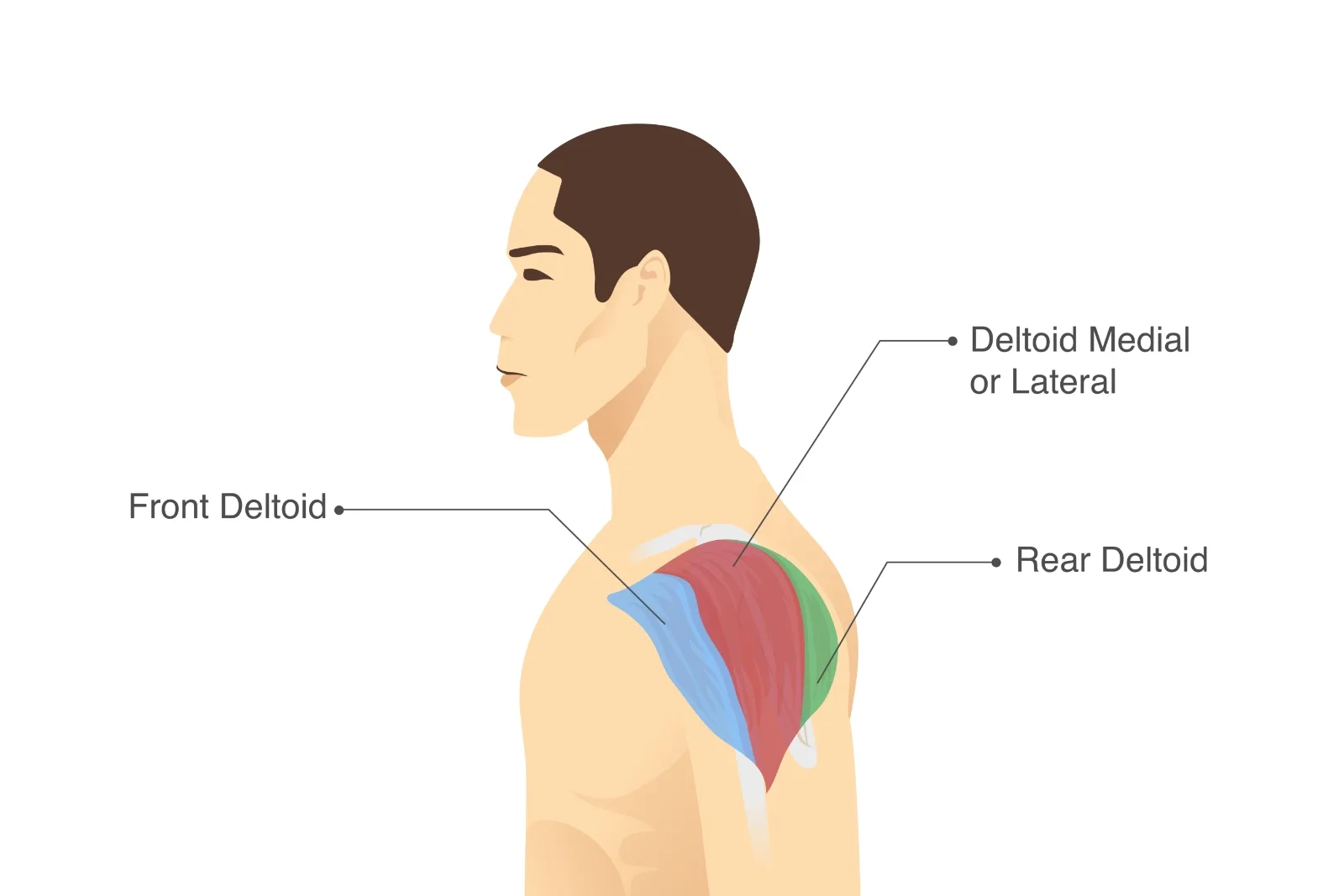
Your upper trapezius and the supraspinatus (one of the rotator cuff muscles) assist, especially at the start of the lift and if you shrug. The front delts help too, more so if your arms drift forward.
How to do a dumbbell lateral raise
- Stand tall with a light dumbbell in each hand, arms by your sides, palms facing your thighs. Soften your knees and brace your stomach.
- Lean forward very slightly from the hips and keep a small bend in your elbows. Hold that bend for the whole set.
- Raise the dumbbells out to your sides, leading with your elbows, until your arms are roughly parallel to the floor.
- Pause for a moment at the top. Your elbows should be level with or just above your hands.
- Lower the weights slowly, over two or three seconds, until they’re just short of your thighs, then go again without resting at the bottom.
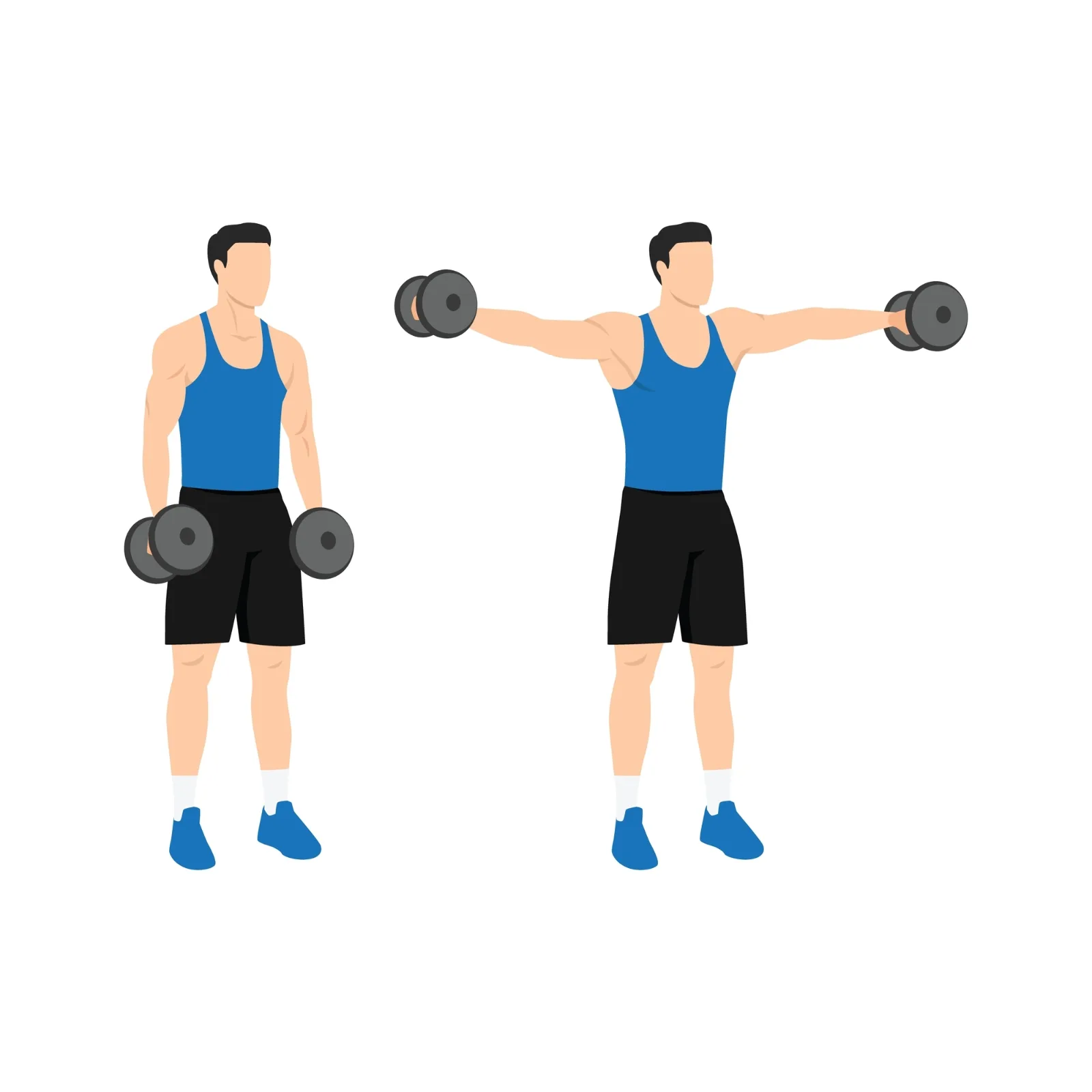
A useful cue: imagine pushing the dumbbells out towards the walls on either side of you rather than lifting them up. It keeps the work on your shoulders instead of your traps.
Common lateral raise mistakes
- Going too heavy. If you need to swing your body or bounce at the bottom to get the weight moving, it’s too heavy. The side delt is a small muscle with a long lever against it, so even strong lifters use light dumbbells here.
- Shrugging. Lifting your shoulders towards your ears shifts the work to your traps. Keep your shoulders down and your neck long.
- Lifting too high. Going well past shoulder height adds little for the side delts and makes it easier to shrug. Stop around parallel.
- Leading with the hands. If your hands rise above your elbows, the front delts take over. Lead with the elbows.
- Rushing the lowering. Dropping the weights wastes half of each rep. Control the way down.
The best lateral raise variations
Dumbbell lateral raise
The standard version, and the one to learn first. It needs only a pair of light dumbbells, and you can do it standing or seated. Its weakness is that the effort is lowest at the bottom, where the dumbbells hang straight down, and highest near the top.
Cable lateral raise
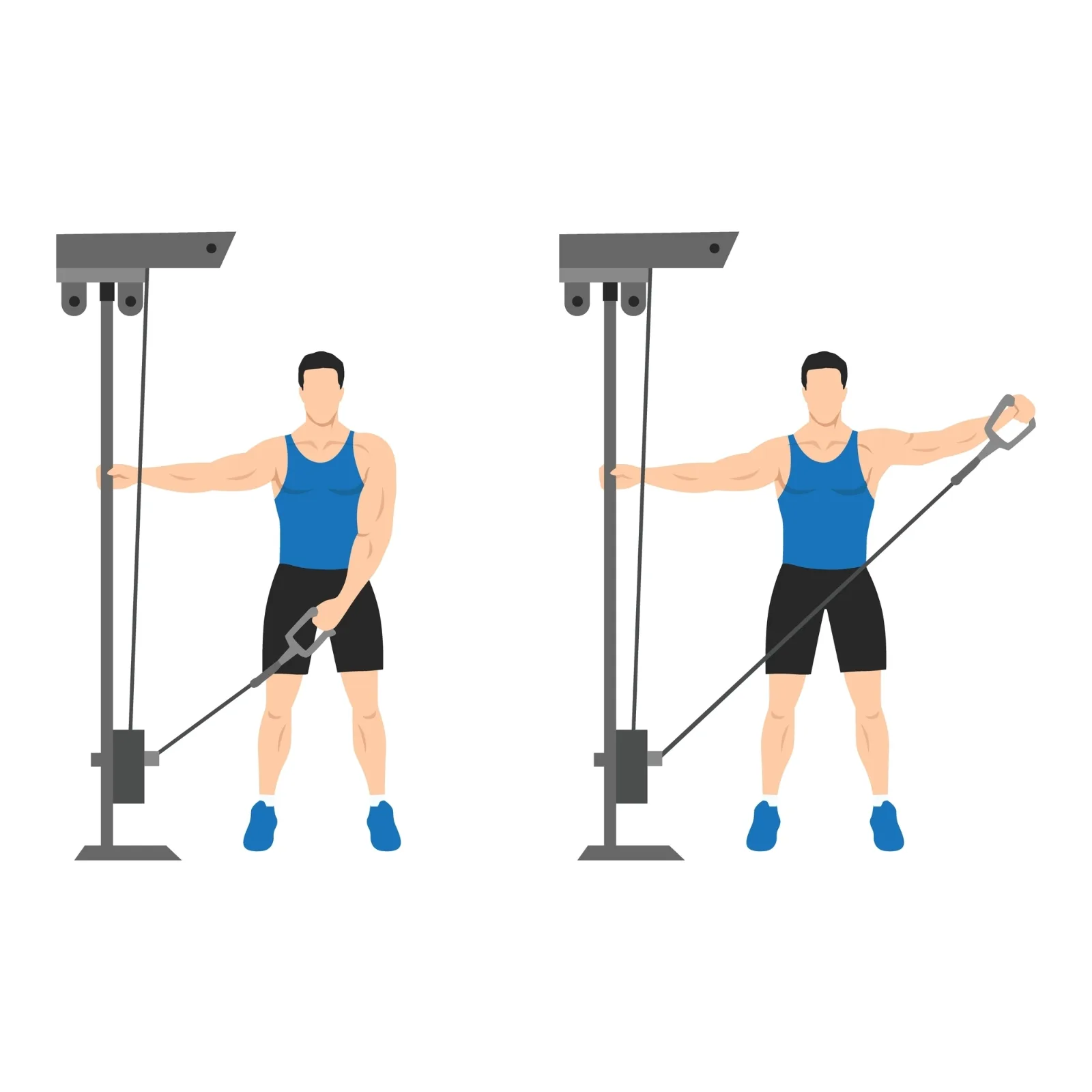
Stand side-on to a low pulley and raise one arm at a time across and out from your body. The cable keeps tension on the side delt from the very bottom of the movement, which the dumbbell version can’t. Many lifters find it easier to feel the right muscle working.
Lateral raise machine
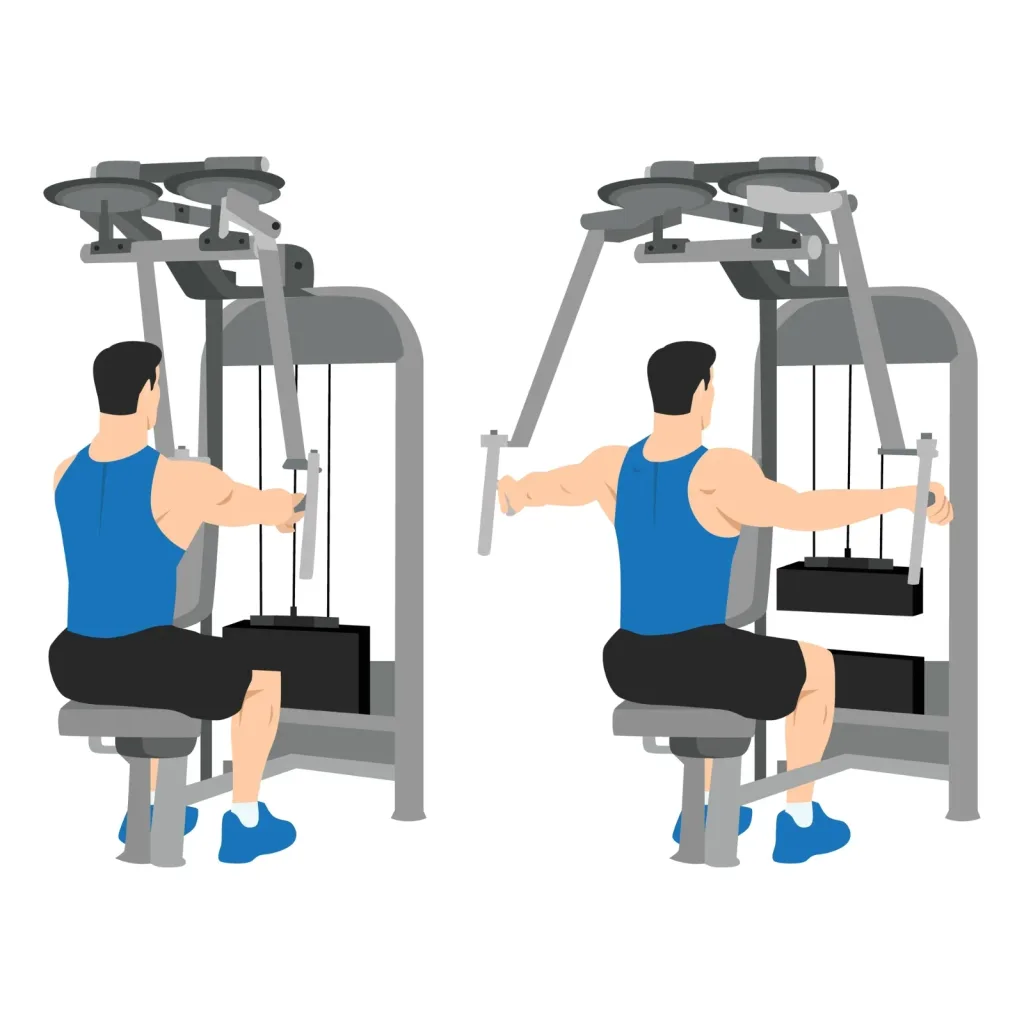
Most gyms have one. You sit with pads against your forearms or upper arms and push out and up. The machine fixes the path, so it’s hard to cheat with momentum, which makes it a good option late in a session when you’re tired, or for beginners still learning to feel the side delts.
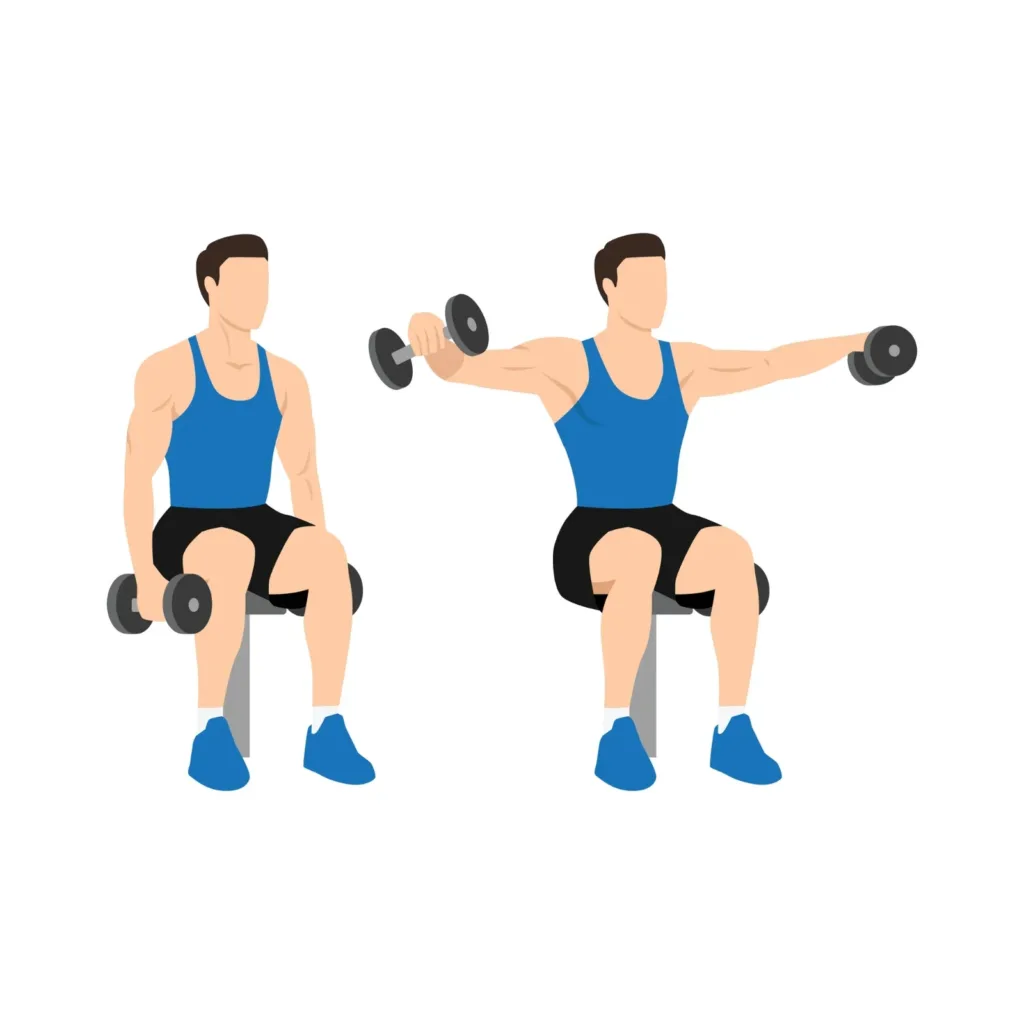
Seated lateral raise
The same movement as the standing dumbbell version, done sitting on the end of a bench. Taking your legs out of it makes it almost impossible to swing, so it’s a strict way to train when your form tends to slip.

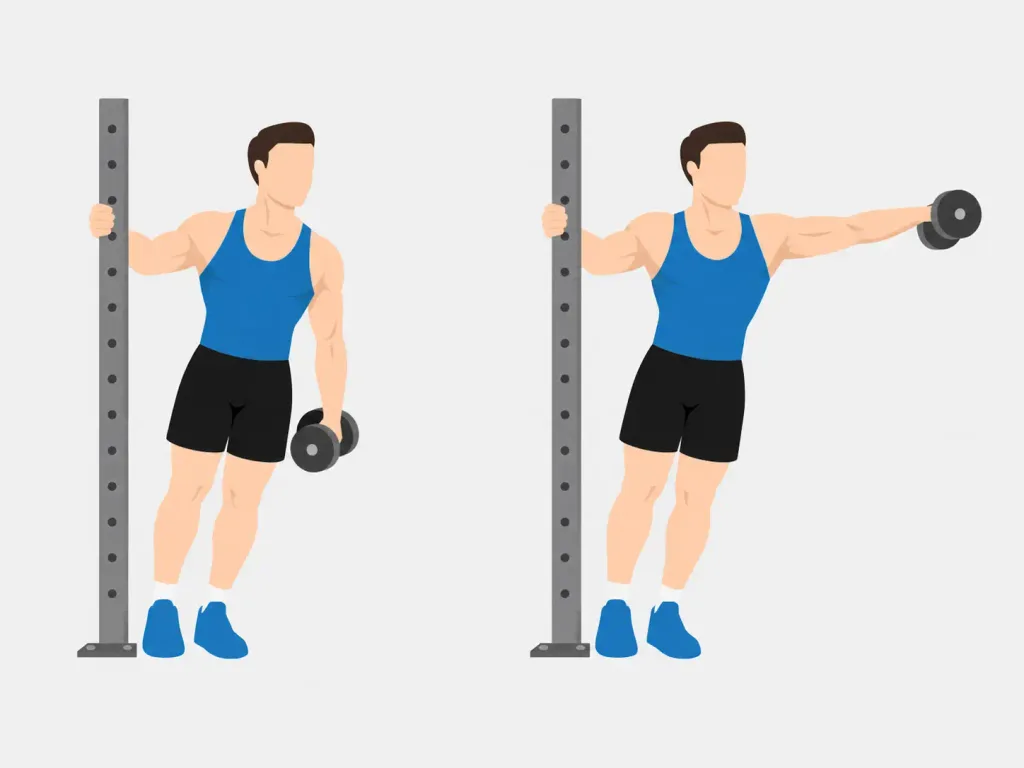
Leaning lateral raise
Hold an upright or a rack with one hand, lean away from it, and raise a dumbbell with the other arm. The lean changes where the movement is hardest, putting more tension on the side delt near the bottom of the lift. Do one arm at a time.
How much weight should you use for lateral raises?
Less than you think. Pick a weight you can lift for 12 to 20 strict reps without swinging, and start lighter than feels necessary: form breaks down quickly as the weight goes up. Add weight only when the top of your rep range feels easy.
For context, here’s Strength Level’s standard for men’s estimated one-rep maxes on the dumbbell lateral raise, based on about 315,000 logged lifts (per dumbbell, not a weight to train with for reps):
| Level | Estimated 1-rep max, per dumbbell |
|---|---|
| Beginner | 4kg |
| Novice | 9kg |
| Intermediate | 16kg |
| Advanced | 24kg |
| Elite | 34kg |
Source: Strength Level, dumbbell lateral raise standards (men). For a single heavy rep you can cheat more than you would for a set of 15, so treat these as a rough guide to where you stand, not a target. For the big lifts, see our strength standards and the one-rep max calculator.
How many sets and reps of lateral raises?
Three or four sets of 12 to 20 reps, taken close to failure, works well for most people. Higher reps suit this exercise because heavy, low-rep sets are hard to do without swinging. Train them two or three times a week, after your pressing work or on their own at the end of an upper-body session.
If you want to go further, finish a set with a few partial reps in the bottom half of the movement once you can’t do full reps any more.
Lateral raise alternatives
If you don’t have dumbbells, or your shoulders don’t tolerate the movement:
- Resistance band lateral raise: stand on a band and raise the handles out to the sides. See our resistance band training guide.
- Upright row with a wide grip: pull the bar or cable to chest height, elbows leading. Keep it no higher than chest level if your shoulders are sensitive.
- Y-raise: lie face down on an incline bench and raise light dumbbells in a Y shape, which also works the rear delts and upper back.
If raises hurt your shoulder rather than just tiring it, stop and read about exercises that can make shoulder pain worse, and see a physio if it persists.
Where lateral raises fit in a shoulder workout
Lateral raises work best alongside an overhead press for the front delts and a rear-delt movement such as face pulls or reverse flyes. Our shoulder workout for broad shoulders puts all three together.
Lateral raise FAQ
Are lateral raises worth doing?
Yes. They’re one of the few exercises that directly target the side deltoids, which pressing movements leave relatively under-trained, and the side delts are what make your shoulders look wider.
Should lateral raises be heavy or light?
Light enough to do 12 to 20 controlled reps without swinging. Going heavy usually just shifts the work to your traps and lower back.
Is the cable or dumbbell lateral raise better?
Both work. The cable version keeps tension on the muscle at the bottom of the movement; the dumbbell version is simpler and needs less equipment. Using both across the week is a good approach.
Why do I feel lateral raises in my traps?
You’re probably shrugging, going too heavy or lifting too high. Lower the weight, keep your shoulders down and stop around shoulder height.
How often should I do lateral raises?
Two or three times a week is plenty for most people, with three or four hard sets each time.