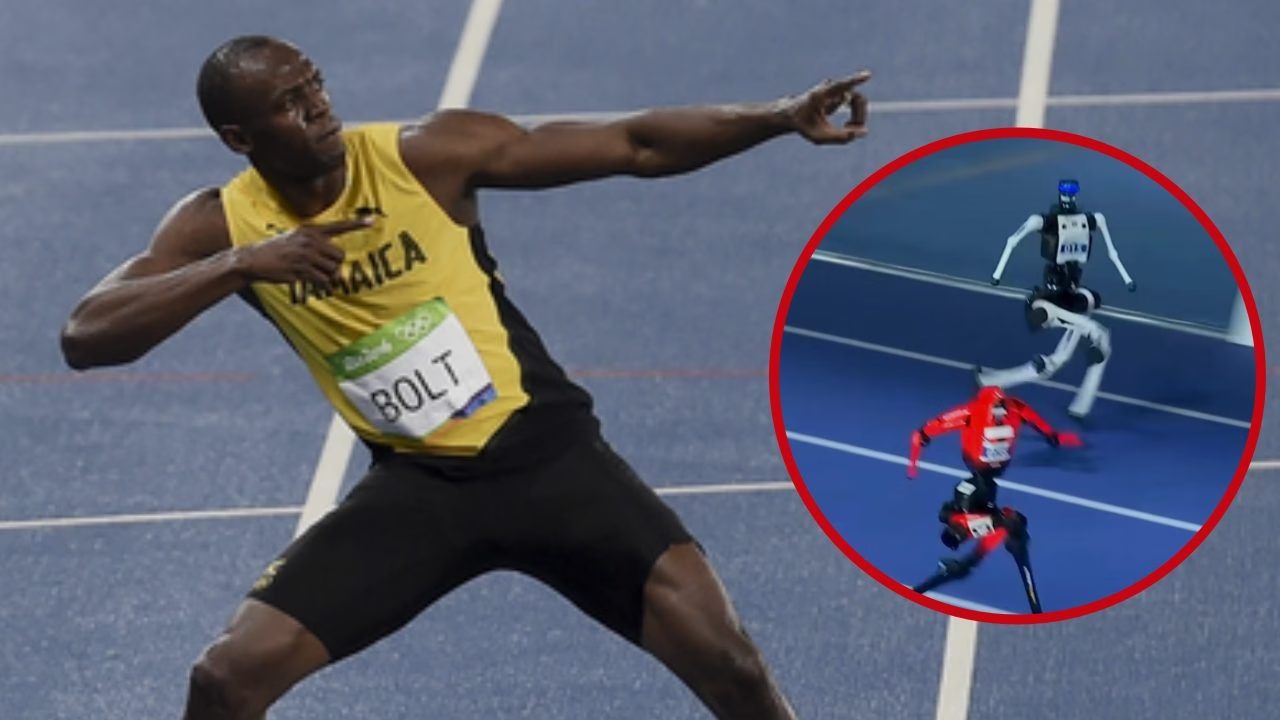

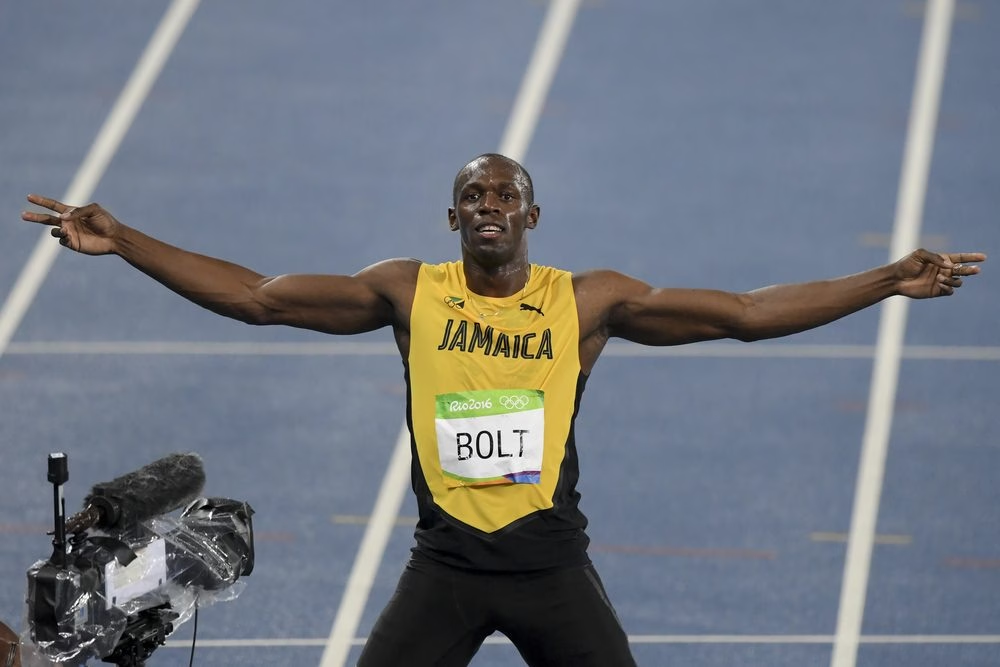
For 17 years, 9.58 seconds has been like light speed, one of sport’s untouchable numbers. Usain Bolt set the men’s 100-metre world record in Berlin in 2009, reached for the line, thumped his chest and left a generation of sprinters wondering whether they had chosen the wrong sport.
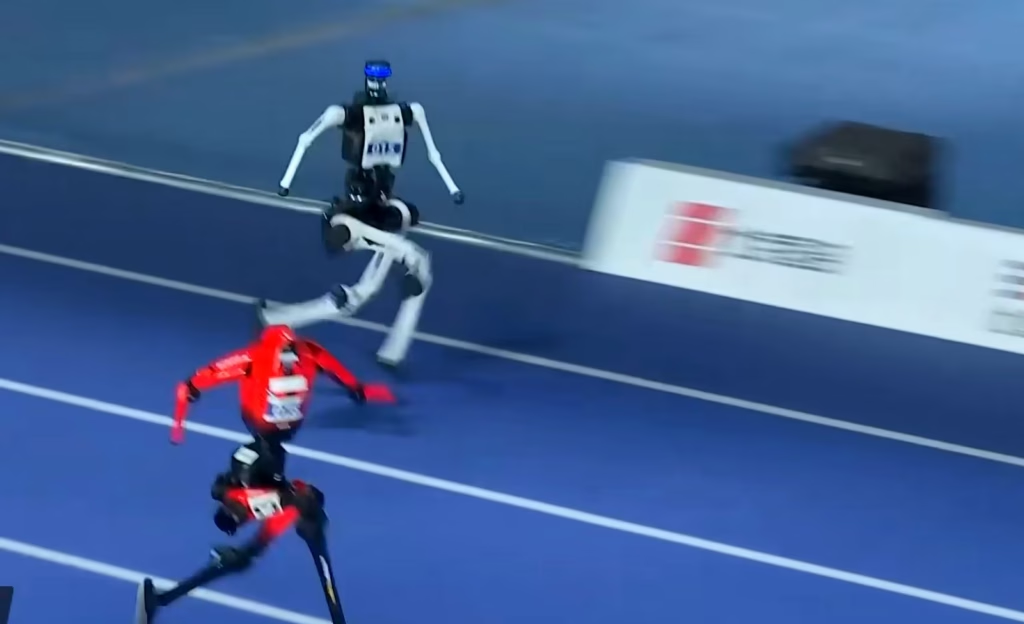
Now a robot has run faster. A Chinese humanoid robot called Tiangong Ultra ran 100 metres in 9.39 seconds during a preliminary heat at the World Humanoid Robot Games in Beijing.
Tiangong was actually behind early. It then ran down Honor’s aptly named Lightning robot, which crossed the line in 9.47 seconds. Both were quicker than Bolt.
Lightning had reportedly gone faster again in a preparatory trial that morning, covering the distance in 9.32 seconds and reaching a peak speed of 14.5 metres per second, or 52.2 km/h.
THE FASTEST BIPEDS OVER 100 METRES
- Lightning 9.32 seconds Preparatory test
- Tiangong Ultra 9.39 seconds Competition heat
- Lightning 9.47 seconds Same competition heat
- Usain Bolt 9.58 seconds Berlin, 2009
Before somebody starts removing Bolt from the record books, the robot does not own the men’s 100-metre world record.

World Athletics records are performances by human athletes under regulated conditions. The robot race had its own rules, equipment and timing arrangements. Bolt remains the fastest man in history.
The more interesting point is how quickly the machines are catching up. At last year’s inaugural robot games, Tiangong Ultra won the 100 metres in 21.50 seconds. Twelve months later, it ran 9.39.That is 12.11 seconds removed in a year. Human coaches would sell a kidney for a tenth.
How? They Gave It Longer Legs
Lightning’s engineers even applied the most obvious piece of sprint science available: longer legs generally mean a longer potential stride.
The robot stood 169 cm tall with 95 cm legs when it competed in a humanoid half-marathon earlier this year. Before the games, its engineers lengthened its legs by 10 cm.
It sounds like cheating, but only because World Athletics has so far refused to let coaches rebuild their sprinters between meetings.
As we explained in our look at Australian sprinter Lachlan Kennedy’s 48-step 100 metres, speed ultimately comes down to two things:
Stride length × stride frequency = running speed.
Lightning’s developers simply improved one side of that equation with a spanner.
Fast Forward, No Brakes
Stopping remains less sophisticated. After crossing the line, both machines barrelled into the thick crash mat placed beyond the finish. Tiangong stumbled towards spectators, while Lightning collapsed and was carried away on a stretcher. Which is odd.
Lightning has already demonstrated that its endurance is as unsettling as its speed. In April, an autonomous version completed a robot half-marathon in 50 minutes and 26 seconds, quicker than the pace of the human world record.
Again, it was a separate robot race with different rules, not a legitimate challenge to the human record. But a bipedal machine maintaining that speed over 21.1 km is no longer a clumsy laboratory trick.
This year’s games feature 2,056 robots from 666 teams competing across 51 events. There is football, weightlifting and dancing, along with less glamorous tests involving factories, warehouses and everyday physical tasks.
That is the real purpose of the spectacle. Running exposes weaknesses in balance, power, coordination, cooling and real-time control. If a machine can remain upright at 52 km/h, carrying a box across a warehouse begins to look rather manageable.
So, has the machine finally made human sprinting obsolete?
No. A robot can have its legs lengthened by 10 cm, its motors replaced and its software rewritten. Bolt ran 9.58 using 94 kg of muscle, bone, nerves and swagger.
That remains the more impressive machine.