
Instagram: tom_haviland
Tom Haviland is not your usual fitness influencer. He does not pose under perfect gym lighting, explain his macros in a tank top, or film himself walking into a boutique strength studio with a tripod and a dream.
Instead, the Australian strongman trains like a bloke who wandered out of BCF, forgot he was meant to go fishing, and decided to carry half the shed up a hill.
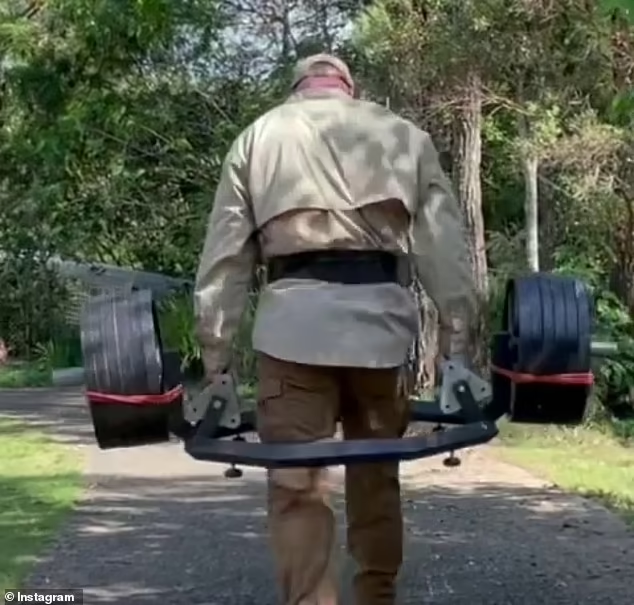
Long sleeves. Work pants. Big hat. Sometimes what looks suspiciously like a fishing shirt. No face. No showbiz. Just absurdly heavy lifts performed on what appears to be a rural Queensland property. The vibe is very close to Russian outdoor-strength oddity Ivan Yaroslavtsev: logs, stones, awkward carries, uneven ground and improvised implements, all of it sitting somewhere between strongman, farm work and old-school training naturelle. That is the appeal.
Haviland has become one of the strangest and most compelling figures in online strength culture because he looks less like a sponsored athlete and more like a bushland folk tale. Depending on the source, he stands around 203 cm and weighs roughly 150–159 kg. In plain English, he is a very large man doing very large things, usually without the usual theatre of modern fitness.
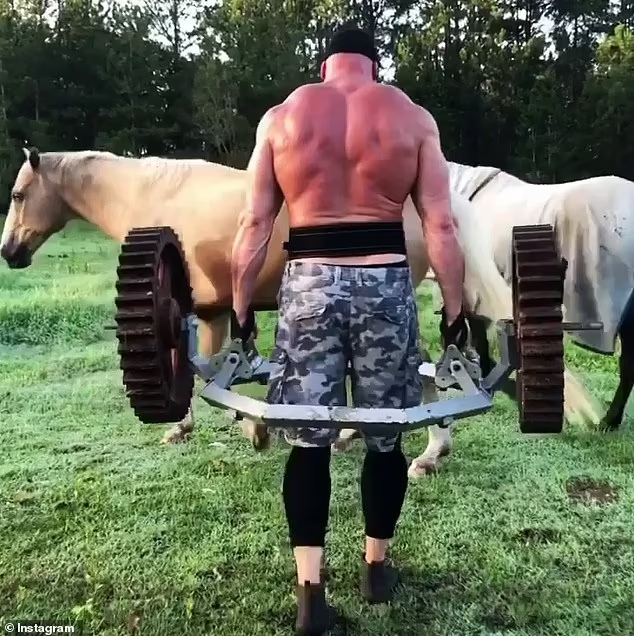
The numbers are stupid. Reported lifts include a 272.5 kg bench press, a 455 kg deadlift from 13 inches with straps, a 340 kg Zercher squat and an 811 lb squat for reps. He has also been filmed doing brutal carries and yoke-style work on uneven ground, which is where the whole thing starts to look less like powerlifting and more like some lost Australian military selection drill invented by a sadist with access to farm machinery.
Joe Rogan helped blow the mystery wide open when he talked about Haviland on his podcast, describing him as a freakish Australian who trains in jeans and flannel and calling him “possibly the strongest man alive”. That sort of line can ruin a normal person’s peace. For Haviland, who deliberately keeps his face and personal life mostly out of frame, it only made the myth bigger.
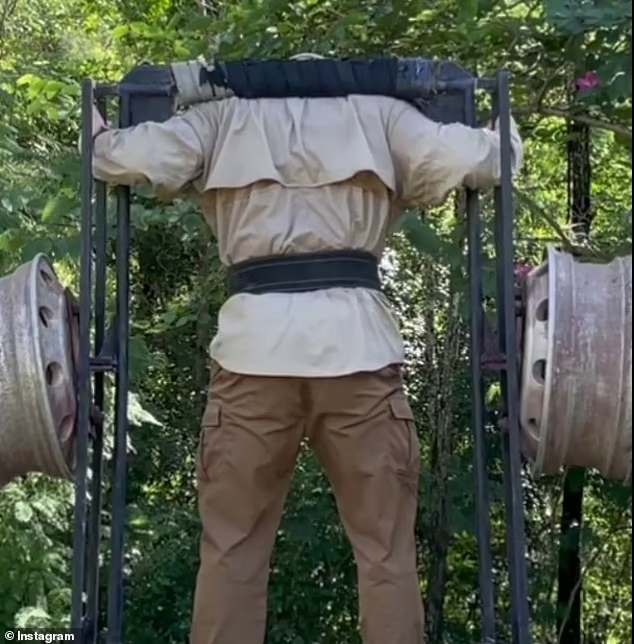
What separates him from the usual social media strongman is not just the weight. Plenty of people are strong. Haviland’s point of difference is the way he has turned strength into something rougher and older. His training sits somewhere between strongman, manual labour, bush fitness and old-school physical culture. There is a bit of “training naturelle” about it: lift awkward things, carry them over bad ground, get outside, suffer quietly, repeat.
That does not mean it is random. Haviland has serious strength pedigree behind him. He has spoken about learning from Derek Boyer, a multiple-time Australia’s Strongest Man, and working with American strength coach Josh Bryant. So while the videos look wild, the engine underneath is not just “pick up rock, hope for best”. It is structured brutality dressed up as farm work.
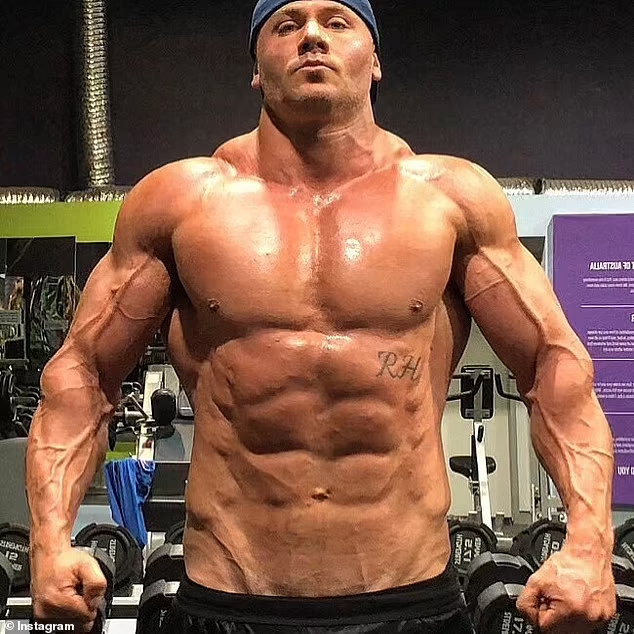
There is also a useful lesson here, even if you are not planning to Zercher squat a small car. Haviland’s training reminds people that strength is not only built in clean gyms with matching plates and LED lighting. It is built by progressive overload, consistency, hard carries, awkward positions, tendon strength, trunk stiffness and a willingness to do unglamorous work for a long time.
And in a fitness world drowning in polish, that feels oddly refreshing.