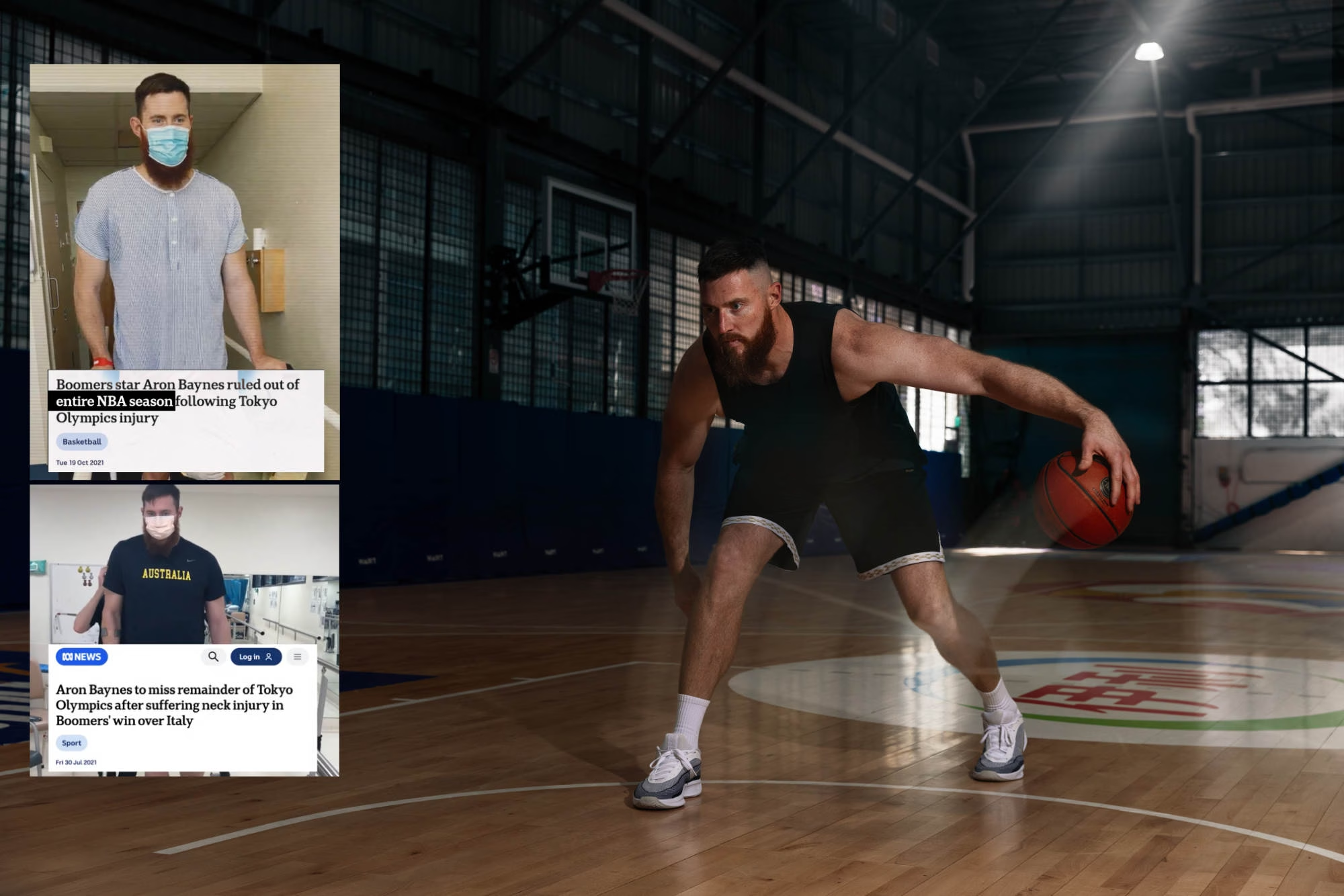
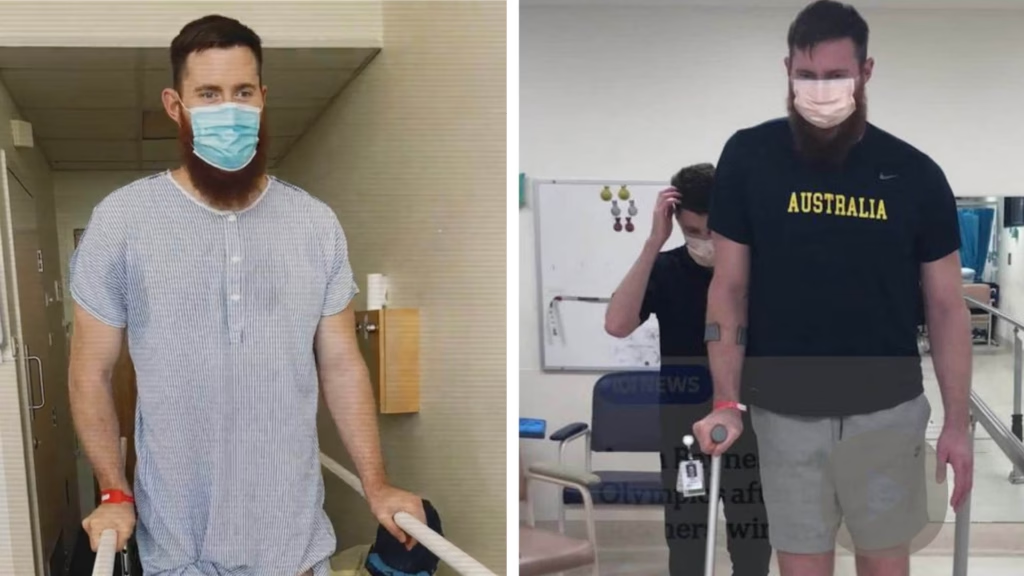
Two days after Aron Baynes suffered the devastating injury, his phone rang in a Tokyo hospital room. NBA free agency had opened and the Toronto Raptors wanted answers. Could he stand? Could he walk? Could he still play basketball?
Lying in that Tokyo hospital bed with damage to his head, neck and spinal cord, Baynes told them what he knew. He couldn’t stand. He couldn’t walk. He didn’t know if he ever would. He was waived. A seven-and-a-half-million-dollar future disappeared by the end of the call.
“That was the moment,” Baynes says. “I went from having everything to having nothing. And I mean nothing, the way I defined it at the time.”
That is how elite sport can end. Not with a farewell lap and a cushy TV career, but with a single sentence then uncertainty and abandonment. For Aron Baynes, it was a brutal reckoning after a career that had been built through risk and sacrifice.
Growing up far from the fast lane
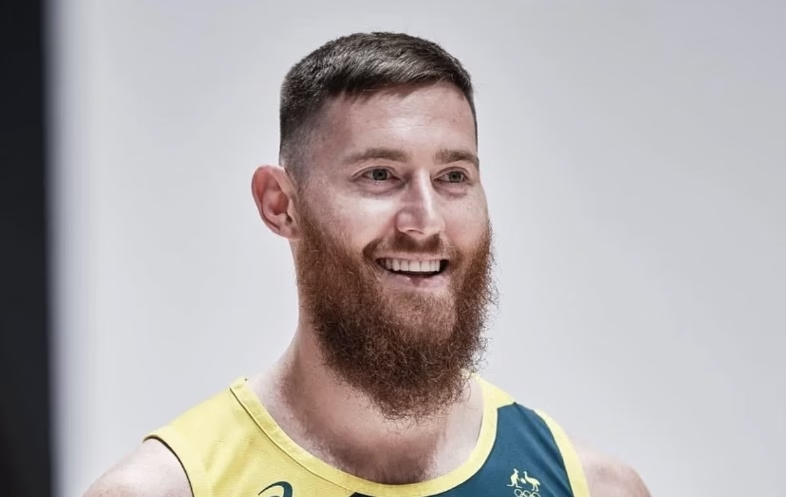
Baynes is a Queenslander, raised in Far North Queensland (FNQ). Mareeba is not exactly known as a factory for pro basketballers. “It’s a beautiful part of the world,” he says, “it’s rugby league and bull riding, not a basketball breeding ground” There were no scouts, no prep schools, no shortcuts. He didn’t even start playing basketball until he was 15.
He began because his older brother did. “I just followed him,” Baynes says. “If he was doing it, I figured I might as well see if I could too.” What started as fun slowly turned into structure. His first organised team was coached by a Cairns Taipans player who later became the club’s head coach. “I was lucky,” he says. “I didn’t know it then, but I was learning professional habits early.”
Learning the hard way at the AIS and college
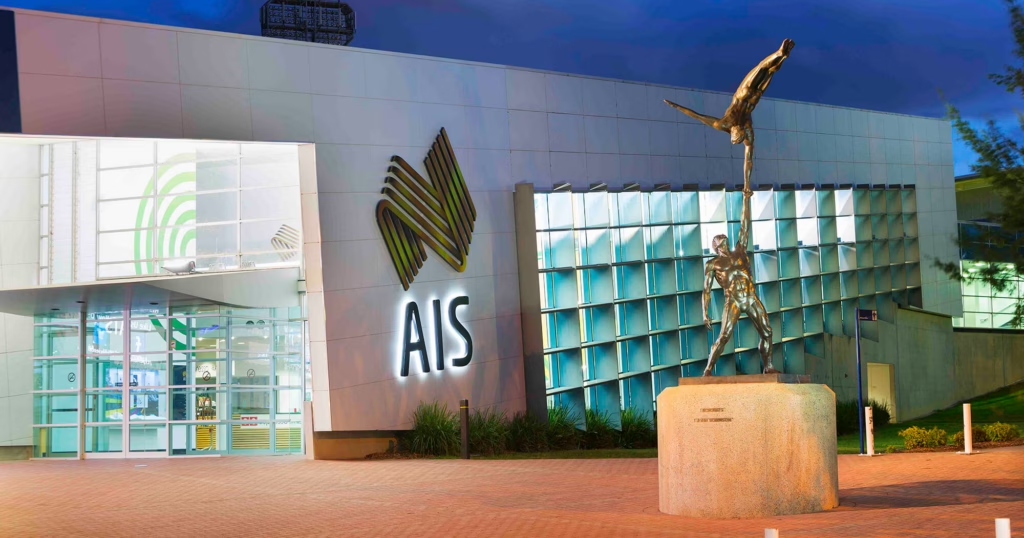
From Cairns, Baynes moved to the Australian Institute of Sport. That’s where reality sets in. “You find out pretty quickly what you’re missing,” he says. Strength, conditioning, consistency. The AIS years weren’t glamorous. They were about catching up to athletes who’d been playing since childhood.
College basketball followed. A degree came with it and the first time playing professionally became a realistic option to him. He missed out on being drafted to the NBA and pursued a professional career over in Europe. A year in Lithuania, where basketball is a second religion. The next year, he made a move to Germany. Throughout the year, his playing time faded and so too did the joy. “I wasn’t really having fun playing basketball,” he admits. That offseason, he seriously considered hanging up the shoes. “Do I go home and work FIFO in the mines with my brother or give this one more real shot?”
Falling back in love with responsibility
Instead of giving up, Baynes chose accountability. He dropped down to a smaller team in the Greek national league. “If I played well, we won. If I didn’t, we lost,” he says. “That responsibility made me love the game again.”
The same logic took him to Slovenia and the smallest EuroLeague team available. Less prestige. More exposure. “It was the same thing,” he says. “If I played well, we did well.” Strong performances, Olympic exposure and consistency against real competition finally opened the NBA door. Not through hype, but proving himself on the floor. Adding to a team, while mixing it with the best players in the world.
What Popovich really taught him
San Antonio was a different world. Gregg Popovich was demanding, blunt and uninterested in ego. Early on, Baynes admits he gave Pop plenty to hone in on. “He wanted players to bite back,” Baynes says. Eventually, Tim Duncan pulled him aside. “Whatever he say’s to you,” he told him, “listen, say yes coach and move on.”
That message portrayed professionalism, something Duncan was for over 20 years as the foundation at the pinnacle of basketball.
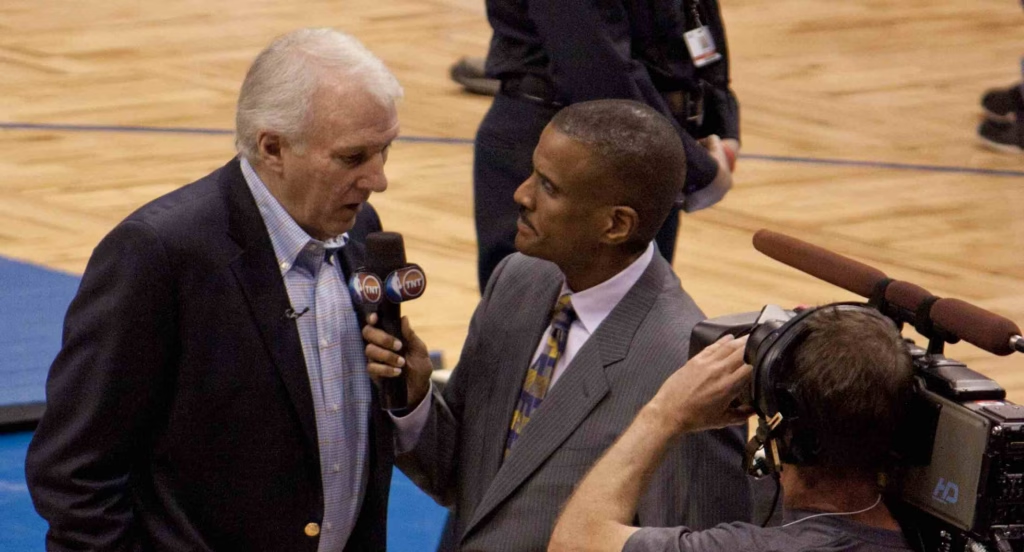
Pop soon started to trust and value Aron’s role in the team more. This led to less reprimands and more time to take on Pop’s broader view of life. “The longer I’ve gone in life,” Baynes says, “the more his messages resonate.” Basketball mattered, but it wasn’t everything. Hospital visits. Work with military veterans. Perspective. “You’d think you weren’t doing much,” Baynes says, “then a parent would tell you their child hadn’t smiled in a year.”
Aron Baynes: Career Highlights
- NBA Champion (2014) – Won an NBA title with the San Antonio Spurs under Gregg Popovich after defeating the Miami Heat in the NBA Finals.
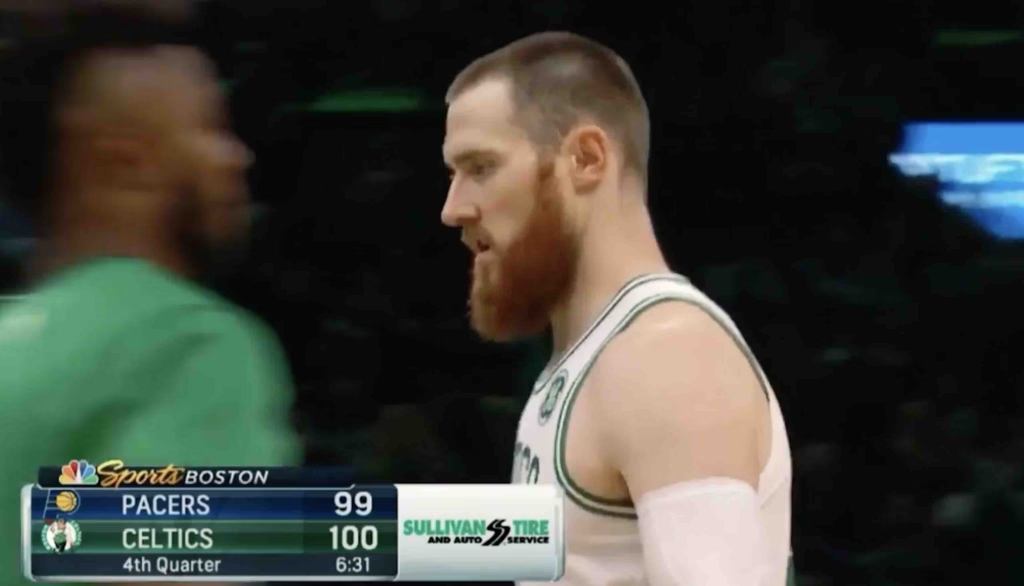
- Nine NBA Seasons – Played 576 NBA games across stints with the San Antonio Spurs, Detroit Pistons, Boston Celtics, Phoenix Suns and Toronto Raptors.
- Australian Boomers Mainstay – Represented Australia at three Olympic Games: London 2012, Rio 2016 and Tokyo 2020.
- Undrafted to the NBA – Reached the world’s top basketball league despite going undrafted and not playing basketball seriously until his mid-teens.
- Career-Best NBA Season – Averaged 11.5 points and 5.6 rebounds per game with the Phoenix Suns in 2019–20.
- Career Night for Phoenix – Scored a career-high 37 points and hit nine three-pointers against Portland in March 2020.
- Career NBA Averages – Finished his NBA career with averages of 6.0 points and 4.6 rebounds per game.
Tokyo and losing everything at once
Tokyo changed everything. A wet floor. Damage to his head, neck and spinal cord. “I don’t remember everything,” Baynes says. “I was in and out. The pain was bad.” Two days later, free agency opened. The Raptors called. He had to tell them he couldn’t stand, couldn’t walk, didn’t know if he’d use his left side again.
“That was when it hit,” he says. “Jesus. I went from living behind this facade of strength and confidence. One that I had unknowingly fooled myself and those around me into believing. It crumbled, exposing the raw, hurt, broken man I was.”
Physically, recovery was brutal. Psychologically, it was worse. Baynes’ breaking point came while calling his family to share his accomplishment of stacking a cup, seven days after his fall. During the call, he watched his six-month-old stack blocks without effort and he hung up. “I believed I had no value to my children,” he says. “My identity was built on what I did and how much I earned.” Isolated in Tokyo, unable to hug his those he loved, he felt alone.
Rock bottom and rebuilding from why
Baynes speaks openly about suicidal thoughts. “I felt, I was nothing. My family is better off with the memory of what I was.” During this time, he didn’t have any purposes or values to guide who he was, or as a reason to carry on. The next few months were stark. The rebuild started months later after witnessing and reflecting on the tv’s coverage of a footy suicide. His identity’s most prolific growth started with one question. Why?
“I broke myself down to the most basic level,” he says. The answer came back to his children. “I brought kids into this world. I can’t leave.” From there, he began to find himself from the inside out, defining values instead of letting his contract define his value. Rock bottom didn’t arrive once. It arrived again later. Divorce followed.
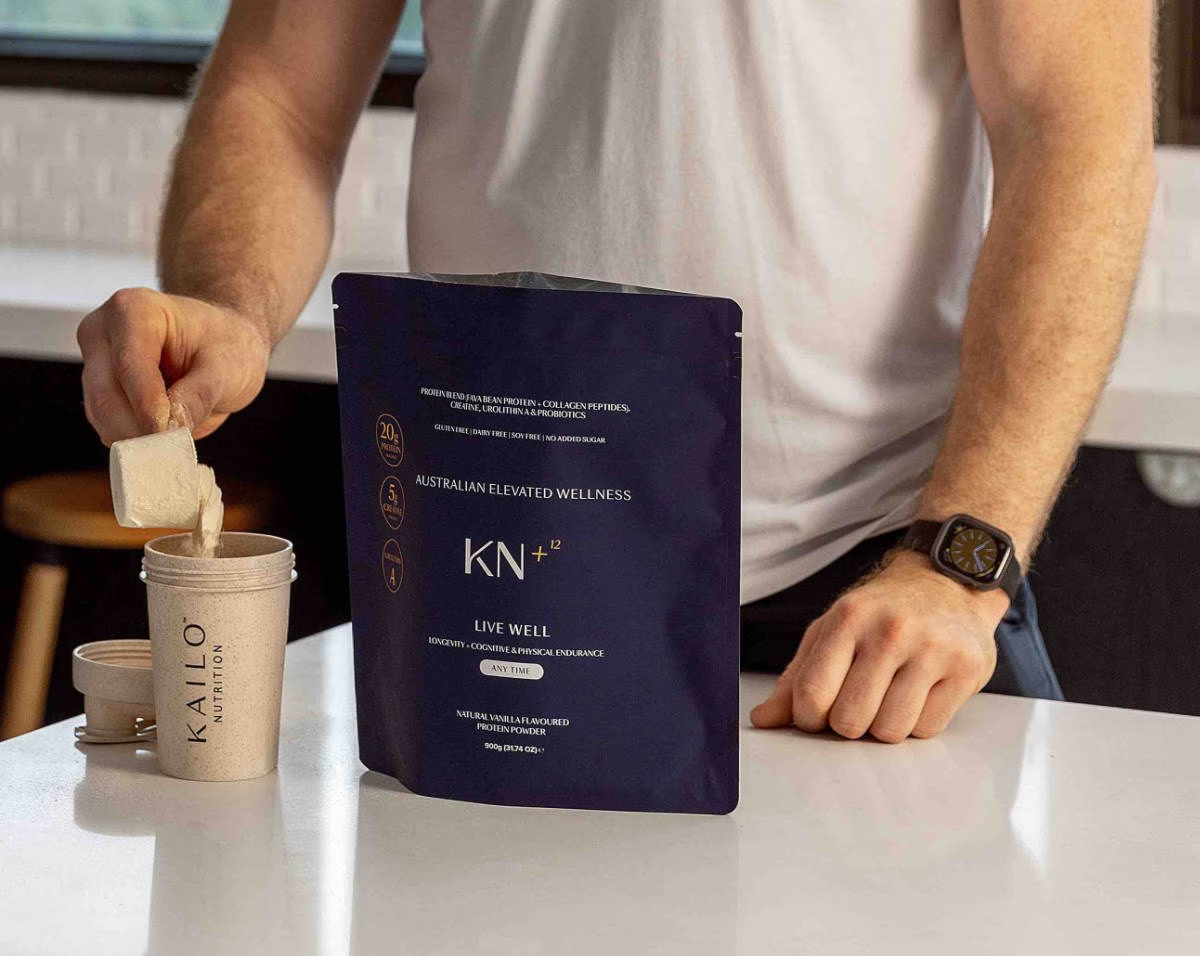
KN+12 x Aron Baynes
Performance. Recovery. Cognitive support.
Aron Baynes has partnered with KAILO Nutrition on KN+12, a daily performance and longevity formula built for men thinking beyond the next workout.
Life after basketball and real purpose
Basketball stopped being his identity. Service replaced status. Presence replaced performance. “Acts of service,” Baynes says, “that’s where I find my purpose now.” He began speaking openly about mental health, not as a campaign, but as lived experience. What he once saw as weakness, he now recognises as strength.
His approach to health shifted too. Gut health. Routine. Creatine for mental clarity rather than aesthetics. “It fuels the biggest energy user in your body,” he says. “Your brain.” Stability became the goal.
The message he wants men to hear
This chapter of Baynes’ life, he says, feels more purposeful than basketball ever did. His guiding principle is simple. Sacrifice for his children. Make their world better.
For men reading this who feel flat, stuck or close to the edge, his message is direct. “Everyone has weak moments,” he says. “Don’t let a moment of weakness take something permanent from the people who love you.” Contentment, he believes, is learning to sit with both the highs and the lows.
Aron Baynes didn’t follow the script. He started late. He took the long road. He earned everything the hard way. And when it was taken from him, it forced a deeper rebuild than any training block ever could. He is no longer chasing validation. He is building something slower, quieter and far more durable. A life defined not by what he does, but by who he is when everything else is stripped away.