

These photos are of the same man, taken 15 weeks apart. Glenn Parker went from 98.2kg and 23.9% body fat to 6.8%, losing 13kg of fat and adding 7kg of muscle. He did it by training twice a day on a plan built by personal trainer Nick Mitchell. Here’s who he is, how the plan worked, and whether it’s for you.

- Start: 98.2kg at 23.9% body fat
- Finish: 6.8% body fat
- Fat lost: 13kg
- Muscle added: 7kg
- Training: twice a day, with a lighter week every third week
- Coach: personal trainer Nick Mitchell
Who is Glenn Parker?
Glenn Parker is a former British soldier who served with the Paras in 16 Air Assault. It was the army career he had wanted since he was a boy. It ended after an unprovoked attack at a nightclub left him in a coma, with swelling on the brain and severe epilepsy.
He was given a choice: serve elsewhere in the army, or take a medical discharge. Rather than leave the Paras, he chose to become a civilian, and then had to come to terms with his disability and the loss of the life he’d loved. The transformation in these photos came after that.
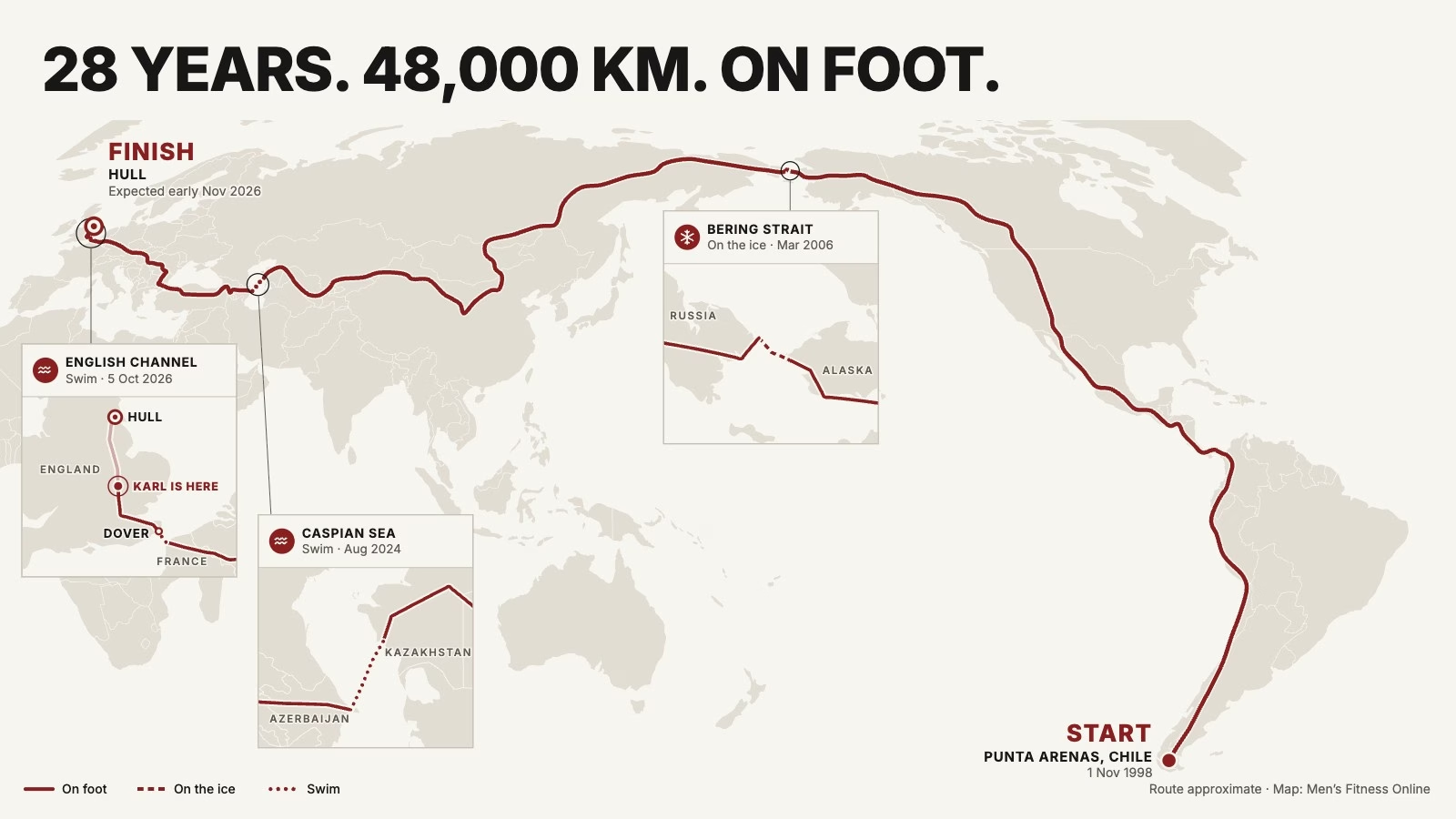
The Paras breed a particular kind of stubbornness. Another former paratrooper, Karl Bushby, left Chile in 1998 to walk home to Hull and is nearly there. Read Karl Bushby’s story.

Why train twice a day?
“The morning workout is strength-based and designed to fire up your high-threshold motor units, which are responsible for power and muscle growth,” says Mitchell. “Doing this workout first thing will make you stronger in the afternoon session when you’ll work a wide range of your muscle fibres to increase muscle size.”
In other words, the heavy morning session primes the nervous system so you can work harder in the afternoon’s muscle-building (hypertrophy) session. It’s a demanding schedule for anyone juggling work and family, which is the point: big changes take big effort.
How the 15-week plan was structured
Mitchell built Parker’s training in three-week blocks:
- Week 1: train twice a day for two days, take two days off, train twice a day for two more days, then take one day off.
- Week 2: the same again.
- Week 3: a lighter week, still training, but at about 30% of your maximum.
“I’m not going to lie – this was an extreme transformation that required intense effort and commitment from Glenn,” says Mitchell. “You need a lighter week every third week to allow your body to recover; otherwise, you’ll overtrain and burn out. But this doesn’t mean put your feet up: work just as intensively, but with about 30 per cent of your maximum limit.”

Morning sessions: heavy and short
The morning workouts are two exercises, each for five sets of five reps, using the same weight for all five sets.
“If you lift heavy weights for low reps with a short time under tension, this taps into the high-threshold motor units that are responsible for strength and power,” says Mitchell. “This heightens nervous-system activation, with decreased inhibition of the muscle’s protective mechanisms, both of which will prepare you for the afternoon sessions. The result is the ability to lift more weight, for more reps, leading to greater muscular damage, which equals better results.”

Afternoon sessions: drop sets
The afternoon sessions are built on drop sets: a set to failure, then a lighter weight and straight on, which breaks down more muscle fibres. For most exercises you do 10 reps, drop the weight and do another 10, then drop it again for a final 10. That’s three sets of 10 of the same move without rest. Rest 60 to 90 seconds, then move on to the next exercise. (More workouts.)
Is this plan for you?
Mitchell is blunt about it. “This program isn’t for everyone. If you’re generally happy with the way you look, it’s not the workout for you,” he says. “This is designed for people who want to make a big change to the way they look.”
Two sessions a day is a short, extreme block for someone with a clear goal and the time to recover, not a way to train all year. If you’re starting out, build a base first: our free 28-day military calisthenics plan needs no gym.