

Most men know roughly how much they bench press. Far fewer know whether they can perform an acceptable number of push-ups for their age. That’s a mistake.
Push-ups remain one of the simplest tests of upper-body strength, muscular endurance and functional fitness. Research from Harvard University revealed that middle-aged men who could perform at least 20 push-ups had a significantly lower risk of all-cause mortality over 10 years. More importantly, push-ups require no equipment and can be tested almost anywhere, making them one of the most practical fitness benchmarks available.
So how many push-ups should you be able to do?
Average Push-Ups by Age
| Age | Poor | Average | Good | Excellent |
|---|---|---|---|---|
| 20–29 | <15 | 15–29 | 30–44 | 45+ |
| 30–39 | <12 | 12–24 | 25–39 | 40+ |
| 40–49 | <10 | 10–20 | 21–34 | 35+ |
| 50–59 | <8 | 8–15 | 16–29 | 30+ |
| 60–69 | <6 | 6–12 | 13–24 | 25+ |
| 70+ | <5 | 5–10 | 11–19 | 20+ |
Figures are broad fitness benchmarks rather than clinical standards.
If you’re struggling to hit these benchmarks, don’t worry—modifications like knee or wall push-ups can help you build strength gradually.
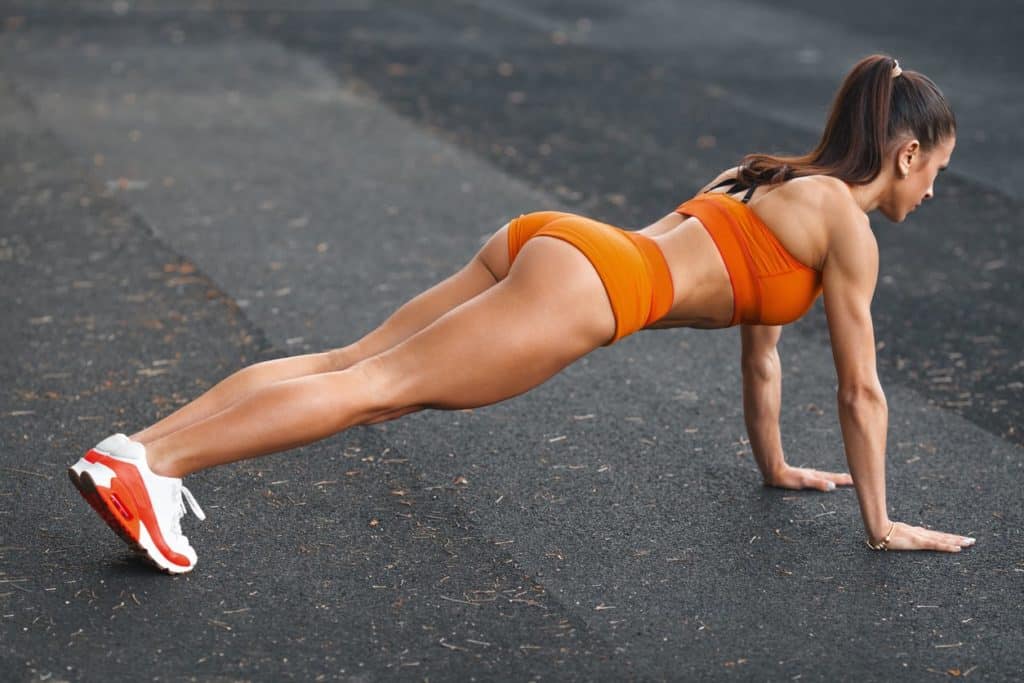
How to Get Better at Push-ups
If your current maximum is 10 push-ups, stop treating them like a workout and start treating them like brushing your teeth. In week one, aim for 30 push-ups a day, but never in one set. Do 5 when the kettle boils, 5 before a shower, 5 while waiting for lunch, 5 before bed. Keep every set easy.
In week two, push that to 40 or 50 a day. By week three, most people find their maximum rep count has jumped without ever doing a brutal session.
The mistake is constantly testing yourself. Save that for once every fortnight. The goal is accumulating hundreds of quality reps each week. Perfect form, chest down, full lockout. Do them at home, at work, beside the couch, wherever. The best push-up programme is the one you actually remember to do.
How to Improve Your Push-Up Score
- Train push-ups everyday
- Leave 1-2 reps in reserve
- Add rows and pull-ups
- Use diamond push ups (see below)
- Build core strength

5 Push-Up Variations Worth Trying
1. Standard Push-Up
The benchmark. Hands slightly wider than shoulder-width, body in a straight line, chest touching the floor. If you want a quick measure of real-world upper-body fitness, this is the variation that matters most.
2. Close-Grip (Diamond) Push-Up
Bring your hands close together beneath your chest, forming a diamond shape with your thumbs and index fingers. This shifts more of the work to the triceps and is significantly tougher than a standard push-up.
3. Wide-Grip Push-Up
Place your hands wider than shoulder-width apart. This increases the involvement of the chest muscles while reducing the range of motion slightly. A favourite among those looking to build pressing strength and muscle.
4. Decline Push-Up
Elevate your feet on a bench, box or step. The higher your feet, the more work your shoulders and upper chest must do. This is one of the simplest ways to make standard push-ups harder.
5. Archer Push-Up
Place your hands very wide apart and shift your body towards one arm as you lower yourself. One arm performs most of the work while the other provides support. It builds unilateral strength and serves as a stepping stone to a true one-arm push-up.
Mil-Fit Tip: If standard push-ups have become easy, don’t just add more reps. Rotating through close-grip, decline and archer variations can build strength faster and expose weaknesses that high-rep push-ups often hide.
Military Push-Up Standards
While civilian fitness standards vary, military organisations continue to use push-ups as a simple measure of muscular endurance.
Most entry-level military standards require somewhere between 15 and 40 push-ups depending on age, sex and service branch. Elite military selection courses often demand significantly higher numbers. Test youerself at mensfitness.ai.
The Bottom Line
If you’re a healthy adult male, 20 push-ups is a solid minimum target. Thirty is good. Fifty is excellent. If you’re over 50, maintaining double-digit push-up performance remains one of the simplest ways to preserve upper-body strength and functional fitness.practice will lead to noticeable improvements in strength and endurance over time.
Photo by Domagoj Bregant: